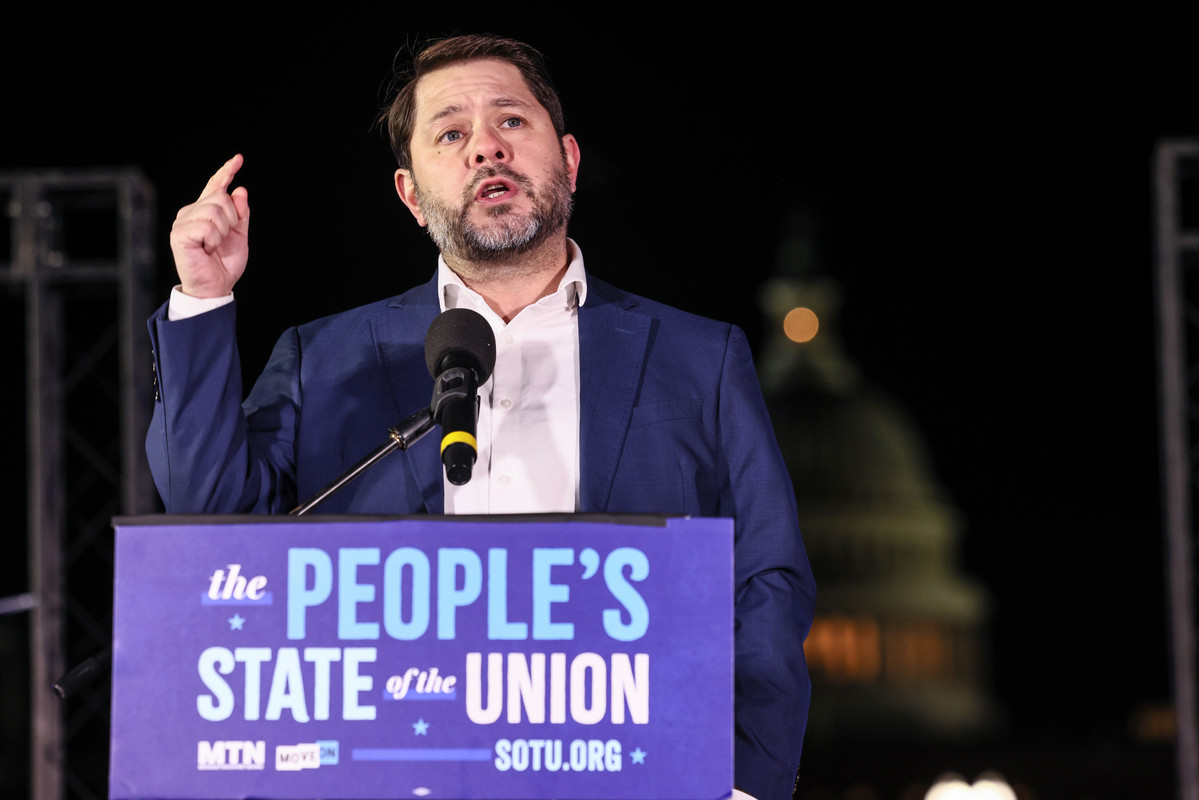
On Monday, he argued that Democrats must abandon what he called a loaded climate vocabulary and instead campaign on the price of gasoline and electricity if they hope to win control of Congress in November.
In an interview on the POLITICO Energy podcast, Gallego said soaring costs for fuel and power have become the defining economic anxiety for voters, eclipsing concerns about rising temperatures even in his home state, which endures the nation’s most severe heat waves and a punishing drought worsened by climate change. “Honestly, it’s just so loaded,” he said of the climate conversation. “If our goal is to bring down our carbon footprint, try to restrain climate change, we need to win. And focusing on words versus outcomes, I think, is a real good pathway to losing.”
Gallego’s push for a centrist pivot reflects a broader calculation among Democrats that the party’s traditional environmental appeals are failing to resonate with voters squeezed by inflation. Pump prices have spiked nearly a dollar and a half per gallon after Iran closed the strategic Strait of Hormuz waterway in response to American and Israeli strikes, according to polling cited by the senator. Electricity bills, meanwhile, have climbed in many regions as demand surges from energy-intensive artificial intelligence data centers, compounding household financial strain even before the latest geopolitical crisis.
The first-term senator released a 32-page energy policy paper in December that outlines a platform to expand overall energy output, an approach he describes as “all of the above.” The plan aims to address what he called the “utility roulette game” faced by families who must decide which bills to pay before service is cut off. “You are really tackling what people are worried about when it comes to energy and what they’re worried about is the cost of living and the high cost of utilities,” Gallego said.
A Strategy Borrowed From a Tough State
Gallego pointed to his own victory in Arizona during the same election cycle in which President Donald Trump won the state as evidence that a moderate energy message can succeed. He argued that Americans broadly favor more energy production, not less, and that this preference could expose Republicans to political vulnerability given the GOP’s alignment with the Trump administration’s energy policies. “Americans like the idea of more, not less,” Gallego said.
Polling suggests voters are increasingly blaming Republicans and the former president for the surge in gasoline prices, a shift that Democrats hope to exploit by framing energy affordability as a kitchen-table issue rather than an environmental one. Gallego said energy has become the top concern he hears on the campaign trail, intertwined with broader anxieties about the cost of living. He argued that a focus on expanding supply would ultimately benefit clean power sources, which already represent the vast majority of new additions to the electric grid.
“For some of us that grew up poor like I did, playing the utility roulette game is not fun,” Gallego said. “Like what can you pay now before it gets shut off, before something else gets shut off?” His call for a strategic shift in messaging underscores the pressure Democrats face to recalibrate their platform as the November midterms approach, with control of Congress hanging in the balance.