Fewer than half got through. According to records disclosed for the first time in a recent Government Accountability Office report, the agency failed to answer 58 percent of those calls, and those who did connect waited an average of 25 minutes.
The numbers directly contradict sworn testimony that FEMA’s acting administrator, David Richardson, gave to House lawmakers two weeks after the floods, which killed 139 people including more than two dozen children. Richardson told Congress that “the vast majority of phone calls were answered” and that “all calls were answered within three minutes,” dismissing earlier reports of missed calls as “fake news.”
The newly released data raises serious questions about the accuracy of Richardson’s statements and whether the agency was capable of delivering timely disaster services during one of the nation’s deadliest natural catastrophes. When call volume peaked from July 7 through July 9, FEMA failed to answer 78 percent of calls, and the average wait stretched to 61 minutes.
FEMA did not answer questions about whether Richardson’s congressional testimony was inaccurate. An agency spokesperson told E&E News that during the flood, FEMA prioritized “intake” callers registering for assistance.
Agency Turmoil and Political Pressure
The communication failures unfolded against a backdrop of deep internal instability at FEMA. Under three temporary leaders with no emergency management background, the Trump administration had cut agency staff, canceled grant programs, slowed recovery funding, and denied most aid requests from Democratic-led states. President Donald Trump has repeatedly threatened to weaken the agency since taking office.
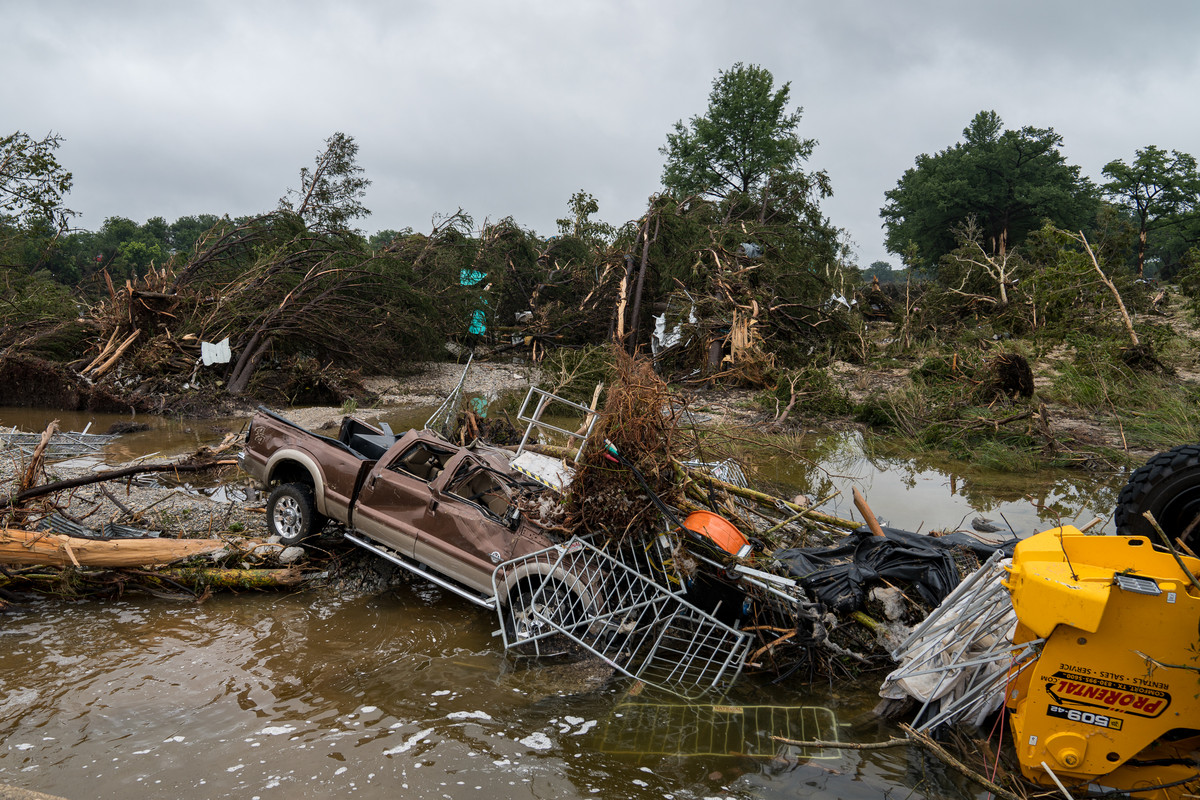
The floodwaters that swept through Texas Hill Country in early July left debris and vehicles scattered across parks and neighborhoods, killing more than 100 people in a matter of days. For the thousands of survivors who called FEMA seeking help, the agency’s failure to answer represented more than a bureaucratic lapse. It meant families waiting for assistance, for information, for any sign that the federal government was coming.
The GAO report, which disclosed the call data for the first time, did not offer a direct assessment of Richardson’s testimony. But the records paint a starkly different picture from the one he presented to Congress, and they are likely to fuel further scrutiny of an agency already under political siege.