The prolonged uncertainty over the business delegation, which has shifted between two dozen companies and roughly half that number, has frustrated corporate leaders who describe the signals from the White House as contradictory and confusing.
The administration began sending invitations to executives only after weeks of internal debate over the size and composition of the delegation. According to two people briefed by the White House, officials circulated a draft list of executives from roughly two dozen companies, but some senior figures, including U.S. Trade Representative Jamieson Greer, pushed for a group closer to half that size. The current guest list is tracking toward the smaller figure, though the number could still change before the administration finalizes attendance by the end of this week.
“The president is ‘wheels up’ in about a week. And a week out from the visit … there are still CEOs waiting to find out if they will be part of the president’s trip,” said Sean Stein, president of the US-China Business Council, which represents more than 270 companies. “We have multiple CEOs who’ve been told, ‘well maybe you’re going to be invited.’”
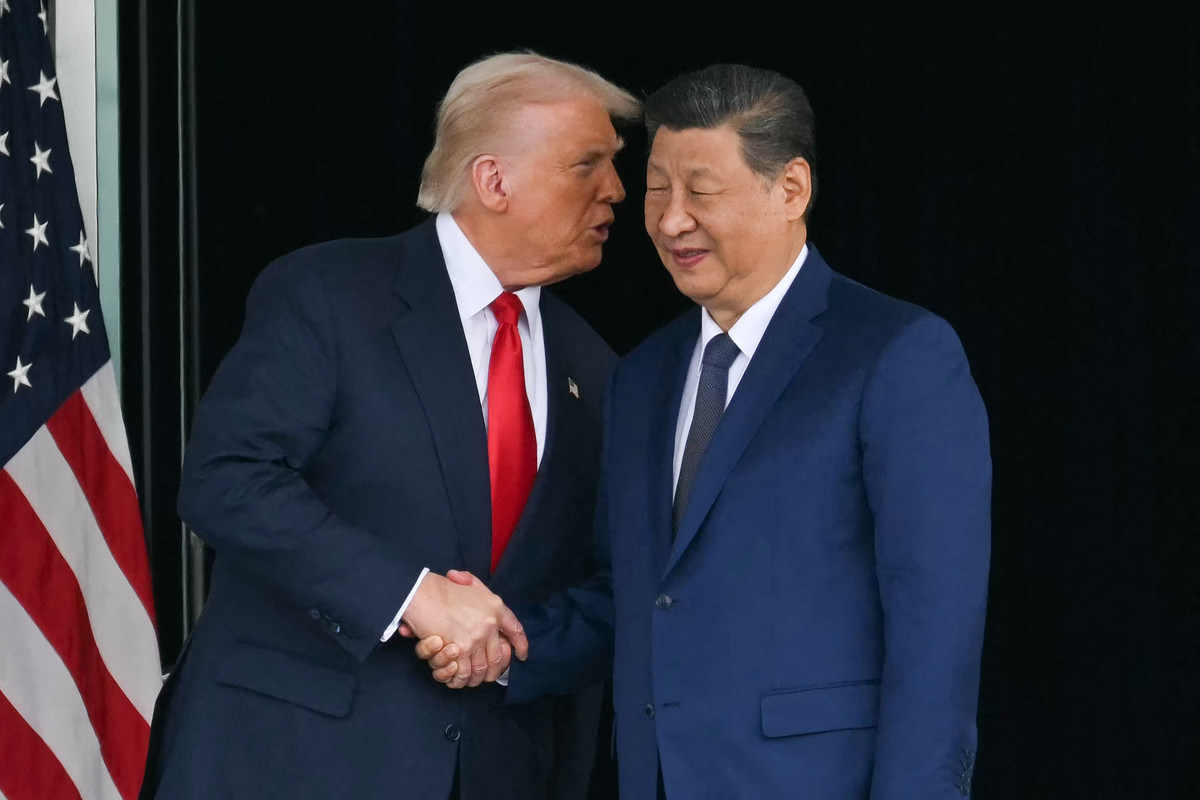
The wrangling over the delegation reflects a deeper balancing act within the administration as it navigates the commercial relationship between the world’s two largest economies. Trump has long sought to showcase splashy, high-dollar investment deals with foreign countries, but that impulse is colliding with a growing Washington consensus that Chinese investment poses a threat to national security.
“The biggest China dove in the administration is the president. He’s always been focused on making deals with China. That’s just who he is — he wants a deal,” said one person close to the White House, speaking on condition of anonymity to describe private conversations. That view was echoed by nine other people interviewed for this article, including three administration officials and seven who regularly speak with the White House on China and private sector matters.
In a statement, White House spokesperson Kush Desai stressed that there is no daylight between the president and senior officials on the administration’s approach to China. But the internal friction over the delegation suggests otherwise, as the White House tries to calibrate how much to encourage private sector engagement with its biggest economic rival while also addressing national security concerns.
The summit is expected to test the limits of Trump’s dealmaking instincts. While the president has shown a willingness to pursue agreements with Beijing, his own administration remains divided over how aggressively to court Chinese investment, leaving American business leaders caught in the middle as they await a final decision on their participation.