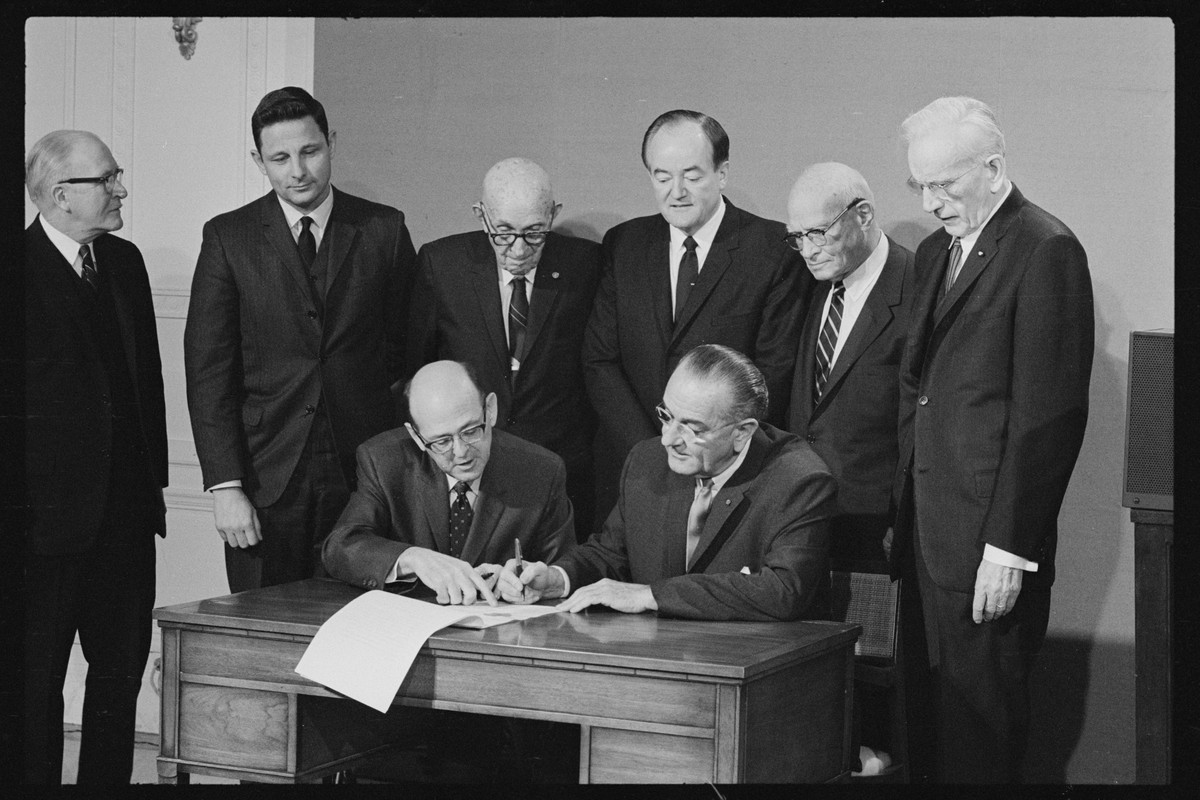
Johnson signed the 25th Amendment into law in a ceremony at the White House, a quiet capstone to years of painstaking legal work. The document Johnson put his name to was not a weapon for political battles. It was a practical blueprint, drafted in the shadow of a national trauma, to ensure that the machinery of the American presidency would never again grind to a halt in a moment of crisis.
In the eight years since, the amendment has been invoked in public debate with increasing frequency, often as a supposed mechanism for removing a sitting president from office. That reading, according to the man who helped write it, is a fundamental misunderstanding of the text and its history.
John Feerick, dean emeritus and a professor at Fordham University Law School, assisted Congress in crafting the amendment after publishing a landmark article in the Fordham Law Review in 1963. That article detailed the Constitution’s flawed history of presidential succession and argued that a formal amendment was long overdue. Invited by the American Bar Association and congressional leaders to help draft the reform, Feerick ultimately played a key role in the amendment’s creation, ratification and subsequent implementation.
The amendment was adopted in 1967, in the direct aftermath of President John F. Kennedy’s assassination, a moment that exposed dangerous gaps in the constitutional order. Its purpose, Feerick explained, is limited and precise: to address presidential inability and to fill a vacancy in the vice presidency. It was not designed to resolve political dissatisfaction with a president.
A Tool for Continuity, Not Conflict
Three of the amendment’s four sections have been implemented since 1967 without controversy. They have been used to appoint vice presidents and to restore the line of succession after periods of instability. The confusion, Feerick said, centers almost entirely on Section 4, which empowers the vice president and a majority of the president’s Cabinet to declare a president unable to discharge their duties. If the president disagrees, Congress is empowered to resolve the dispute.
Section 4 is often cited in political discourse as a backdoor method for removing a president from office. But Feerick emphasized that the provision was created as a medical and procedural safeguard, not a political check. It was meant to address situations where a president is physically or mentally incapacitated, not where lawmakers or Cabinet members disagree with policy decisions or find a president unfit for reasons of temperament or judgment.
The distinction matters, Feerick argued, because misreading the amendment risks distorting the constitutional balance of power. The 25th Amendment was never intended to function as an alternative to impeachment. It was designed to keep the government running when the commander in chief cannot, not to settle political scores.