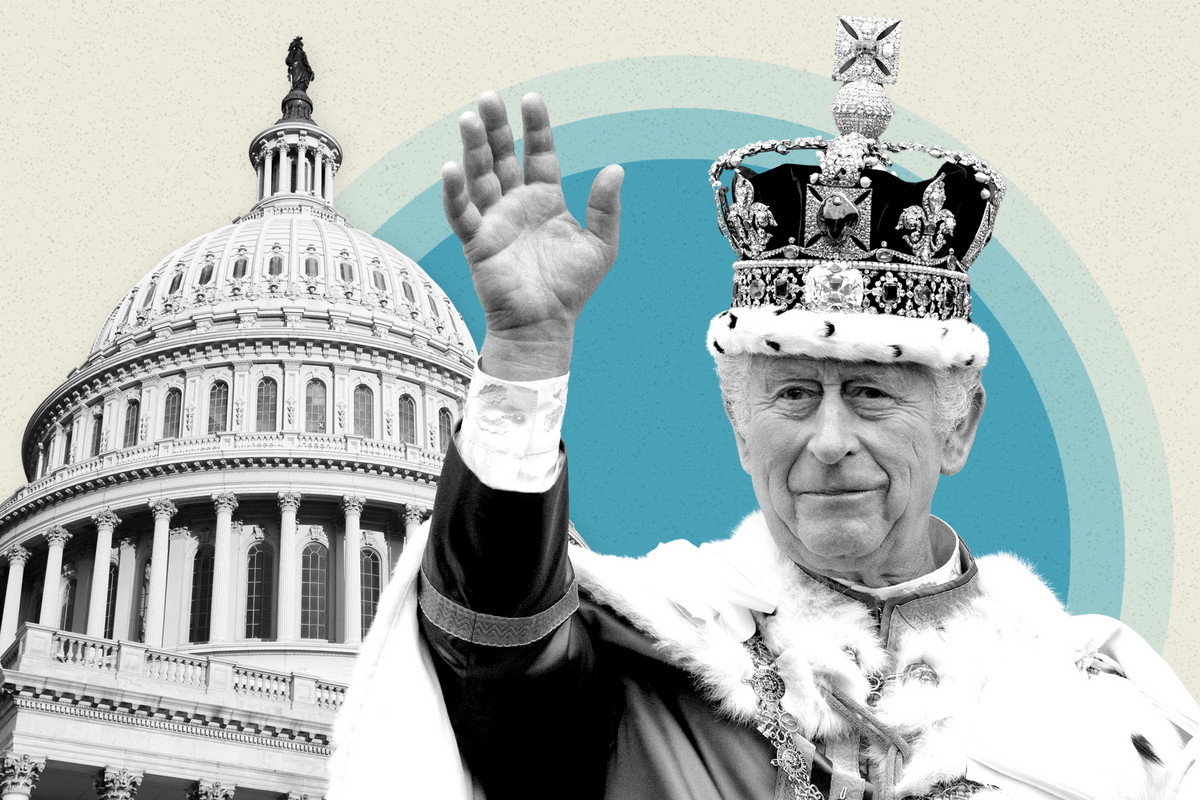
The horse guards will stand at attention. And a 74 year old monarch in a morning coat will step onto American soil for what should be the crowning glory of a reign seven decades in the making. But behind the pageantry, King Charles III carries a burden no British sovereign has borne in living memory: the weight of an alliance that may already be broken.
Three and a half years into the job he spent his entire adult life waiting to inherit, Charles now confronts a convergence of crises that would test any head of state. His own health is fragile. His younger brother Prince Andrew remains entangled in the Epstein scandal. His son Prince Harry lives estranged in California. And the trans Atlantic relationship that has formed the bedrock of British foreign policy for 80 years is showing cracks that no amount of royal charm may be able to seal.
The visit was never meant to carry this kind of weight. State visits to Washington are typically ceremonial affairs, opportunities for photo opportunities and warm toasts to shared history. But the political context has shifted dramatically. Donald Trump has spent recent weeks describing NATO as a “paper tiger,” signaling that the United States may no longer guarantee the collective defense clause that has kept Europe safe since 1949. For Britain, a nation that has outsourced its military credibility to the American arsenal for generations, the implications are existential.
A Myth Under Strain
It is difficult for Americans to grasp how deeply the “special relationship” is woven into the British psyche. Images of Franklin Roosevelt and Winston Churchill sharing cocktails, of Ronald Reagan and Margaret Thatcher locked in embrace, of Bill Clinton and Tony Blair as the West’s young leaders, form a postwar national mythology that has allowed an entire generation of Britons to feel untouchable. The bond is unbreakable, the British have told themselves for eight decades. No nation is closer to Washington.
That mythology was tested in 2016, when anti Brexit campaigners warned that leaving the European Union would endanger national security. The Brexiteers laughed them off. Europe does not keep us safe, they argued. That job belongs to NATO. Britain voted to leave the EU that June. Donald Trump was elected four months later. A decade of political turmoil has now brought the alliance to a point where even its most fundamental guarantee appears negotiable.
King Charles arrives, then, as something more than a constitutional figurehead. He is a diplomat, a salesman, and perhaps a last resort. The irony is unmistakable. George Bernard Shaw once wrote that there are two tragedies in life: not getting your heart’s desire, and getting it. Charles waited 73 years to become king. Now that he is, his most important mission may be to persuade an American president that the alliance Britain has taken for granted is worth preserving.