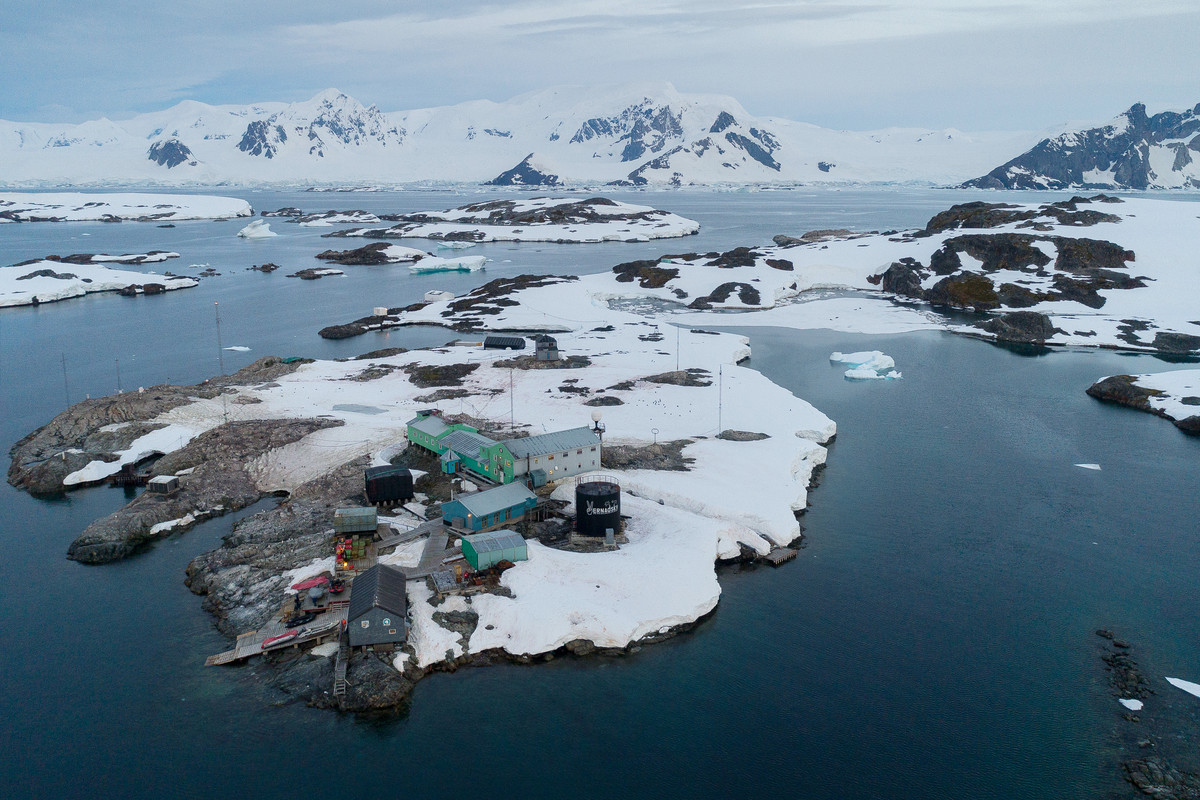
As she leads a team of 14 Ukrainian scientists at the mint-green Vernadsky Research Base in the Antarctic Peninsula, the war feels both impossibly distant and intimately close.
For Ukraine, this remote scientific outpost is far more than a research station. Officials in Kyiv view the base as a strategic asset in their fight for national survival, a platform that secures the country a seat at the table where major world powers govern Antarctica entirely by consensus. In a conflict where Russia has sought to isolate Ukraine on the global stage, the base offers an unlikely diplomatic foothold.
“Stopping the base for even one year and then trying to restart it is simply impossible,” Hanchuk said. “To stop the base for a year would mean losing it forever.” Her team’s work keeping the program operational is itself a form of resistance, ensuring Ukraine does not cede ground in a region where geopolitical influence is measured in permanent presence.
The strategic logic was codified in a long-term polar strategy adopted by Ukraine this year, which declares its Antarctic presence a “platform for protecting national interests.” When approving the strategy in February, Ukrainian Foreign Minister Andrii Sybiha framed the base as a direct counter to Russian expansionism. “It provides additional foreign policy instruments, strengthens Ukraine’s national security, enhances our country’s position on the global stage, and contributes to countering Russia’s aggressive policy in these regions,” Sybiha said.
Seat at the Table
The base’s importance will be tested in May, when the core decisionmakers in Antarctic governance gather in Hiroshima, Japan, for the annual Antarctic Consultative Meeting. Ukraine’s ability to participate as a full voting member depends on maintaining a permanent scientific presence, a requirement that has taken on new urgency since Russia’s full-scale invasion began in 2022.
For the 14 scientists weathering the Antarctic winter, the mission is personal. Hanchuk described watching from her desk as notifications about missile strikes in Kyiv light up her phone, a reminder that her work at the bottom of the world is tethered to the survival of her country. The colony of gentoo penguins outside her window, oblivious to the geopolitics unfolding around them, has become an unlikely symbol of continuity in a time of rupture.
Ukrainian officials argue that losing the base would not only erase decades of scientific investment but also hand Russia a quiet victory in a region where influence is measured in persistence. For now, the mint-green station on its remote outcropping remains a small but stubborn assertion that Ukraine intends to hold its ground, even at the edge of the world.