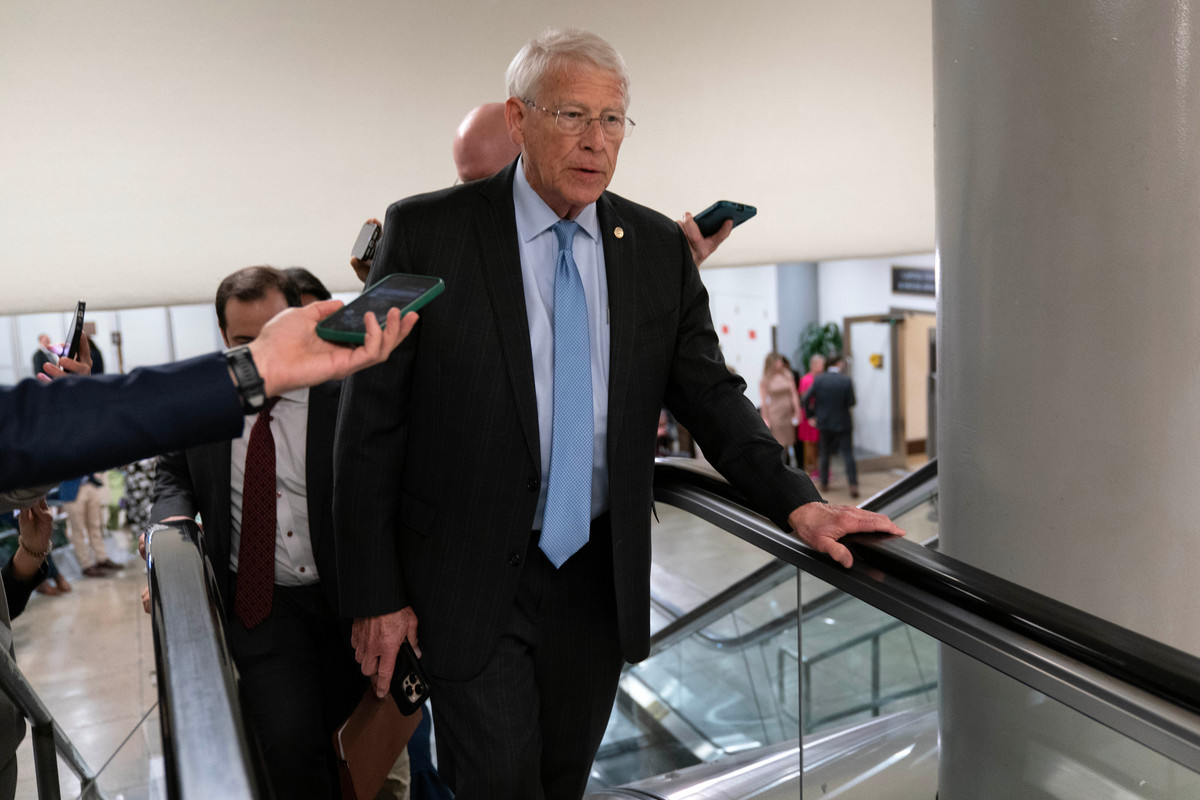
The Mississippi Republican, who chairs the Senate Armed Services Committee, took to social media to argue that negotiations with Tehran were a fool’s errand.
“Our Commander-in-Chief should direct his skilled military leaders to finish destroying Iran’s conventional military capabilities and eliminating any last remnants of their nuclear program,” Wicker wrote. “This is the only way to ensure lasting stability in the region.” His blunt intervention came just days after Trump announced he would extend a two-week ceasefire indefinitely to pursue a peace deal, exposing a sharp divide between the White House and its top defense allies on Capitol Hill.
The administration has sent conflicting signals about its strategy in the conflict. Defense Secretary Pete Hegseth told reporters Friday morning that the military had achieved victory in Iran, but he also pledged to inflict “maximum violence” on the country if the president orders a return to hostilities. “President Trump’s fortitude is unshakable, and his mission is crystal clear,” Hegseth said. “The president said it again yesterday: we have all the time in the world, and we’re not anxious for a deal.”
Despite the ceasefire, American naval forces continue to enforce a blockade of ships traveling through the Strait of Hormuz, and a third aircraft carrier arrived in the region this week. White House press secretary Karoline Leavitt announced Friday that special envoy Steve Witkoff and Jared Kushner, the president’s son-in-law, would travel to Pakistan on Saturday to restart negotiations aimed at ending the conflict.
Wicker, who has repeatedly defended the president’s initial decision to attack Iran as a matter of national security, cast doubt on those diplomatic efforts even before they began. He has promised to hold standalone hearings in his committee to examine the reasons for the war and its impact on U.S. military readiness, though officials have not yet set a date for the proceedings.
The senator’s call for renewed strikes risks inflaming an already tense situation as the administration works to balance military pressure with diplomacy. Wicker’s position as the top Republican on the powerful Senate military panel gives his words significant weight, and his public break with Trump’s current strategy signals potential trouble ahead for the White House’s peace push.