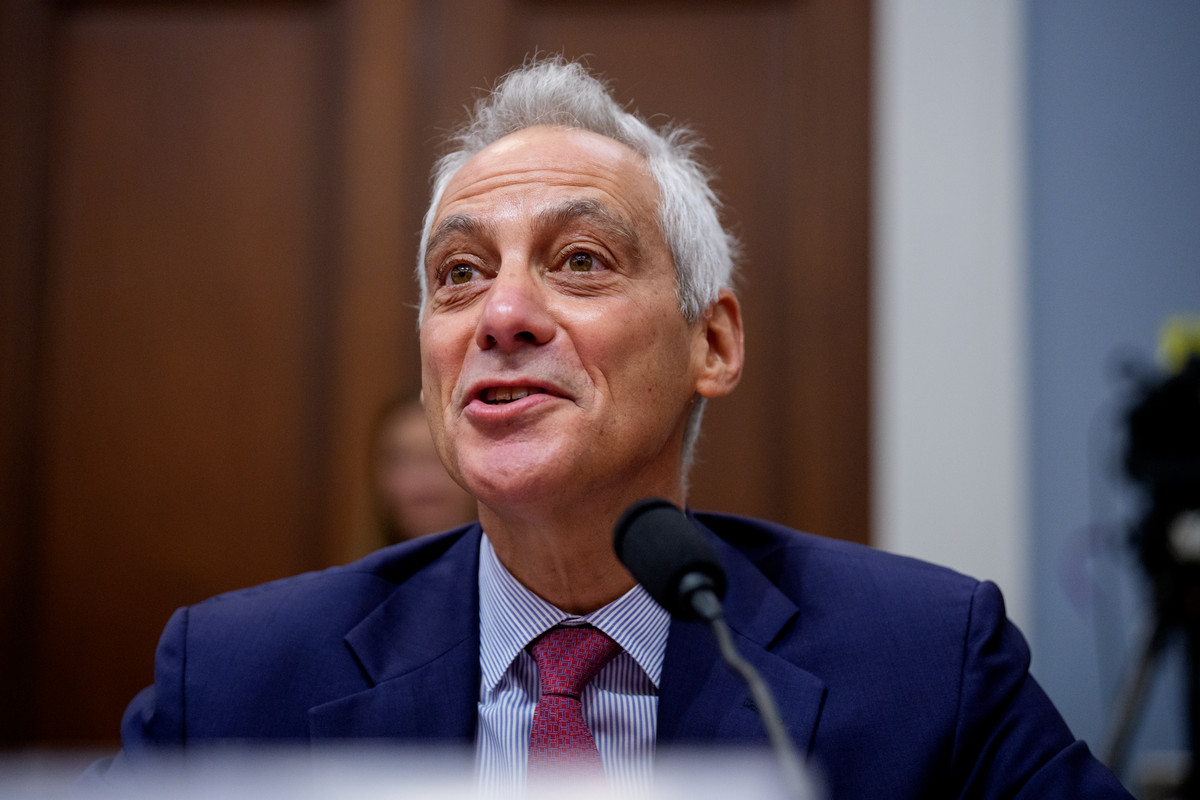
The former Chicago mayor and ambassador shakes the plastic container with a force that leaves no leaf undressed, a small but telling display of the intensity he is now bringing to a nascent campaign for the White House.
More than two years before the first 2028 primary votes are cast, Emanuel is already a disruptive force within his own party. He is crisscrossing battleground states like Michigan and Wisconsin, delivering policy speeches and courting local media with a message that deliberately challenges progressive orthodoxies. For potential Democratic rivals still gauging their own runs, Emanuel’s early and pugnacious presence creates a complex problem, forcing them to define themselves against a seasoned centrist who refuses to cede ground to the left.
His approach is a calculated blend of retail politics and intellectual heft. Emanuel fills hours with reporters in on-and-off-the-record sessions, meticulously rolling out white papers on niche policy issues. He argues that the presidency demands a comfort with both granular detail and high-stakes crisis management, a duality he claims his lengthy resume provides. “You got to be able to be comfortable in the classroom and the Situation Room and everything in between,” Emanuel has said, framing his experience as a unique qualification.
A Rolling Gauntlet for the Left
Emanuel’s pre-campaign is effectively designed as a sustained critique of the Democratic Party’s leftward drift, particularly on social and cultural issues. Political observers anticipate a campaign filled with what one insider termed “rolling Sister Souljah moments,” where he will directly confront progressive shibboleths to appeal to a broader, more moderate electorate. This strategy aims to create a gauntlet through which any other candidate must pass, forcing them to either embrace, modify, or reject his confrontational centrism.
His pugilistic style, forged during decades in Washington and Chicago’s bare-knuckle politics, is a defining feature. Where other potential candidates might seek unity, Emanuel appears ready to pick fights, betting that Democratic primary voters will crave a scrappy, experienced counterpuncher after years of heightened political tensions. This instinct for conflict, combined with his deep network of donors and operatives, makes him an unusually formidable early-stage candidate.
The emerging 2028 field, which may include governors, senators, and other nationally known figures, now must account for Emanuel’s head start in defining the race’s ideological battleground. His early saturation of media markets and political circles allows him to set initial terms of debate around pragmatism and electability, potentially boxing in candidates who hoped to run on a more transformative or progressive platform.
For the Democratic Party, Emanuel’s rise signals a brewing internal conflict over its post-Biden identity. His campaign-in-everything-but-name promises a stark referendum on whether the party’s future lies in bold progressive change or a recalibrated, hard-nosed moderation. As he continues to shake up the political landscape with the same vigor he applied to his salad, one thing is clear: the race for 2028 has already begun, and Rahm Emanuel is determined to write its first chapter.