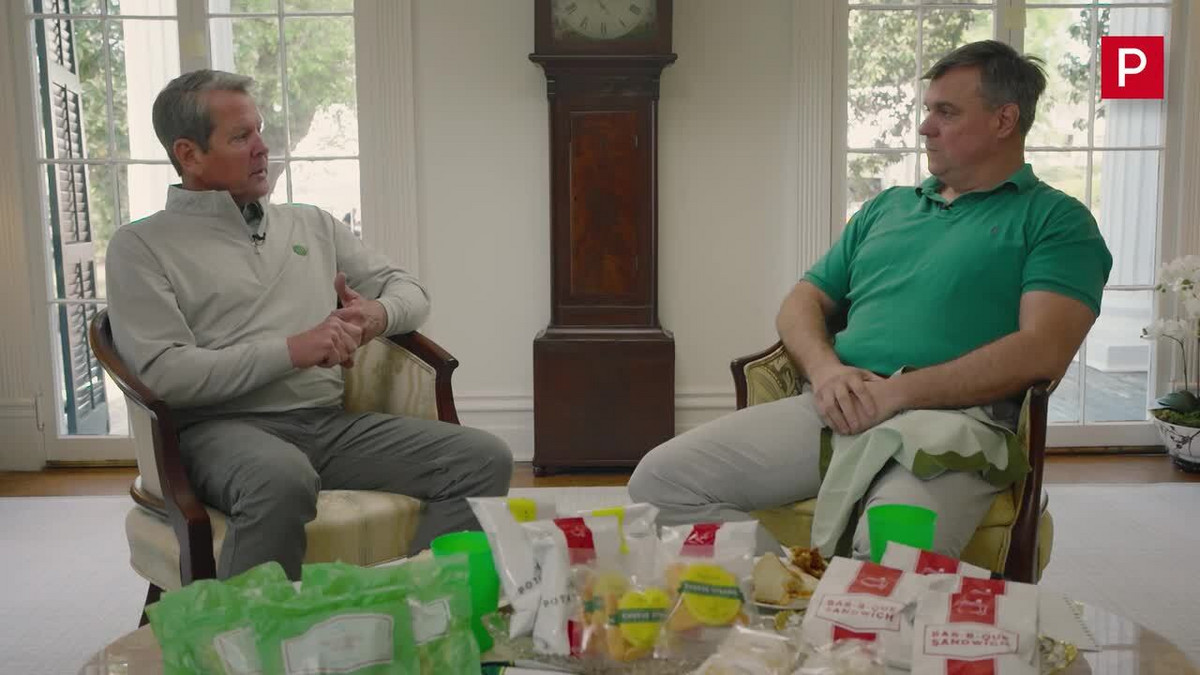
Over a lunch of barbecue and pimento cheese sandwiches held in a Chick-fil-A style bag, the term-limited Republican outlined the challenges awaiting his party in the coming years.
Kemp, who is not seeking the U.S. Senate seat held by Democrat Jon Ossoff this year, warned that Republicans must learn from past mistakes. “We have been down the road where we didn’t have the right candidate and we got our ass kicked in the general election,” he said, alluding to the party’s recent high-profile losses in Georgia. He bluntly predicted, “This is going to be a tough cycle for us.”
The governor’s immediate focus is the upcoming primary to succeed him. He is throwing his weight behind former congressman and Trump administration official Derek Dooley, vowing to do everything possible to propel Dooley into a potential runoff. Kemp’s endorsement carries significant weight in a state where he has consistently won statewide elections, even after defeating a Trump-backed primary challenger in 2022.
A Recruit Who Got Away
Kemp’s decision to forgo a Senate run this year is a source of quiet frustration for national Republicans. Party strategists view the popular, two-term governor as their ideal candidate, one who could have seriously threatened Ossoff and bolstered the GOP’s chances of retaining control of the Senate. His absence from that race leaves the party with a less certain path to victory in a critical battleground.
The current Republican Senate primary has proceeded without a clear frontrunner or the endorsement of former President Donald Trump, creating what one observer called “a bit of a muddle.” Trump’s hesitation may stem from the party’s painful history of losing winnable Senate races in Georgia with flawed candidates, a pattern Kemp is determined to avoid repeating in the gubernatorial contest.
First elected to the state senate in 2002, Kemp represents a brand of pragmatic, business-oriented Republicanism that once dominated Southern politics. His political resilience, demonstrated by his victory over a well-funded Trump-endorsed primary opponent, has made him a singular figure within the GOP, one who operates with considerable independence from the party’s national factions.
As Kemp finished his lunch and prepared to head to the hallowed grounds of Augusta National, his message to fellow Republicans extended beyond the next primary. It was a caution that success requires candidates who can win general elections, not just party primaries, a lesson he believes is essential for surviving what he sees as a difficult political period ahead.