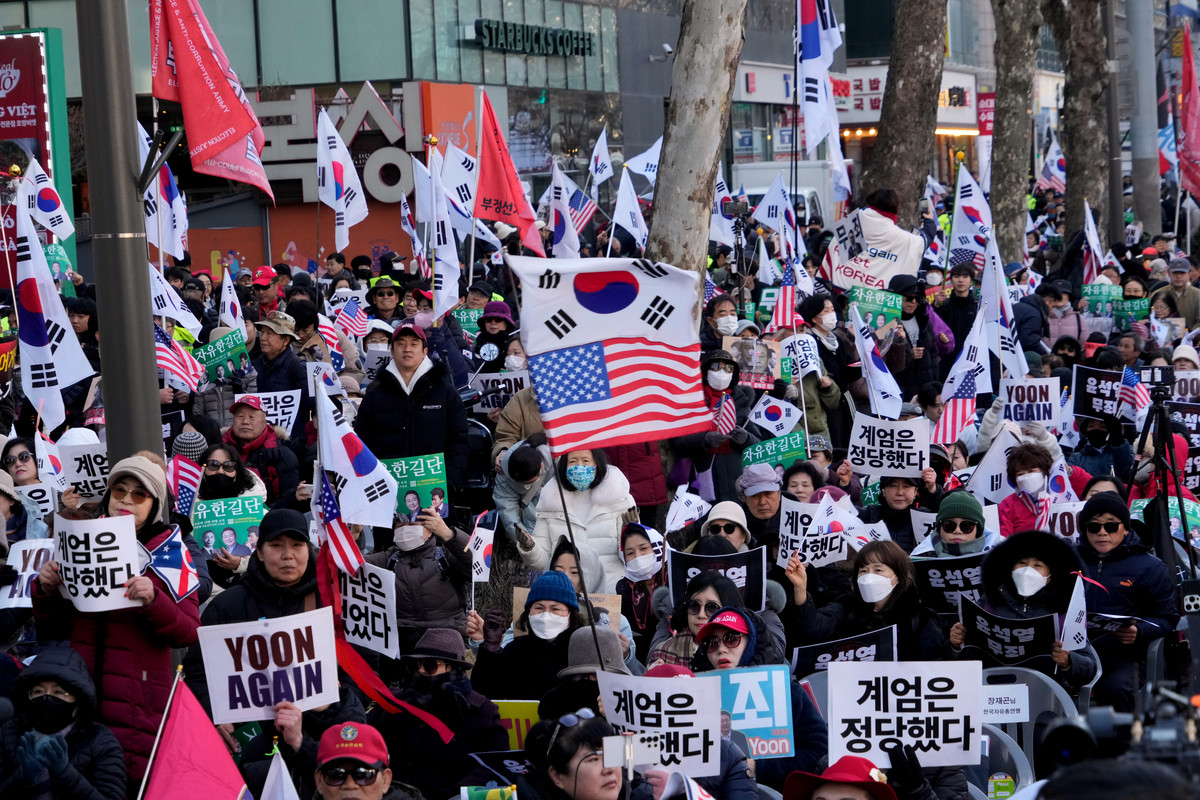
The sea of supporters around him is dotted with red hats, but the slogans are not just in Korean.
"Make Korea Great Again," some read. "Stop the Steal," say others. The scene, captured in mid-February, was the final weekend rally before the sentencing hearing for former South Korean President Yoon Suk Yeol, who was convicted for his 2024 declaration of martial law and attempted insurrection. For his supporters, the American political aesthetic is a deliberate import, a symbol of shared struggle.
To these activists, Trump is more than a foreign politician. He is a template: a leader who weathered intense legal scrutiny and returned to power. The chants of "Yoon Again" mirror the desire to reinstate their own disgraced figure, whom they view as the victim of a corrupt political establishment. The fusion of American and Korean political branding creates a potent, transnational identity for the movement.
"We are fighting the same fight, the struggle to reclaim electoral sovereignty," said Park Joon-young, the 25-year-old leader of the far-right student group Freedom University, which has organized pro-Yoon rallies. For Park and his peers, the core MAGA themes of populist grievance, anti-elitism, and claims of stolen legitimacy resonate deeply within South Korea's own polarized political landscape.
A Blueprint for Vengeance
The adoption of MAGA symbolism points to a broader ideological exchange. Young Korean conservatives see in Trump's narrative a blueprint for political vengeance and restoration. The legal troubles of both men are framed not as accountability, but as evidence of a "witch hunt" by entrenched opponents, a narrative that fuels their supporters' defiance.
The rally's location underscored this blend of global and local influences. Protesters gathered beneath giant LED billboards advertising Netflix Korea, a jarring contrast to the imported slogans of American political revolt. This visual dissonance highlights how digitally native movements can transplant cultural and political motifs across continents, creating hybrid forms of activism.
As the global right continues to exchange tactics and narratives, the scene in Seoul suggests that the iconography of Trumpism is becoming a flexible language for nationalist movements worldwide. It offers a ready-made package of imagery and grievance that can be adapted to local conflicts, uniting disparate groups under a familiar, disruptive banner.
The outcome of Yoon's sentencing will test the momentum of this nascent movement. But the rally in Gangnam demonstrated that the desire to "Make Korea Great Again" is now firmly intertwined with a borrowed American political mythology, signaling a new chapter in the internationalization of populist revolt.