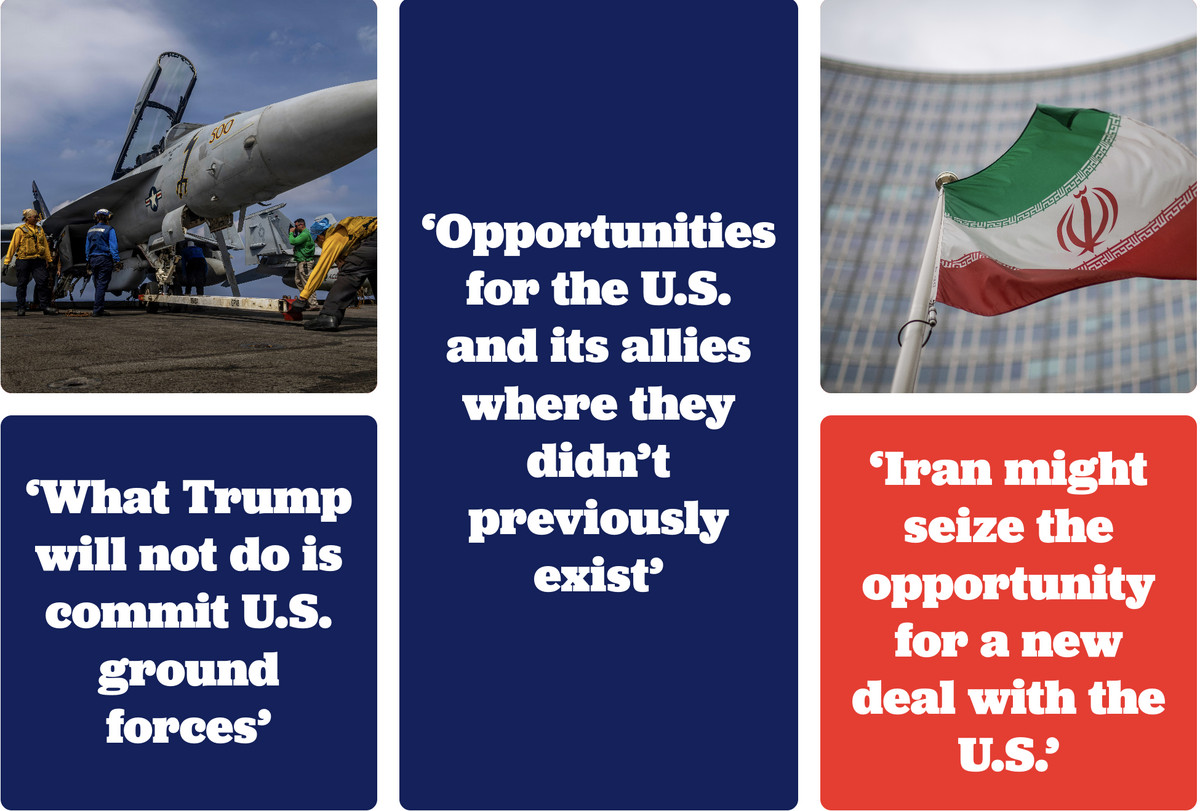
This deployment is not a routine exercise but the centerpiece of a stark ultimatum from Washington to Tehran.
The military pressure campaign represents a dangerous new phase in a confrontation that began eight months ago with U.S. airstrikes on Iranian nuclear facilities. Emboldened by the limited international blowback from that attack and a recent successful operation in Venezuela, President Donald Trump has significantly raised the stakes. The administration is now openly discussing the possibility of pursuing regime change if Iran does not capitulate to a sweeping set of demands regarding its nuclear program and regional activities.
The consensus among seasoned foreign policy observers is that the current standoff carries far greater peril than previous escalations. They warn that the potential rewards of military action are vastly outweighed by the risks of a protracted and devastating regional war, one that could easily spiral beyond any initial limited strikes.
The Calculus in Tehran and Washington
From Iran’s perspective, the American demands are seen as non-starters designed to provoke a conflict. Ryan Crocker, a former U.S. ambassador to Afghanistan and Iraq, notes that Tehran views its nuclear enrichment capabilities and support for proxy forces as fundamental pillars of the Islamic Republic’s security and legitimacy. Agreeing to abandon them would be tantamount to political suicide for the regime, making a diplomatic resolution appear increasingly unlikely.
This leaves the Trump administration with a narrowing set of options. Analysts believe the massive military buildup cannot be maintained indefinitely without action. The expectation is that the president, having committed such significant resources and rhetoric, will feel compelled to follow through with at least an initial, limited strike intended to coerce Iranian compliance.
Such a move, however, is predicted to fail in its primary objective. Experts uniformly assess that Iran would not fold under limited bombardment but would instead retaliate asymmetrically across the region. This would almost certainly draw the United States into a deeper, more punishing conflict, a scenario for which the current strategy appears unprepared.
The path ahead is marked by profound uncertainty. The previous attack on nuclear sites established a precedent with minimal consequences, but expanding the war aims to include regime change ventures into uncharted territory. The experts caution that this gambit risks triggering a chain of events that could reshape the Middle East in catastrophic and unpredictable ways for years to come.