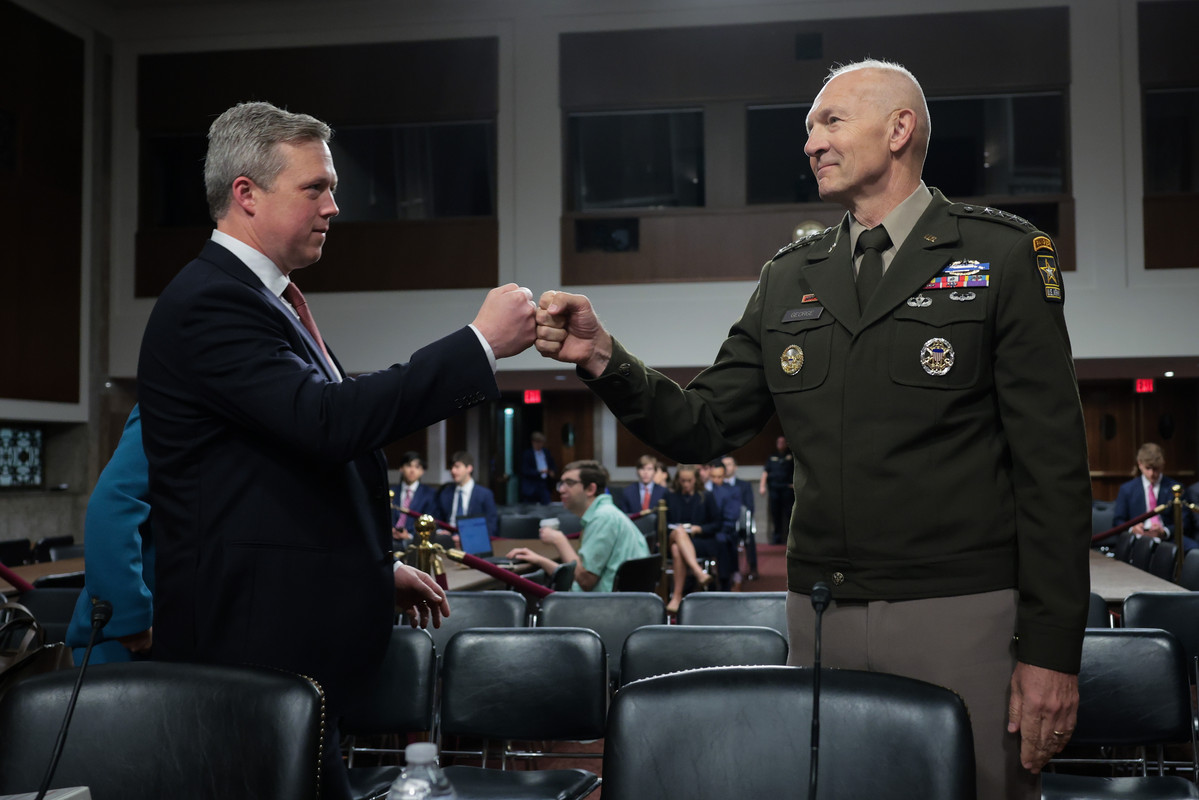
Army Secretary Dan Driscoll offered a firm fist bump to his service’s top general, a public display of a partnership now abruptly severed. The gesture, captured in photographs from just weeks ago, now underscores a deepening unease in Washington over a sudden and unexplained change at the pinnacle of America’s largest military branch.
The Army’s top civilian leader appeared before the House Defense Appropriations Subcommittee on Thursday, where lawmakers from both parties pressed him on the recent ouster of Army Chief of Staff Gen. Randy George. Driscoll heaped praise on the departed general but framed the decision as a straightforward exercise of civilian control. “The civilian leadership, the design of our system is that they get to pick the leaders that they want,” Driscoll explained. “And we execute on those orders.”
The comments came after Defense Secretary Pete Hegseth asked George to step down in early April and retire immediately. George is the latest in a string of more than a dozen senior military officials pushed out by Hegseth since he took office, a pattern that has drawn increasing scrutiny. The Pentagon has provided no public explanation for the Army chief’s removal.
Lawmakers expressed clear discomfort with the move. Republicans and Democrats alike praised George’s service and lamented his departure, with the Republican criticism being particularly notable given the party’s general alignment with the administration. The bipartisan unease suggests growing congressional concern over the pace and opacity of leadership changes under the current Pentagon chief.
Driscoll and George had formed a close working relationship, collaborating on efforts to transform the Army into a leaner, more technologically advanced force. Their partnership included pushing to cut legacy weapons programs they believed were ill-suited for future conflicts, a potentially contentious modernization agenda now facing uncertainty.
A New Acting Chief with Pentagon Ties
Filling the role on an acting basis is Gen. Christopher LaNeve, the service’s vice chief of staff. Driscoll sought to reassure lawmakers by touting LaNeve’s record. The general’s previous assignment is also telling; he served as Hegseth’s senior military aide before becoming vice chief, a career path that places him firmly within the defense secretary’s circle.
The hearing ultimately highlighted the tension between the principle of civilian authority, which Driscoll firmly upheld, and the expectations of transparency and stability in military leadership. As one top general exits without public cause and another with direct ties to the Pentagon’s top civilian steps in, Congress is left weighing its oversight role against the clear legal powers of the secretary of defense.
For now, the Army’s transformation plans proceed under an acting chief while the search for a permanent replacement begins. The episode leaves a lingering question on Capitol Hill about what criteria are now being used to select—and remove—the nation’s most senior military leaders.