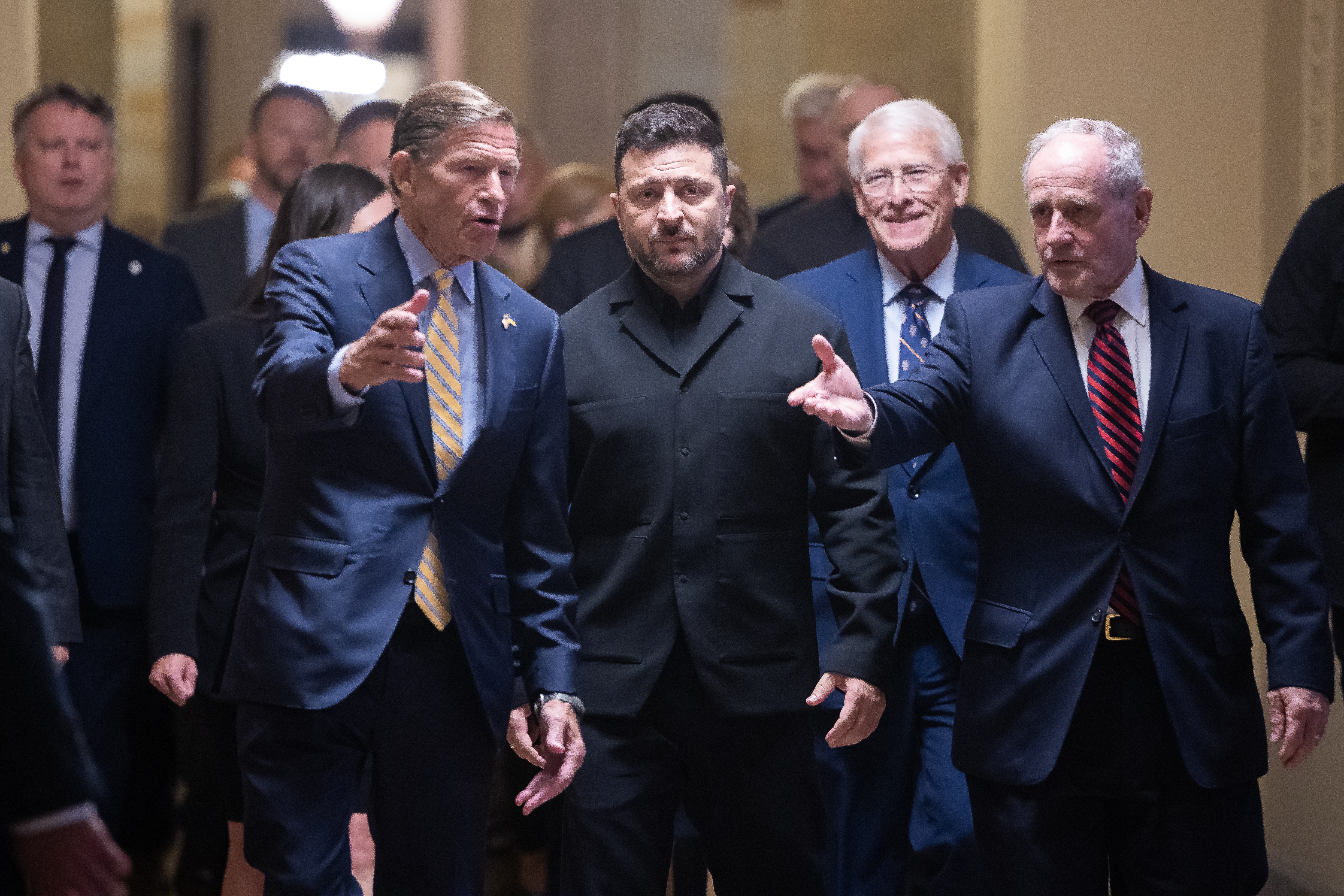
Capitol on Thursday, a handful of Republican senators who had publicly questioned continued aid to Ukraine were seen lingering near the front, their notebooks open and their expressions unreadable. Ninety minutes later, several emerged with a markedly different tone, signaling a tangible shift in the political momentum for President Volodymyr Zelenskyy’s latest appeal for American support.
Senators who attended the closed-door briefing with the Ukrainian leader told reporters that his presentation was direct, data-driven and increasingly difficult to dismiss. “He is starting to have an impact,” one Republican senator said on condition of anonymity, reflecting a sentiment echoed by multiple lawmakers from both parties. The meeting, held amid a fragile moment in the war and a deepening budget battle in Washington, appeared to soften resistance among a bloc of conservatives who have advocated for stricter oversight of U.S. military assistance.
The shift in tone comes as the White House presses Congress to approve a supplemental funding package that includes billions of dollars in new security assistance for Kyiv. For months, a growing number of House and Senate Republicans have argued that the United States cannot afford an open-ended commitment to Ukraine’s defense, particularly as domestic priorities like border security and inflation dominate voter concerns. But after Thursday’s session, several of those same lawmakers acknowledged that Mr. Zelenskyy’s arguments had given them pause.
One senator who had previously voted against a Ukraine aid package described the meeting as “refreshingly candid,” noting that the Ukrainian president did not simply demand more weapons but instead laid out a detailed battlefield calculus. Mr. Zelenskyy reportedly emphasized the need for long-range artillery systems and air defense interceptors, framing the request not as a blank check but as a targeted investment in preventing a broader European conflict. “He made it clear that this is about more than just one country,” the senator said.
Fragile Coalition and Rising Stakes
The diplomatic push in Washington unfolded against a backdrop of mounting casualties and stalled counteroffensives along the eastern front. Mr. Zelenskyy’s visit, his third to the U.S. capital since the invasion began, was carefully choreographed to appeal to both hawks and fiscal conservatives. He met privately with Speaker of the House Mike Johnson and Senate Majority Leader Chuck Schumer before the larger bipartisan briefing, a sign of the administration’s recognition that the political coalition backing Ukraine is fraying.
Despite the apparent progress, significant hurdles remain. A handful of hardline Republicans left the session reiterating their opposition, arguing that the United States should prioritize its own defense industrial base and border security. One of those lawmakers told reporters that while he sympathized with Ukraine’s plight, “sympathy does not pay the bills or secure our southern border.” The divide underscores the delicate task facing Mr. Zelenskyy as he navigates a Washington where the bipartisan consensus that once defined support for his country has fractured along ideological lines.
For now, the momentum appears to have shifted at least marginally in Kyiv’s favor. Several senators who entered the room as undecided or leaning against new funding said they left with a clearer understanding of the strategic stakes. “The world is watching how we respond,” one Democratic senator said after the briefing. “And I think a lot of my colleagues heard that message today.” Whether that shift translates into a successful vote in the coming weeks remains uncertain, but for the first time in months, the odds no longer seem entirely stacked against the Ukrainian president.