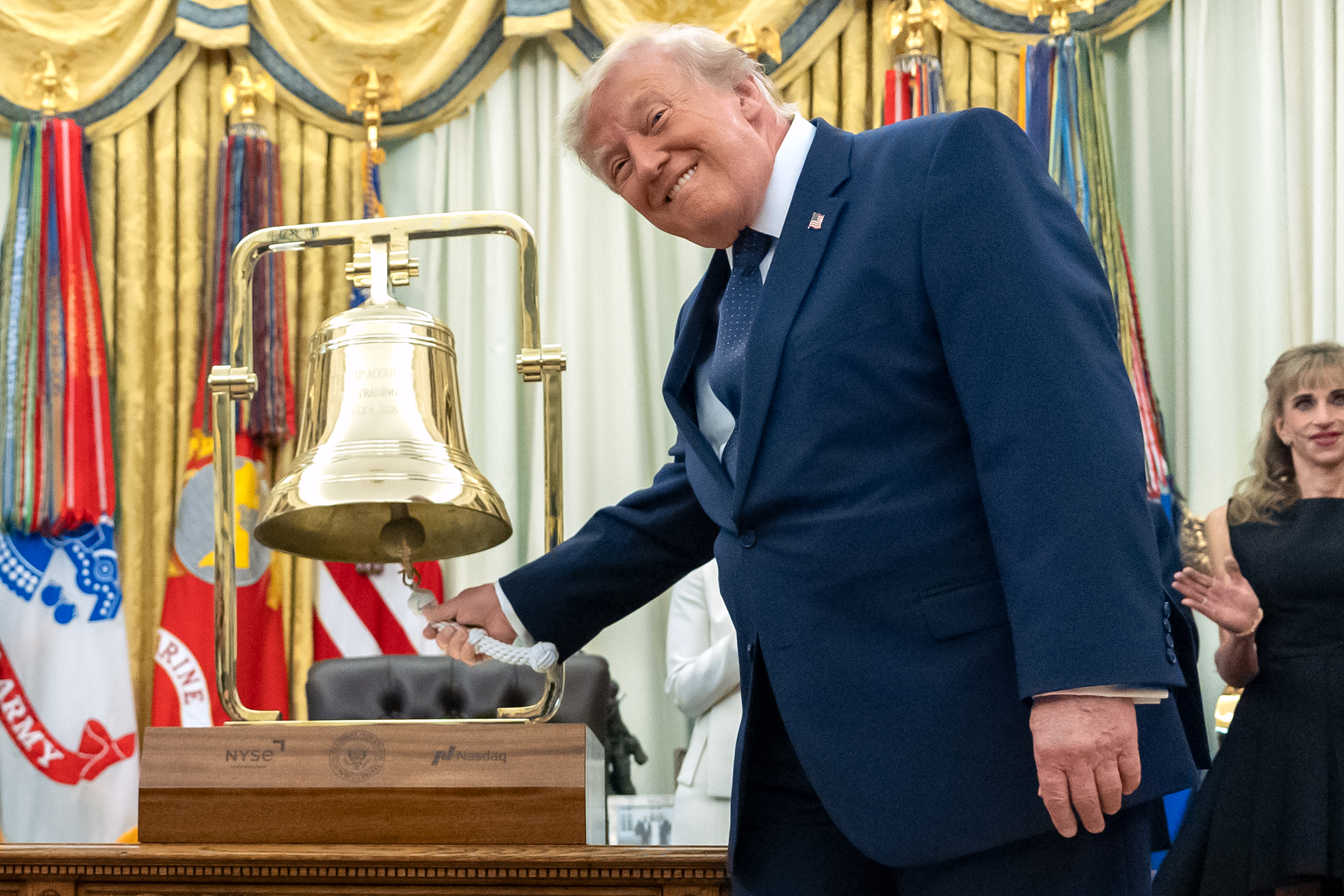
“We cannot, as a Country, put up with this any longer!!! Voter I.D., and Proof of Citizenship, must be approved, NOW. Crooked Mail-In Voting must be stopped!!! PUT IT ALL IN THE HOUSING AND FISA BILLS,” he wrote, casting the move as an emergency measure ahead of the 2026 midterms.
The SAVE America Act, which Trump has called his “No. 1 priority” for the remainder of the year, would impose new voter identification and proof-of-citizenship requirements for federal elections while also banning transgender women from participating in women’s sports. By attaching it to legislation that requires bipartisan support to pass, the president is effectively daring congressional leaders to choose between his agenda and two other key priorities: a housing bill broadly similar to a White House-endorsed version that cleared the Senate in March, and a long-term reauthorization of Section 702 of the Foreign Intelligence Surveillance Act.
House Republican leaders are planning to call a vote next week on the bipartisan housing package, which has drawn support from both parties. At the same time, lawmakers have spent months negotiating a renewal of Section 702, a surveillance rule that allows the government to collect the communications of foreigners living abroad but often sweeps in Americans’ data. The program is operating under a temporary six-week extension approved in late April, with a hard deadline of June 12 to pass a longer reauthorization.
Bipartisan collaboration is essential for both bills to advance. Republicans hold slim majorities in both chambers and have little hope of securing the necessary Democratic votes if the SAVE Act enters the fray. The president’s demand, if heeded, would almost certainly undermine the broader legislation’s chances of passing, potentially leaving Congress without a housing deal or a renewed surveillance authority before the summer recess.
Trump has long advocated for passing the SAVE America Act even at the expense of the rest of his party’s congressional agenda. “It will guarantee the midterms,” he has argued, framing the measure as a political winner that will energize his base. Yet voters remain divided on the proposal. An April POLITICO Poll found that Americans have mixed feelings about the legislation, suggesting that tying it to popular bipartisan bills could backfire at the ballot box.
The White House did not immediately respond to a request for comment on whether Trump plans to formally pressure House and Senate leaders to merge the bills. But the president’s social media post signaled that he expects action now, leaving Republican lawmakers to navigate a narrow path between satisfying their party’s leader and preserving the cross-aisle cooperation needed to govern.