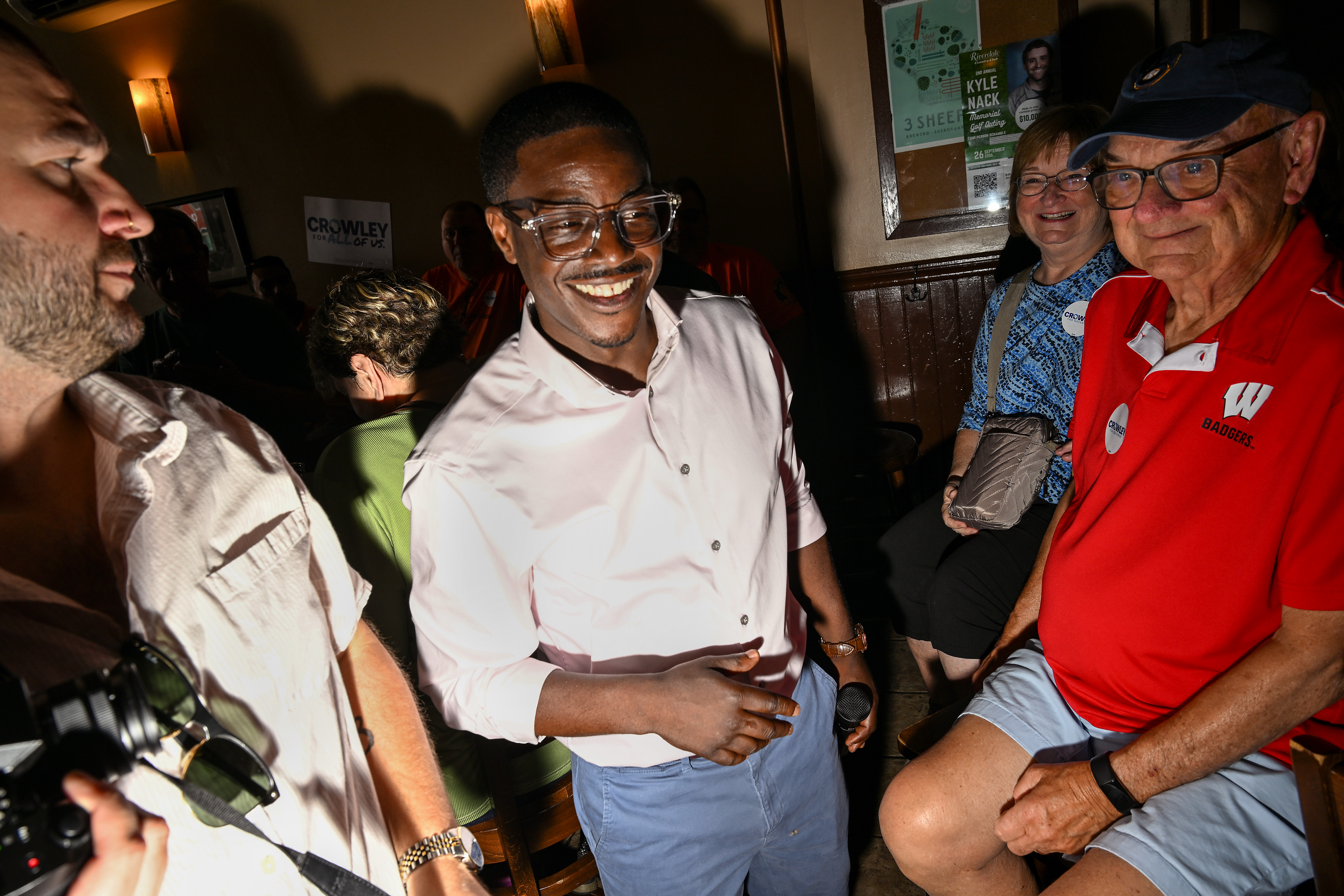
In his first extensive interview since Tuesday’s primary, Crowley acknowledged that the coalition he must assemble to defeat the Republican incumbent looks vastly different from the one that delivered him the nomination.
“The primary electorate was energized by a shared sense of urgency, but the general election is a different animal entirely,” Crowley said, gesturing toward a map of the state’s rural northern counties. His strategy, he explained, hinges on a singular message: that “MAGA extremism” poses a fundamental threat to Wisconsin’s economic stability and democratic institutions, a framing he believes can resonate with both progressive urban voters and moderate suburbanites who may have supported Republicans in the past.
The approach represents a calculated pivot for Crowley, who ran a left-leaning campaign focused on expanding Medicaid and investing in public transit. While he stops short of disavowing the progressive policies that animated his base, he is now tailoring his rhetoric to emphasize pragmatic governance, pointing to his record of balancing the county budget as evidence that he can manage the state’s affairs without the ideological baggage of his opponents.
When pressed on whether he would share a stage with prominent national progressives who have offered to campaign on his behalf, Crowley was unequivocal. “I am not going to spend the fall with surrogates who want to talk about defunding anything or abolishing any system,” he said. “The people of Wisconsin are worried about their kids’ schools and their property taxes. That is where I will be.”
Courting the Francesca Hong Voter
The reference to Representative Francesca Hong, the Madison Democrat whose grassroots campaign became a flashpoint in the primary, was deliberate. Hong’s supporters, a coalition of young activists and working-class voters of color, are considered essential to Crowley’s chances in Dane County, where turnout will be critical. Yet Crowley’s team has reportedly declined offers from Hong to headline joint rallies, preferring instead to have her focus on door-knocking in her own district.
“Francesca’s people are passionate, and I respect that,” Crowley said. “But a rally in Madison does not win Waukesha County. I need to be in places where voters are still making up their minds, not preaching to the choir.” The delicate balancing act has already drawn criticism from the left, with some Hong supporters accusing Crowley of distancing himself from the very energy that helped him clinch the nomination.
Political analysts note that Crowley’s calculus mirrors that of other Democratic nominees in battleground states who have sought to nationalize the race around issues of democracy and governance rather than policy specifics. By focusing on “MAGA extremism,” Crowley aims to tie his opponent to the most controversial figures in the national party, a tactic that proved effective in recent special elections across the Midwest.
“The voters I need to reach are not ideological,” Crowley said, returning to his central theme. “They are exhausted by the chaos. They want a governor who will fix the damn roads and make sure the elections are run fairly. That is the coalition I am building.” With labor unions preparing to launch a coordinated canvassing effort and a Super PAC aligned with national Democrats reserving airtime in the Milwaukee media market, Crowley’s message is set to be amplified significantly in the coming weeks.