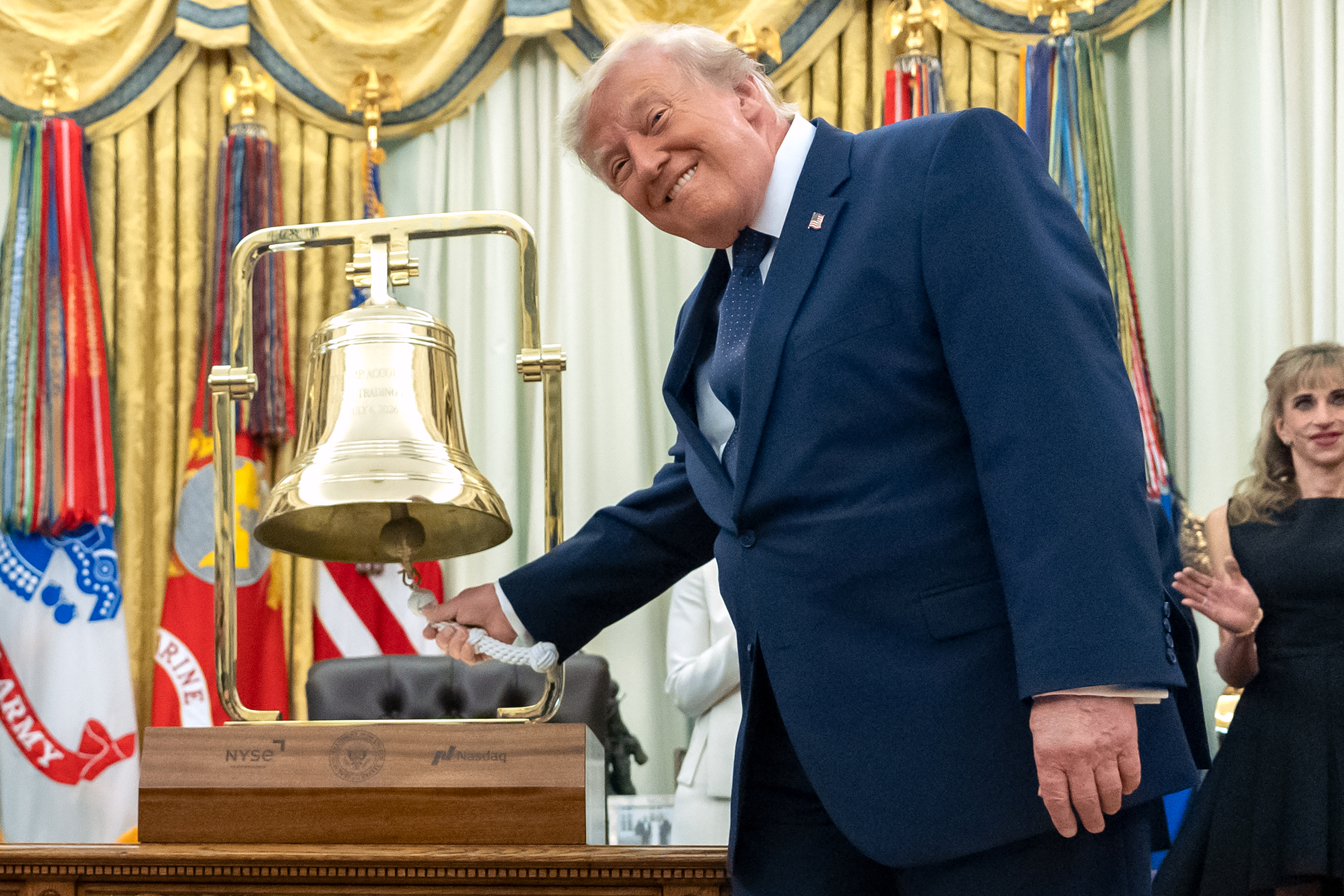
The Dow Jones Industrial Average ticked up 0.4 percent in early trading, a muted but telling signal that the financial world has chosen a path of grudging acceptance over panic. For a White House bracing for economic fallout, the quietude of the trading floor stands in stark contrast to the political storm gathering on the campaign trail.
This newfound market equilibrium, however, is less a vote of confidence in the policy than a recalibration of risk. Investors, having digested the initial chaos of the announcement, are now pricing in a reality where tariffs are a persistent, if unwelcome, feature of the economic landscape. The initial sell-off, which erased billions in market value, has given way to a technical stability, with major indices finding a floor as traders adjust their portfolios to account for higher input costs and reshuffled supply chains.
The calm is a strategic victory for the administration, which has staked its economic credibility on the notion that short-term pain will yield long-term industrial gains. By allowing the initial shock to pass without further intervention, the White House appears to have successfully navigated the most dangerous immediate threat to market confidence. Yet, this quietude masks a deeper fragility, one that is measured not in trading volumes but in consumer sentiment and voter anxiety.
A Political Calculus Diverges From the Trading Floor
While the financial sector has found its footing, the political landscape is proving far less stable. The same tariffs that investors have absorbed are translating into higher prices for everyday goods, from electronics to automobiles, a burden felt most acutely by middle-class households. This disconnect between the market’s complacency and the public’s pocketbook concerns presents a significant electoral liability for the president’s party, which is already facing a difficult midterm environment.
Strategists in both parties note that the backlash against tariffs has the potential to cost the White House dearly in November. The issue has galvanized opposition in key manufacturing states, where the promise of protected jobs is being weighed against the reality of increased costs for components and raw materials. Unlike the abstract movements of the S&P 500, these economic pressures are visceral, playing out at grocery stores and auto dealerships across the country.
The administration’s hope is that the market’s resilience will eventually translate into broader economic confidence, a narrative that could blunt the political damage. However, historical precedent suggests that investors often separate their portfolio strategies from their voting behavior. A stable stock market does little to soothe a voter who has just paid a 25 percent premium on a new washing machine, and the political memory of economic discomfort tends to linger far longer than any quarterly earnings report.
For now, the White House is enjoying a rare period of financial stability, a reprieve that allows it to claim that the economic sky has not fallen. But the quiet victory over markets is a hollow one if it cannot be replicated in the hearts and minds of the electorate. The true test of this policy will not be the closing price of the Dow, but the outcome of the ballot box, where the cost of tariffs is measured in votes, not points.