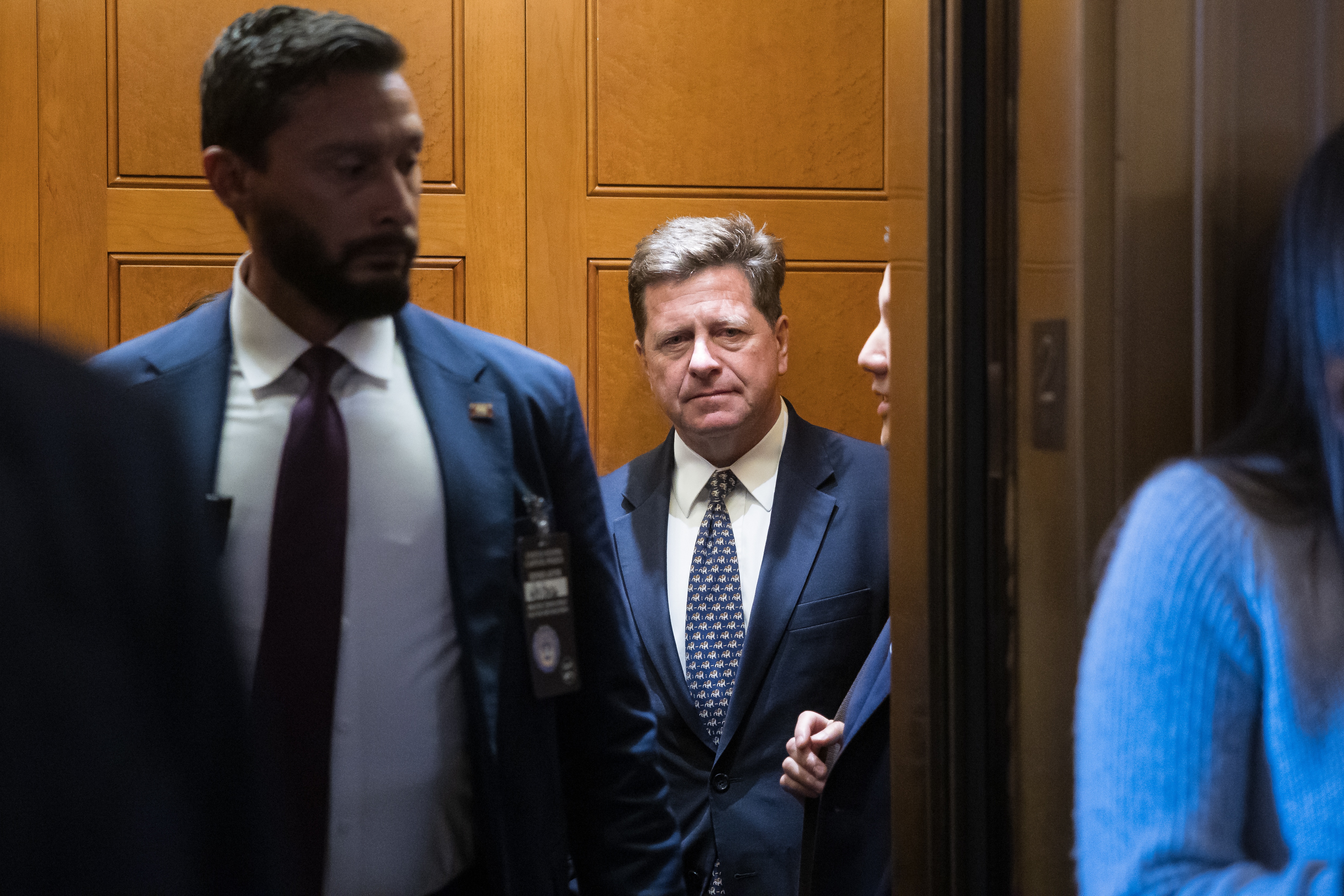
But the former Securities and Exchange Commission chairman, nominated to serve as the next director of the National Counterintelligence and Security Center, quickly found himself at the center of a broader reckoning over the power and direction of the nation’s spy agencies.
The hearing unfolded against a backdrop of growing bipartisan frustration with the Office of the Director of National Intelligence, the sprawling agency that oversees 18 intelligence components. Several committee members signaled that Clayton’s confirmation would serve as a proxy for deeper grievances about surveillance overreach, politicization, and the ODNI’s expanding footprint in domestic affairs.
Clayton, a corporate lawyer who led Wall Street’s top regulator under President Donald Trump, has never held a national security role. His supporters point to his experience managing complex regulatory systems and his reputation for measured decision making. But critics question whether a background in securities law adequately prepares him to oversee counterintelligence operations that involve foreign adversaries, covert sources, and classified surveillance programs.
Senators on both sides of the aisle pressed Clayton on the Foreign Intelligence Surveillance Act and the ODNI’s handling of controversial warrant applications. Several lawmakers expressed concern that the agency has become too opaque and too willing to collect data on American citizens without sufficient judicial oversight. Clayton responded by pledging to prioritize transparency and to ensure that intelligence activities remain within legal boundaries.
The hearing also touched on the ODNI’s role in election security. Clayton was asked directly about the agency’s efforts to counter foreign interference in the 2024 election cycle and whether the intelligence community had adequately shared threat information with state and local election officials. He said he would make information sharing a “top priority” if confirmed.
Democratic senators, in particular, raised alarms about the potential for political pressure to distort intelligence assessments. The ODNI has faced accusations of bending to White House influence in recent years, a charge that Clayton sought to defuse by vowing to maintain “strict independence” from partisan actors. He acknowledged that the agency’s credibility depends on public trust.
Republican members focused more on the ODNI’s internal management and its tendency to accumulate responsibilities without clear accountability. Several noted that the agency’s budget has swelled to more than $70 billion annually, yet oversight mechanisms remain fragmented. Clayton said he would conduct a review of the NCMC’s spending and operations within his first 90 days.
The confirmation vote is expected in the coming weeks. If approved, Clayton will inherit an agency still grappling with the fallout from the Russia investigation and a series of inspector general reports that found systemic failures in the FISA process. His testimony Thursday did little to resolve the fundamental question hanging over the hearing: whether a lawyer from the financial sector can restore faith in an intelligence apparatus that many lawmakers no longer trust.