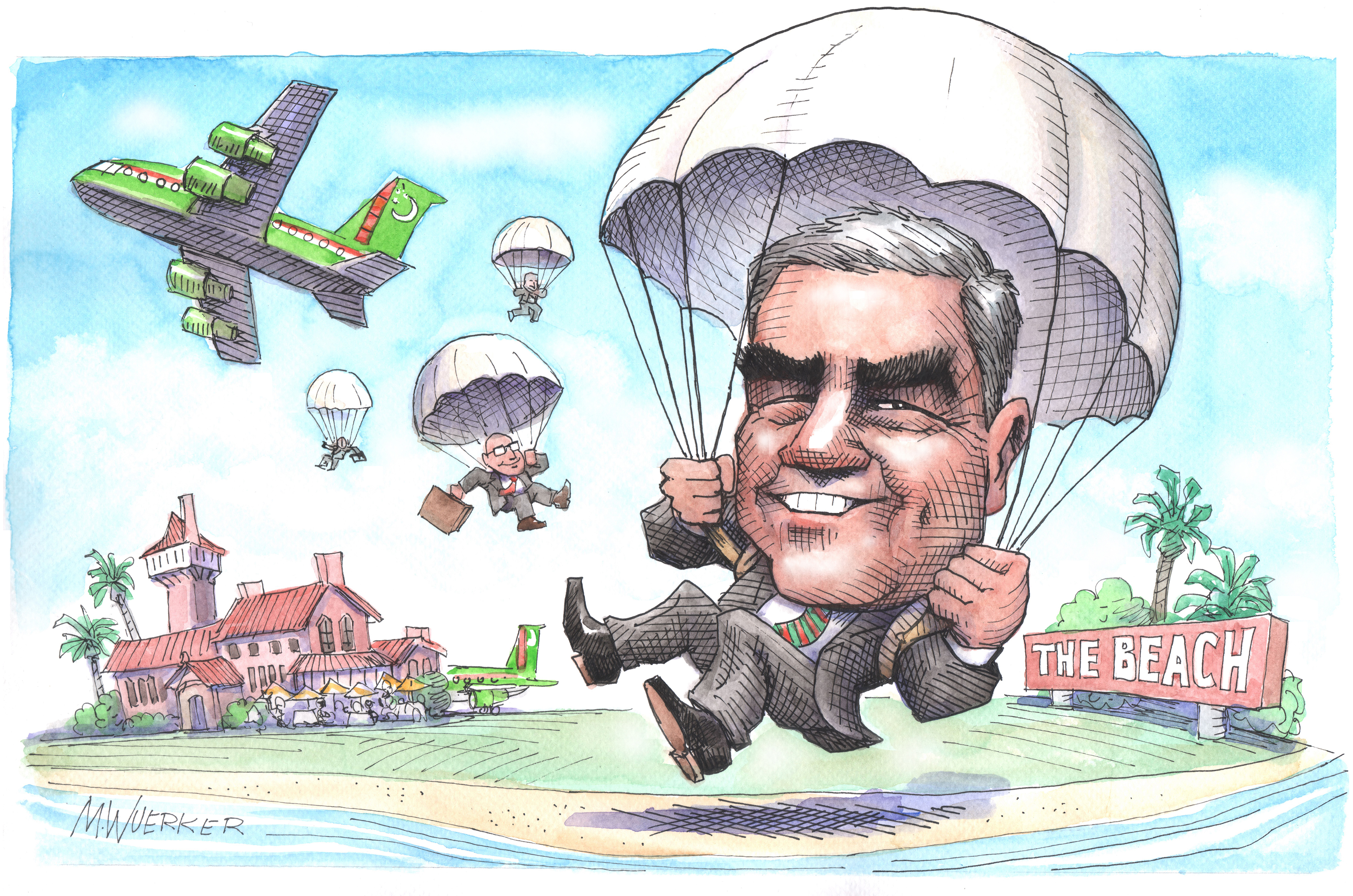
His chair sat empty as other world leaders smiled for the cameras. But behind the scenes, the leader of one of the world’s most isolated and eccentric regimes was conducting a quieter mission: securing access to American investment and technology for his country’s vast natural gas reserves.
Turkmenistan, a Central Asian nation of roughly six million people, is often described as a hermit kingdom. It is ruled by a family dynasty that has cultivated a bizarre personality cult, complete with marble statues, state-sponsored poetry, and a giant indoor amusement park in the capital, Ashgabat. Yet for all its eccentricities, the regime has long understood that its survival depends on selling its massive natural gas reserves. And that requires friends in Washington.
The timing of Berdimuhamedow’s visit was no accident. With the Trump administration signaling a renewed focus on energy dominance and a willingness to engage with authoritarian leaders, Ashgabat saw an opening. The Turkmen president’s agenda included meetings with U.S. energy executives and officials from the Export-Import Bank, according to people familiar with the planning. His absence from the ceremonial photo, aides later explained, was due to a scheduling conflict.
The real story, however, is not about a missed photo op. It is about how a regime that runs one of the most repressive states on earth is quietly positioning itself as a potential energy partner for the United States. Turkmenistan holds the world’s fourth-largest natural gas reserves, but it has struggled to export them beyond Russia and China. American technology and financing could unlock new pipelines and liquefied natural gas terminals.
A Strategic Courtship
Washington has long been wary of engaging with Ashgabat, citing human rights abuses and a lack of political freedoms. But the calculus appears to be shifting. For the Trump administration, energy security and countering Chinese influence in Central Asia have become priorities. Turkmenistan, for its part, has signaled a willingness to offer U.S. companies preferential access to its energy sector, a move that could reshape the region’s geopolitics.
Whether Berdimuhamedow achieved his goals remains unclear. No major deals were announced during his visit. But the fact that he was granted meetings at all represents a significant diplomatic win for a regime that is more accustomed to international isolation than engagement. The empty chair in the White House photo may have been a minor embarrassment. For Ashgabat, the real prize was the conversation that took place before the cameras ever clicked.