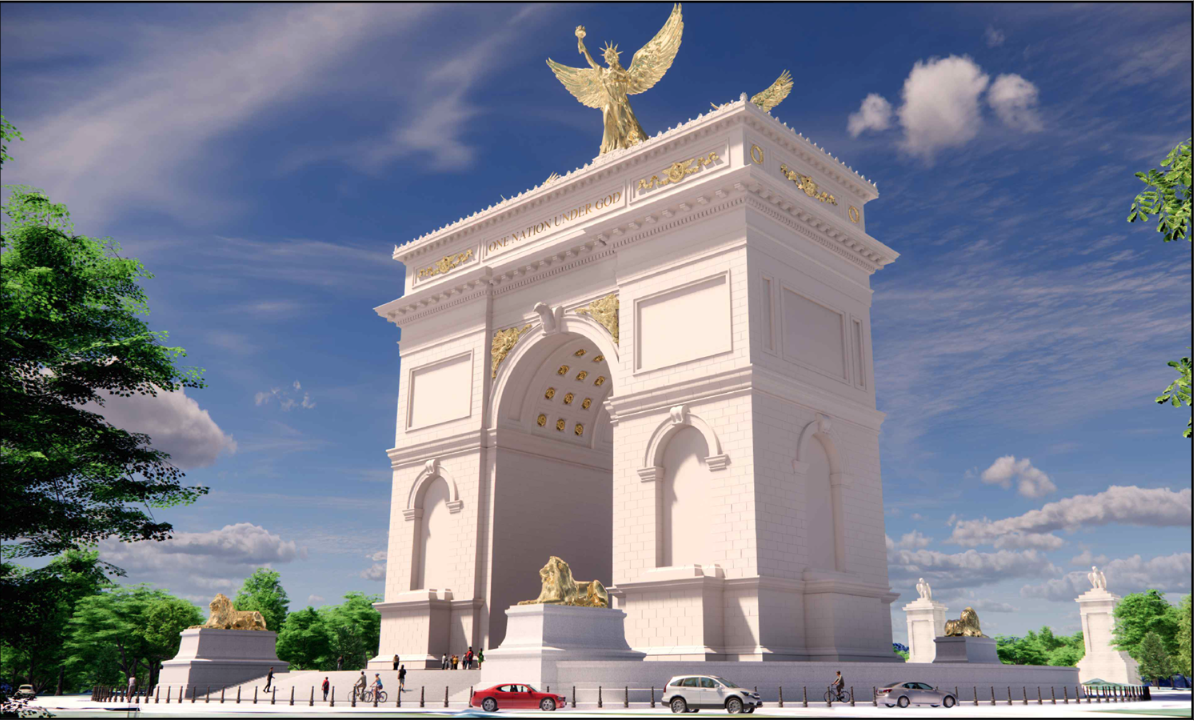
President Trump’s proposed monument, intended to honor American military victories, has already snarled a far more immediate battle over the future of one of the capital’s busiest traffic corridors.
The arch, which would stand nearly as tall as the Statue of Liberty, is planned for a site near the Lincoln Memorial. Lawmakers from both parties have raised alarms that the massive structure would require years of road closures and detours, choking off a key artery used by commuters and tourists alike. The project’s scale, they argue, would turn an already congested area into a permanent construction zone.
Opposition has been particularly sharp from Vietnam veterans, who see the arch as a direct affront to the nearby Vietnam Veterans Memorial. The proposed monument’s triumphalist design, they contend, clashes with the somber, reflective spirit of the black granite wall that bears the names of more than 58,000 fallen service members. “This is not about honoring service,” one veteran told reporters. “It is about ego.”
Critics have also questioned the cost and timeline of the project, which has not been formally budgeted by Congress. Preliminary estimates suggest that construction could drag on for several years, with traffic disruptions extending well beyond the initial phases. The National Park Service, which would oversee the site, has declined to comment on the specifics of the plan.
The president has defended the arch as a necessary symbol of national pride, framing it as a counterweight to what he calls an era of “weakness” in public monuments. In recent statements, he has dismissed the traffic concerns as exaggerated and accused opponents of lacking patriotism. Yet the political calculus remains uncertain, as even some Republican lawmakers have expressed reservations about the project’s location and logistics.
Historical Precedent and Practical Concerns
The debate echoes earlier controversies over major Washington monuments, from the Washington Monument’s lengthy construction to the World War II Memorial’s placement on the Mall. But the arch’s sheer height and its proposed site near the Lincoln Memorial Reflecting Pool have amplified the stakes. Urban planners warn that the project could permanently alter the sightlines and pedestrian flow of one of the most visited public spaces in the United States.
For now, the arch remains a proposal on paper, but the fight over its future is already reshaping the conversation around public memory and urban infrastructure. As hearings are expected to begin in the coming months, both supporters and detractors are bracing for a long and divisive battle over what kind of monument, if any, should rise above the nation’s capital.