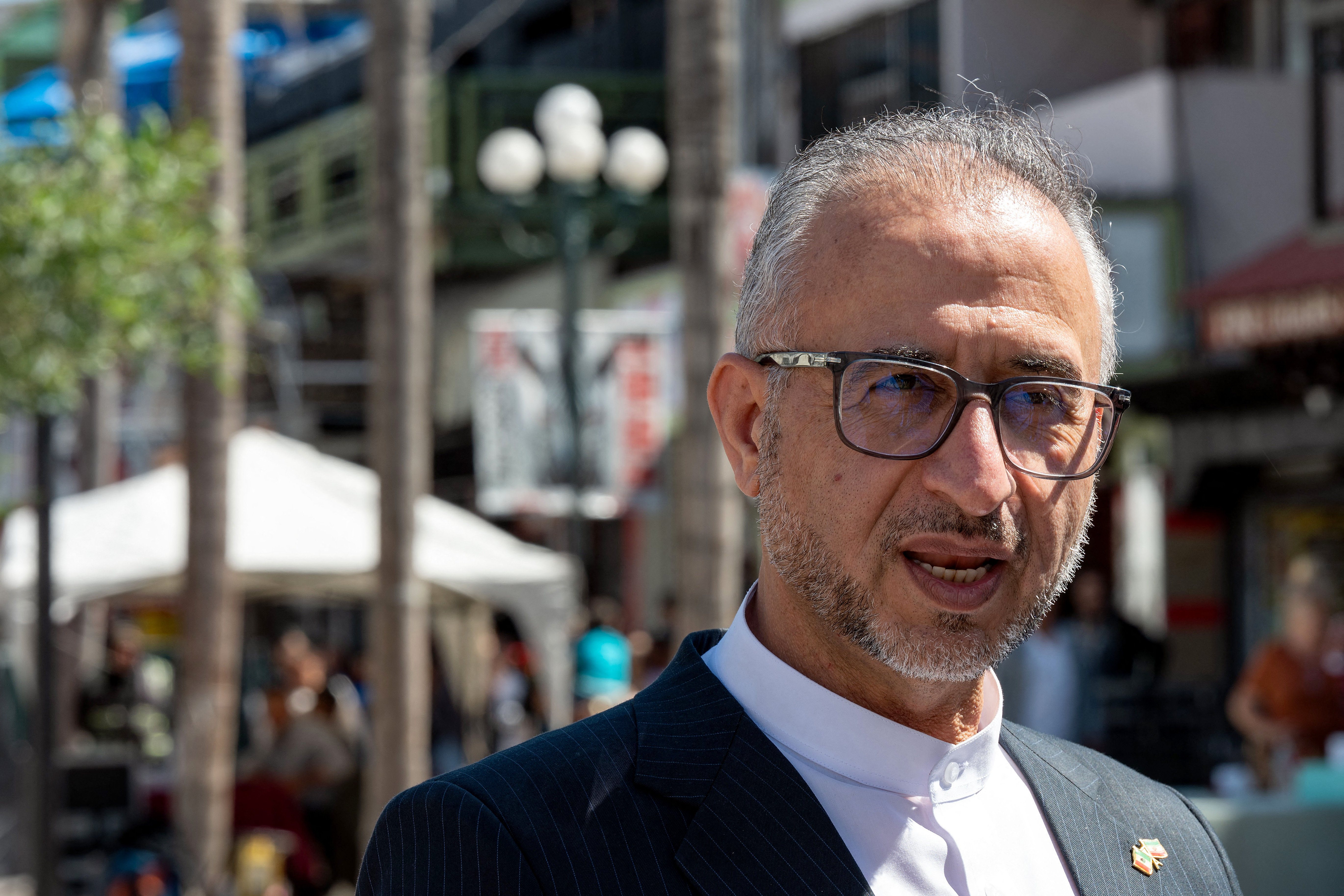
can be very good friends.” The remark, delivered as the Iranian national team prepared to face the United States in a politically charged group stage match, came at a moment when the two countries are quietly engaged in talks to de-escalate a long-running conflict over Iran’s nuclear program.
The ambassador, whose portfolio includes representing Tehran in the United States in the absence of formal diplomatic relations, said Iran’s decision to send its team to the World Cup on American territory should be interpreted as a deliberate gesture of goodwill. He framed the athletic competition as an opportunity for cultural exchange, noting that sports can open doors that politics keep closed.
His comments arrive amid a delicate diplomatic window. U.S. and Iranian officials have been holding indirect negotiations, mediated by Gulf states and European powers, aimed at reviving constraints on Tehran’s nuclear enrichment in exchange for sanctions relief. Those talks have made incremental progress, though both sides continue to trade accusations of bad faith.
The ambassador’s appearance in the United States itself was notable. Iran has no embassy in Washington, and senior Iranian officials rarely travel to the country. His presence for the World Cup matches, he suggested, was a tangible signal that Tehran is willing to engage with the American public even as its government remains officially hostile to U.S. policy in the Middle East.
World Cup stage becomes diplomatic platform
The match between Iran and the United States carried heavy symbolic weight. Fans on both sides waved flags and chanted slogans, and security was heightened around the stadium. Yet the ambassador’s tone was conciliatory. He described the encounter as a chance to demonstrate that ordinary Iranians and Americans share common ground, a message that stands in stark contrast to the rhetoric of Iranian state media, which routinely denounces the United States as the “Great Satan.”
Political analysts noted that the ambassador’s remarks were unlikely to have been made without approval from Tehran. The Islamic Republic’s leadership has long used anti-American sentiment as a pillar of its legitimacy, but the current government of President Masoud Pezeshkian has shown a greater willingness to explore diplomatic openings than his hardline predecessor. The World Cup, analysts said, offers a rare stage for signaling without the baggage of formal negotiations.
Whether the goodwill extends beyond the stadium remains uncertain. The two countries remain at odds over a range of issues, including Iran’s ballistic missile program, its support for proxy militias across the Middle East, and its treatment of domestic protesters. But for one afternoon, on a soccer pitch in the United States, an Iranian diplomat allowed himself to imagine a different relationship. “We can be very good friends,” he repeated, before turning back to the game.