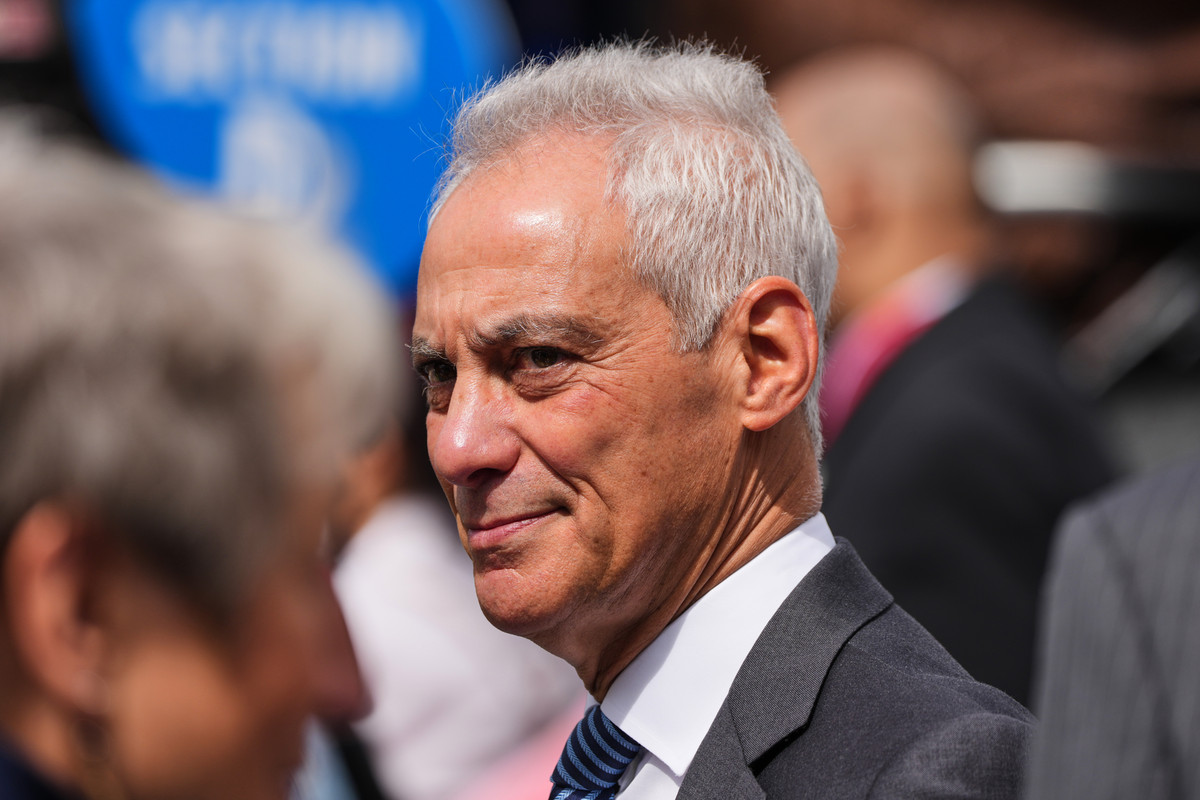
The former White House chief of staff, a son of a Jerusalem-born father who fought for Israeli independence, plans to tell an audience at Tel Aviv University that the era of absolute and unshakable American support for the Israeli government has come to an end.
The speech, a copy of which was shared by Emanuel’s team, argues that the war in Gaza and shifts in global opinion have produced seismic consequences. Going forward, Emanuel will say, American backing should be expressly contingent on a revived commitment to Palestinian sovereignty, a rejection of “Greater Israel” ambitions beyond official borders, and a security strategy that moves beyond brutal military force toward credible diplomatic planning. U.S. administrations of both parties, the draft contends, have spent too long “averting our eyes” from Israeli misjudgments.
The language is infused with disdain for Prime Minister Benjamin Netanyahu, a figure Emanuel has clashed with for decades. Netanyahu once described Emanuel in the Israeli press as a “self-hating Jew,” an insult Emanuel brings up explicitly in his prepared remarks. The personal history between the two men underscores how sharply the message cuts: this is not a critique from the political margins but from a veteran of the Democratic establishment who has served in the Clinton, Obama and Biden administrations.
Emanuel, now 66 and a 2028 presidential hopeful, did not craft this speech in isolation. He shared the draft with both former President Bill Clinton and former Secretary of State Hillary Clinton, among other prominent figures in the Democratic foreign policy establishment. The extensive consultations suggest that while the specific words are his own, the broader sentiment reflects a realignment underway inside the party. This is not the voice of the progressive left’s most outspoken critics of Israel, but of a mainstream figure with deep institutional ties.
From Democracy to Pariah
The speech traces a stark transformation in how Israel is perceived on the world stage. Once celebrated as a prosperous, high-tech democracy, the country is now more commonly viewed as a “pariah,” according to the draft. Emanuel’s argument is that Israeli policy, particularly under Netanyahu, has driven this shift, and that American policymakers can no longer pretend otherwise by offering reflexive support.
The timing of the address is significant. Emanuel is delivering it as the war in Gaza continues to reshape American politics and international alliances. His message is that the old bargain, in which Washington would fret privately about Israeli choices while backing them publicly, is no longer sustainable. The speech calls on Israelis to abandon dreams of asserting dominion beyond official borders and to reject a security strategy that emphasizes military force with scant attention to what comes next in Gaza or Iran.
For Democrats, the speech is a marker of how far the party has moved from the days of unquestioning solidarity with Israeli governments. Emanuel, a figure known for his sharp elbows and strategic calculation, is betting that the political center of gravity has shifted. Whether his message lands as a thunderclap or a warning shot, it signals that the debate over Israel is no longer confined to the party’s fringes but has reached its most seasoned operatives.