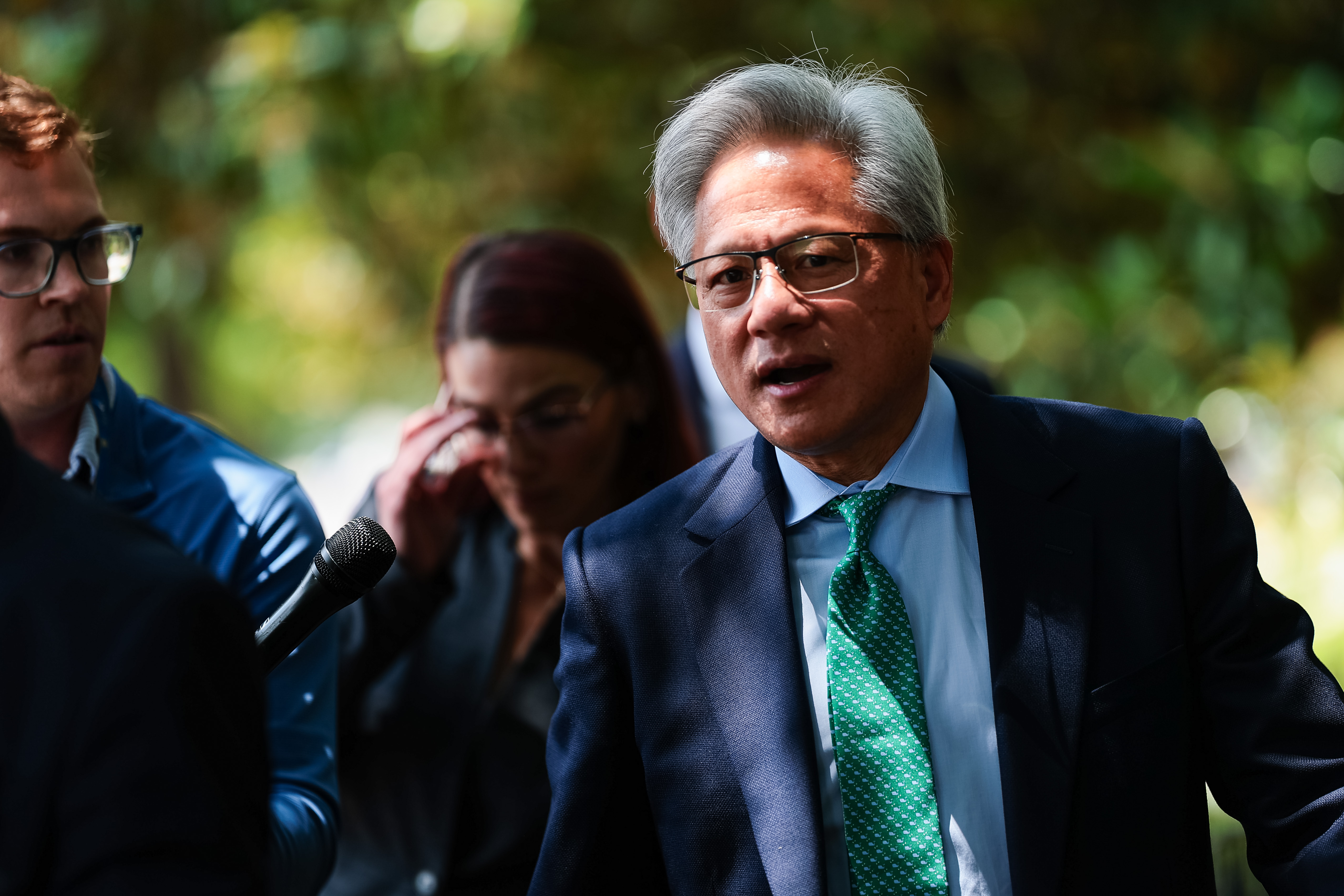
Huang’s lobbying blitz came as Washington debates how to oversee a technology that has rapidly reshaped industries from health care to defense.
Huang argued for a measured regulatory framework, warning that heavy-handed rules could stifle innovation and cede American leadership to global competitors. The visit placed the chipmaker at the center of a growing political struggle over AI governance, with some lawmakers pushing for strict guardrails and others advocating for a hands-off approach to encourage development.
The Nvidia CEO met with members of both parties in closed-door sessions, according to people familiar with the meetings. He emphasized that the United States should focus on fostering investment in AI infrastructure and research rather than imposing broad restrictions that could slow deployment. Nvidia’s chips are the dominant hardware powering most advanced AI systems, giving Huang significant sway in the policy debate.
Huang’s lobbying effort arrives as the Biden administration continues to craft executive actions on AI safety and as Congress considers multiple bills aimed at regulating the technology. Industry leaders have increasingly made their voices heard on the issue, with some arguing that existing laws are sufficient and others calling for new oversight to address risks like bias, misinformation, and national security threats.
Balancing Innovation and Oversight
During his meetings, Huang stressed that Nvidia supports responsible development but cautioned against sweeping mandates that could slow the pace of breakthroughs. He pointed to the company’s own safety protocols and voluntary commitments as evidence that the industry can self-regulate without heavy government intervention. Lawmakers pressed him on how to ensure AI systems are transparent and accountable without choking off economic growth.
The divide in Congress mirrors a broader split in the tech sector. Some companies and researchers have called for a moratorium on training the most powerful AI models until safety standards are established, while others, including Nvidia, argue that such a pause would cede ground to China and other nations racing to dominate the field. Huang’s position aligns with the latter camp, urging lawmakers to prioritize competitiveness.
No formal legislation emerged from Tuesday’s discussions, but aides said the meetings helped clarify the industry’s stance as committees prepare for hearings later this year. Huang’s direct engagement underscores the high stakes for Nvidia, which has seen its market valuation soar past $2 trillion on the back of AI demand and now faces the prospect of regulatory headwinds that could reshape its business.