inside Executive Branch, the private club founded by Donald Trump Jr., a pair of ring girls stepped into a miniature octagon as guests finished their caviar from an ice sculpture carved into the club’s logo. The crowd pressed forward when Ja Rule emerged, bouncing around the ring with a microphone in one hand and a bottle in the other, calling for party people to come back to 1998 and 1999. Many of the Republican elite mingling there that night were too young to remember the songs when they first topped the charts, but that was beside the point.
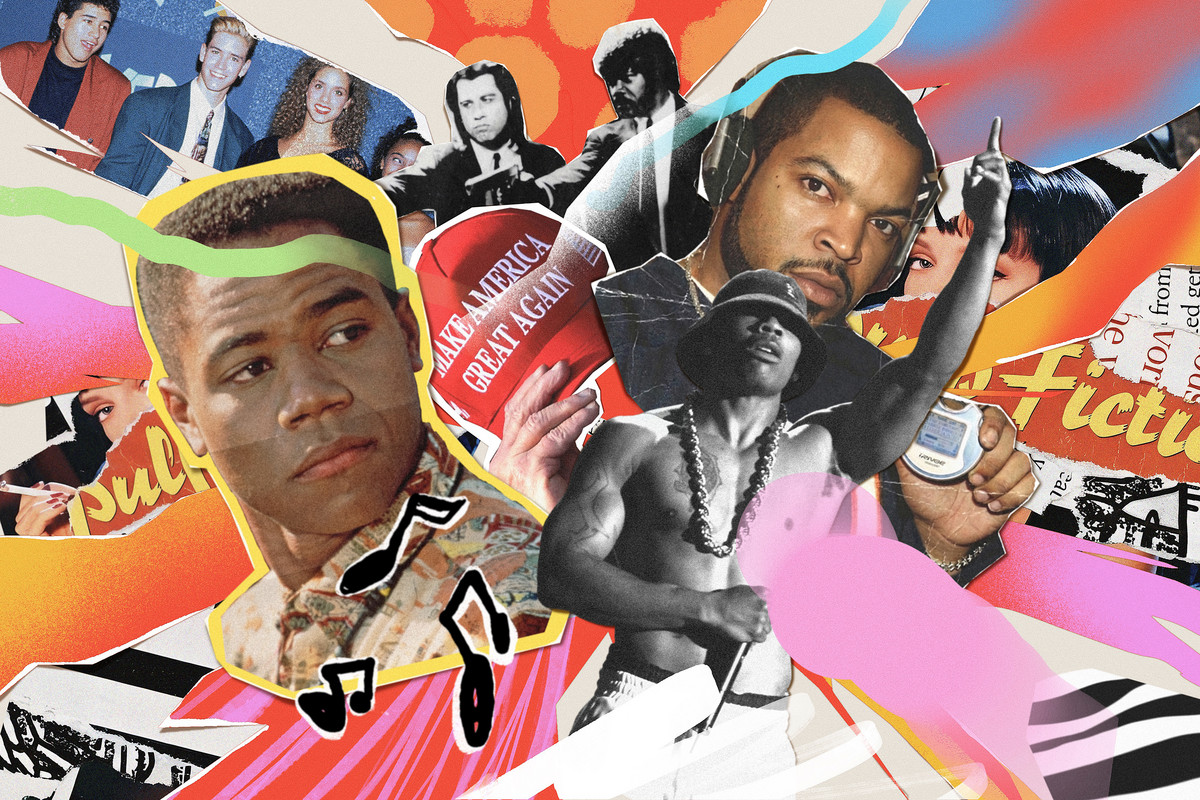
To Washington’s new Republican power structure, the 1990s have become more than a soundtrack. The era’s nostalgia, swagger and anti-establishment edge now serve as the house style for the generation running Donald Trump’s Washington. Omeed Malik, a club co-founder, has been candid about curating a headliner list of Busta Rhymes, Akon, Timbaland and Nelly, all artists who dominated the charts during his college years. Marco Rubio has dropped Cypress Hill in the White House briefing room. Kash Patel made an FBI recruitment video that recreated a 1994 Beastie Boys music video nearly shot for shot. JD Vance credits the film Boyz n the Hood with shaping his entire political worldview.
These are Gen Xers and millennials, and their cultural references reflect the media they grew up on. But the nostalgia runs deeper than generational reflex. It carries a political argument that the 1990s represented the last time America got it right. In this telling, the Cold War had ended, the Soviet Union had collapsed and by the decade’s close the United States was running a budget surplus for the first time in a generation. China had not yet joined the World Trade Organization, a move many Republicans blame for hollowing out American manufacturing.
From Defiance to Governance
The 90s revival also reflects a deeper shift in how this generation of Republicans approaches power. They grew up on the rebellious culture of that decade, discarding its politics while keeping its defiance. The result is a governing style that borrows the swagger of an era defined by anti-establishment figures in music and film, applied now to running the federal government. At Executive Branch, the club’s most recognizable patrons were cordoned off in a side room fashioned as a library, a deliberate separation from the crowd that mirrored the insider-outsider dynamic these officials have cultivated.
The political implications are significant for a party that has spent years arguing that America has lost its way. If the 90s represent the last time the country got it right, then the decades since have been a story of decline that Trump and his allies were elected to reverse. The cultural references serve as shorthand for a worldview in which American strength, economic independence and cultural confidence have all eroded, and must be restored.
Whether the crowd at Executive Branch was old enough to remember Ja Rule’s 1998 hit “Can I Get A…” or his 1999 debut “Holla Holla” was irrelevant. The music, the attitude and the era itself have become a political statement. For the Republicans now running Washington, the 90s are not just a decade they remember. They are a benchmark for what America should be again.