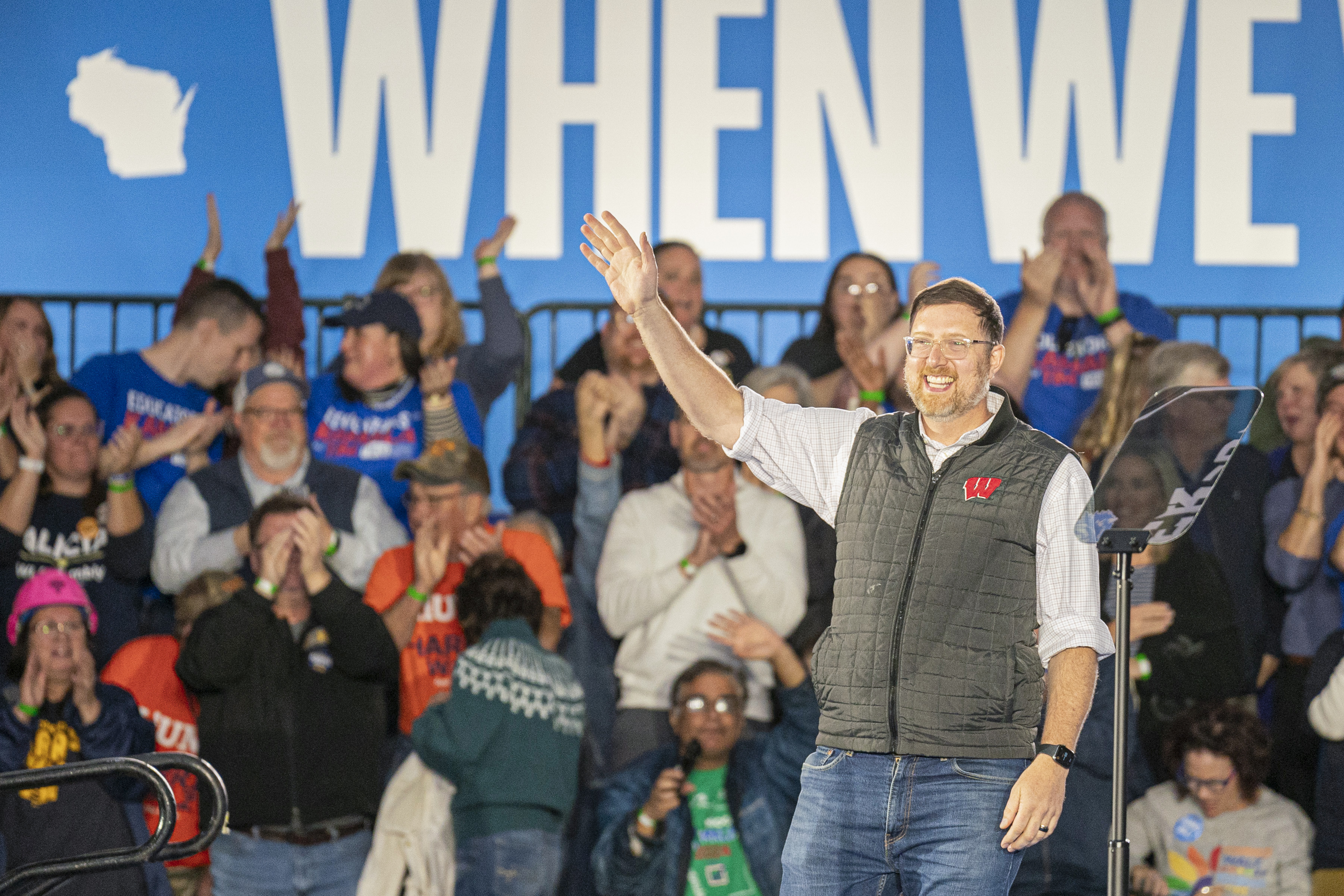
The road back to power, he contends, does not begin in the Oval Office or on the floor of the U.S. Capitol. It starts in the cramped committee rooms of statehouses in Madison, Lansing, and Phoenix.
Wikler, who has spent years studying the mechanics of Democratic losses and wins, believes the party has become addicted to nationalized messaging and presidential-level fundraising. This fixation, he argues, has left Democrats blind to the slow-building Republican dominance in state legislatures, where redistricting power and policy agendas are forged.
The numbers support his warning. Republicans currently control 57 state legislative chambers to the Democrats’ 41, a disparity that has allowed the GOP to cement gerrymandered maps and pass laws on abortion, voting access, and education that Democrats struggle to challenge at the federal level. Wikler sees this as a structural crisis, not a temporary setback.
“The party needs to think smaller to win bigger,” Wikler has told allies, urging a recalibration of resources toward down-ballot races that often receive a fraction of the attention and money lavished on presidential campaigns. He points to state-level wins in Michigan and Minnesota as proof that sustained, localized organizing can flip chambers and produce tangible policy results.
Lessons From the Ground
In Michigan, Democrats broke years of Republican control over the state legislature in 2022, a victory that allowed them to repeal a right-to-work law and expand voting access. In Minnesota, a one-seat state Senate majority enabled the party to pass protections for abortion rights and free school meals. These victories, Wikler argues, were not the product of national messaging but of years of patient, district-level investment.
Despite these successes, the broader Democratic ecosystem remains reluctant to shift its focus. Major donors and national committees continue to pour hundreds of millions into presidential and Senate races, while state legislative candidates often struggle to fund basic field operations. Wikler warns that this imbalance is self-defeating, as state legislatures will determine the boundaries of congressional districts for the next decade after the 2030 census.
The challenge for Democrats is one of scale and patience. Building a durable state-level infrastructure requires years of work without the glamour of a national campaign. But Wikler’s argument is gaining traction among a growing number of operatives who see the party’s future not in the hands of a single presidential candidate, but in the collective power of a thousand local races, won one precinct at a time.