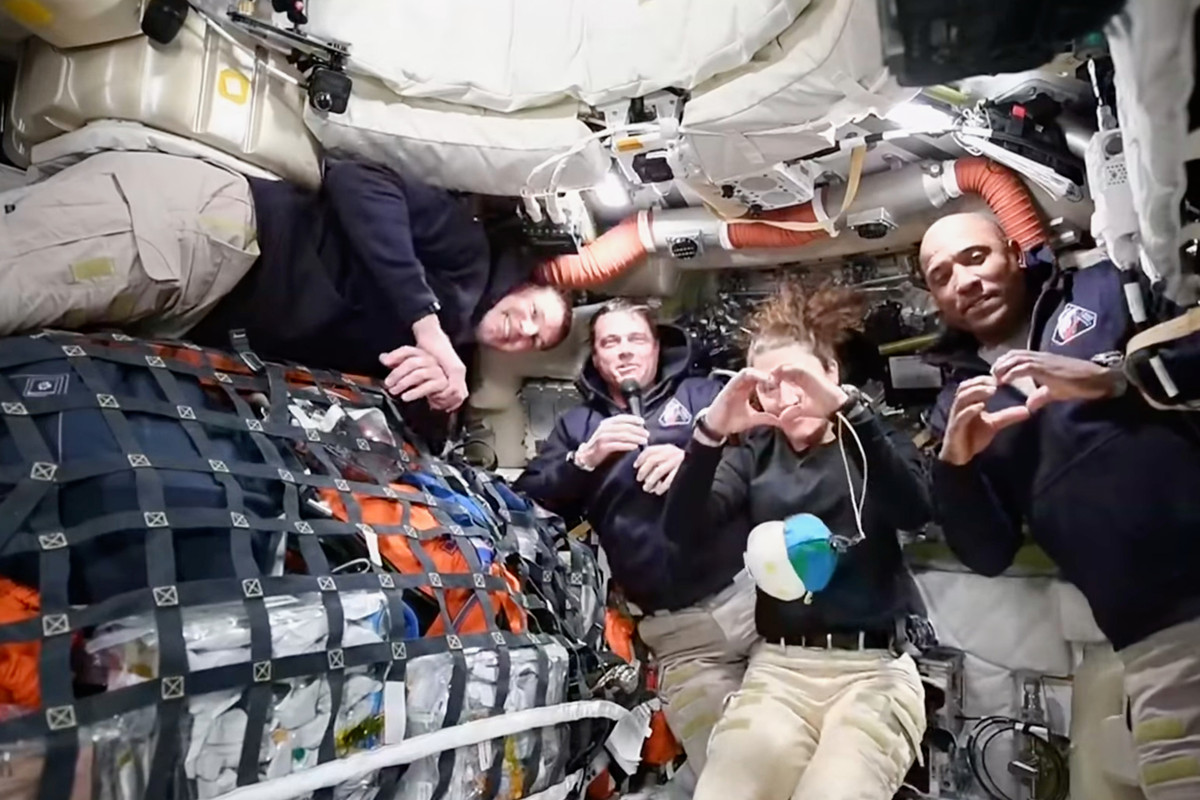
The four astronauts aboard NASA’s Orion capsule watched their home world shrink in the windows Thursday night after a critical engine burn set them on a deep-space path.
The maneuver, known as translunar ignition, occurred 25 hours after the mission’s launch from Florida. It marks a definitive end to the era since Apollo 17 in 1972 where human spaceflight has been confined to orbits close to Earth. “Human beings have left Earth orbit,” announced NASA’s Lori Glaze following the successful engine firing.
The crew, consisting of Americans Commander Reid Wiseman, pilot Victor Glover, and mission specialist Christina Koch, alongside Canadian astronaut Jeremy Hansen, spent their first day in space conducting systems checks close to home. NASA officials stated this cautious approach was to thoroughly verify the capsule’s life-support systems before committing to the lunar journey.
Canadian Space Agency astronaut Jeremy Hansen described the crew pressing their faces against the windows to view the receding Earth, a sight he called “phenomenal.” He dedicated the moment to public ambition, saying, “it’s your hopes for the future that carry us now on this journey around the moon.”
A Path Toward a Lunar Future
This test flight, designated Artemis II, is a crucial precursor to NASA’s broader ambitions of establishing a sustained human presence on the lunar surface. The mission serves as the first crewed validation of the Orion spacecraft and its life-support systems on a journey to the moon and back.
The astronauts are not scheduled to land. Instead, their capsule will perform a lunar fly-around early next week, using the moon’s gravity to slingshot them back toward Earth. In the process, the crew is expected to break the record for the farthest distance humans have traveled from our planet, set by the Apollo 13 mission in 1970.
Following the lunar flyby, the Orion spacecraft will begin its high-speed return. The mission is scheduled to conclude with a splashdown in the Pacific Ocean on April 10, where the astronauts may also set a new record for the fastest reentry speed ever experienced by a human crew.
The success of this initial crewed voyage is foundational for NASA’s Artemis program, which aims to return astronauts to the lunar surface later this decade and eventually build a base for long-term lunar exploration.