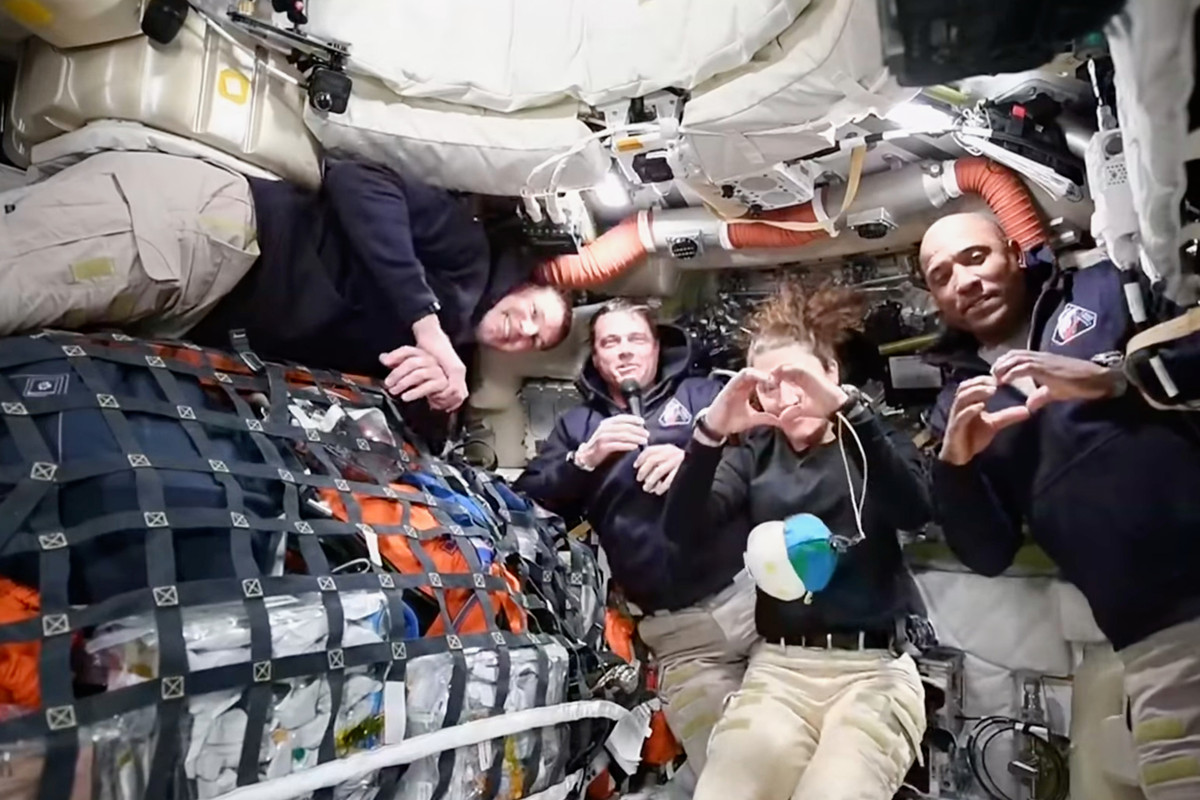
The crew of NASA's Artemis II mission, now more than halfway to the moon, is on course to become the first humans in over half a century to visit its vicinity.
The three Americans and one Canadian are aiming to break a record set in 1970 by the Apollo 13 mission. They will travel more than 252,000 miles from Earth before swinging around the far side of the moon and beginning their return journey, without entering lunar orbit or landing.
Their destination is Monday's lunar flyby, where they will photograph the moon's mysterious far side. This mission is the first crewed flight to the moon since Apollo 17 in 1972, marking a revival of NASA's deep space ambitions after decades.
The Canadian Space Agency highlighted the international significance of the flight on Saturday. Astronaut Jeremy Hansen is the first non-U.S. citizen to travel to the moon. "Today he is making history for Canada," said agency president Lisa Campbell during a live televised linkup with the crew.
Hansen, alongside commander Reid Wiseman, pilot Victor Glover, and mission specialist Christina Koch, described witnessing "extraordinary" views from the Orion capsule. Koch and Glover are, respectively, the first female and first Black astronauts on a lunar mission.
A Stepping Stone to the Surface
The nearly 10-day mission, scheduled to end with a Pacific splashdown on April 10, is a critical test of NASA's hardware and operations. It serves as the essential precursor to more complex lunar missions planned for the coming years.
Artemis II is the first step in NASA's plan to establish a sustainable human presence on the moon. The space agency is targeting a crewed landing near the lunar south pole in 2028, which would be the first human footsteps on the lunar surface since the Apollo era.