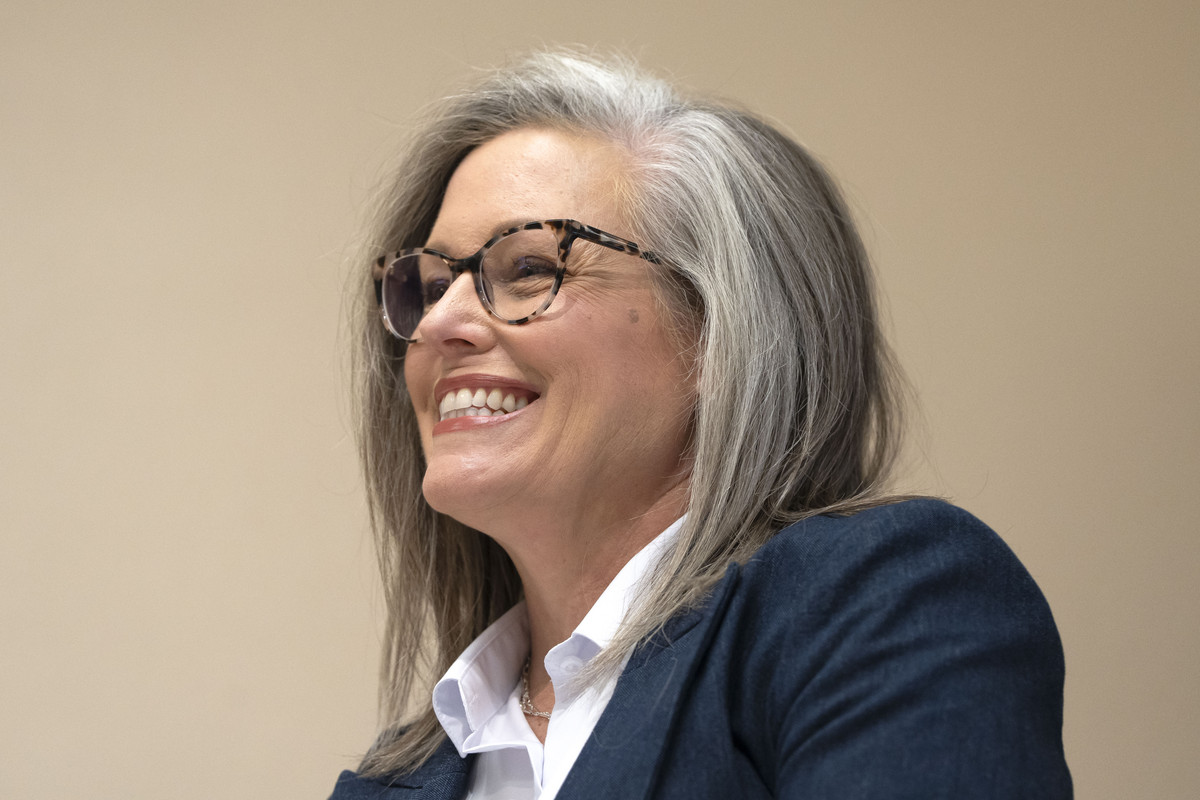
While many Democratic governors are criticizing President Donald Trump over the economic fallout from the U.S.-Israel war with Iran, Hobbs is taking a different tack. She is publicly emphasizing Arizona defense contractors’ crucial work on the very weapons deployed in the conflict, framing it as a strategic argument for federal intervention in the West’s most contentious water war. Her goal is to persuade the president to blunt deep, impending cuts to Arizona’s share of the Colorado River.
“This administration’s goals rely on Arizona receiving our fair share of Colorado River water,” Hobbs told the U.S. Chamber of Commerce audience. “It relies on Arizona-made missiles, Arizona-made semiconductors and Arizona-grown agriculture.” The argument links national security directly to the state’s water security, a calculated move by a swing-state Democrat facing a tough reelection battle this year.
Observers see the approach as a savvy blend of practical policy and political maneuvering. By focusing on the Colorado River’s importance to the defense industrial base, Hobbs seeks to court Trump on a vital issue for Arizona while avoiding the partisan minefield of the national debate over the Iran war. The state is facing severe mandatory reductions from the overtaxed river, which feeds its cities, farms, and booming semiconductor industry.
The strategy appears to be building a wide coalition of support within Arizona itself. A phalanx of state business and political leaders has rallied behind Hobbs’s pitch, recognizing the acute economic threat posed by water shortages. Stan Barnes, a former Republican state senator and current GOP consultant, called the linkage of water, national defense, and Arizona’s economy “a wonderfully crafted political and campaign tool.”
“The No. 1 objective is to signal to the broad electorate that she’s doing something about the Colorado River situation,” Barnes said. “Everyone in Arizona is on the same team on that subject.” For Hobbs, the immediate practical upside is clear: applying maximum leverage on a president who holds significant sway over federal water policy to secure a more favorable outcome for her parched state.