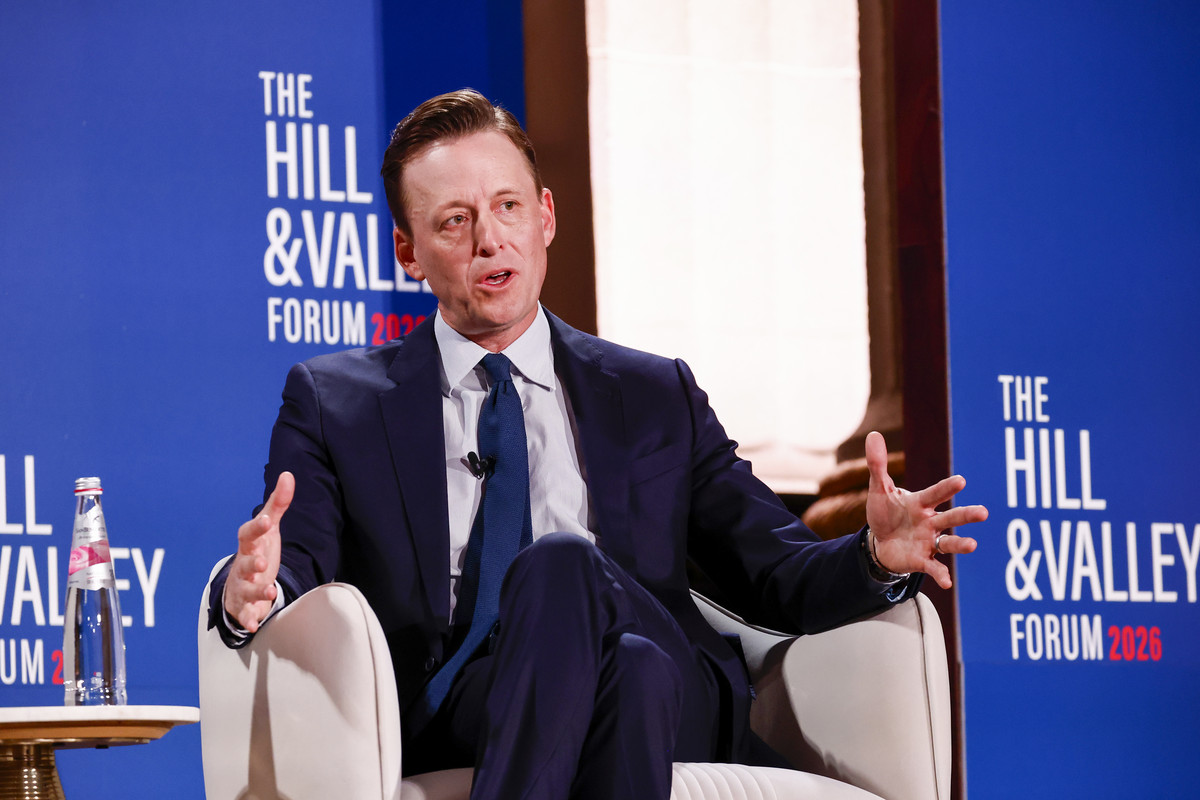
But even as he works to shape a potential executive order on AI security, a growing number of current U.S. officials and industry representatives say they are not confident he is the right person for the job.
Four current U.S. officials and five industry representatives who spoke to The Chronicle Page said they fear Cairncross is not moving with sufficient urgency and lacks the technical expertise required to lead the federal response to hyper-advanced AI models. These systems have reached a level of coding proficiency that surpasses all but the most skilled human programmers, raising alarms about their potential use in cyberattacks against critical infrastructure.
The concerns extend beyond the cyber director’s office. Jamie Dimon, the chief executive of JP Morgan Chase, has relayed to Treasury Secretary Scott Bessent his worries about the speed of the government’s response to major potential risks posed by new forms of AI, according to two current U.S. officials and two industry representatives with knowledge of the exchange. Dimon emphasized the need for stronger coordination with the private sector to protect the nation’s financial systems and other critical infrastructure.
Cairncross has defended his approach by pointing to a flurry of recent activity. Over the past month, he has convened a series of calls and in-person meetings with corporate leaders, security experts and administration officials to discuss AI security concerns and potential executive action to manage the rollout of new AI models. He previously met with Bessent, White House chief of staff Susie Wiles and Anthropic CEO Dario Amodei at the White House to discuss what participants described as “advancing innovation and ensuring safety” in scaling up these powerful systems responsibly.
Questions of Expertise and Urgency
Critics within the administration argue that the pace of these efforts does not match the speed at which AI capabilities are advancing. Multiple current officials, speaking on condition of anonymity to discuss sensitive policy deliberations, said they are unsure whether Cairncross possesses the technical background needed to oversee a response to a threat that is evolving faster than the government’s ability to understand it. The concern, they said, is that the national cyber director’s office may be falling behind at a moment when the private sector is racing ahead.
Industry representatives echoed those worries, noting that the government has yet to establish clear guidelines for how AI companies should test their most advanced models for security vulnerabilities before releasing them to the public. Without a coordinated federal strategy, they said, the burden of managing catastrophic risks is falling disproportionately on individual companies that have limited visibility into one another’s work or into potential threats from state-sponsored hackers.
The White House has not publicly addressed the internal doubts about Cairncross’s leadership. A spokesperson for the National Cyber Director’s office declined to comment on the record for this article. But the emerging tensions highlight a broader challenge facing the Trump administration as it tries to balance the promise of artificial intelligence with the national security risks posed by systems that can write sophisticated computer code, identify software vulnerabilities and potentially automate cyberattacks at a scale previously unimaginable.