The mandate requiring his stores to transition to climate-friendly coolants, a rule set to take effect next year, had been postponed indefinitely. For a moment, he said, he simply stared at the screen.
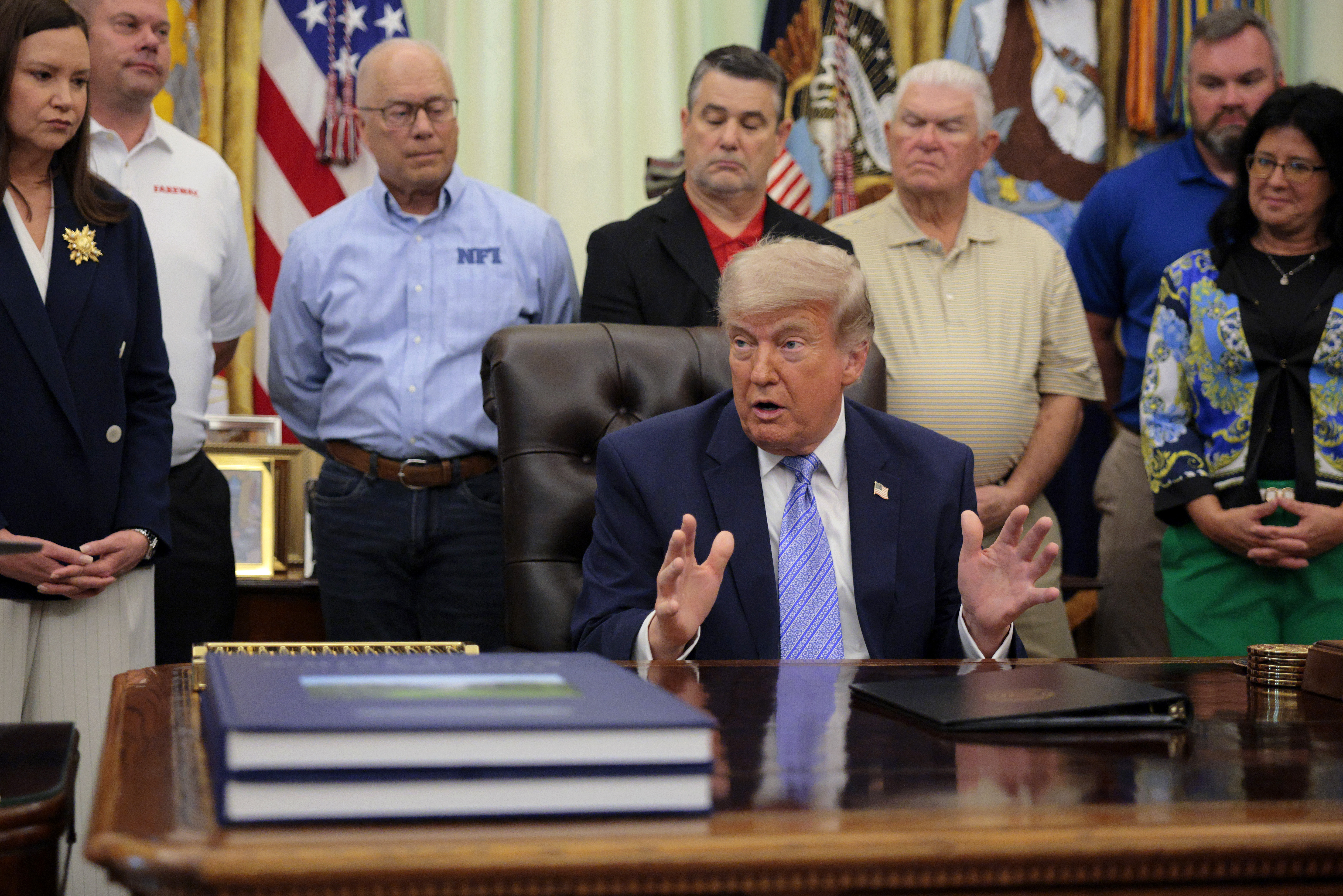
The decision, announced by the White House on Wednesday, delays a key piece of the administration’s environmental agenda. The rule, originally adopted under the previous administration, would have forced thousands of supermarkets and convenience stores to replace older hydrofluorocarbon-based systems with newer, less potent greenhouse gas alternatives. The president framed the move as a direct response to rising food prices, arguing that compliance costs would have been passed on to shoppers already struggling with inflation.
“This is about putting American families first,” the president said in a brief statement. He did not specify a new timeline for the regulation, leaving its future uncertain. Environmental advocates immediately condemned the decision, warning it undermines the United States’ commitments under the global Kigali Amendment, an international treaty designed to phase down HFCs, which are thousands of times more potent than carbon dioxide at trapping heat.
The delayed mandate is part of a broader pattern. Since taking office, the president has paused or rolled back several climate-focused rules, including emissions limits for power plants and fuel economy standards for automobiles. Each time, the administration has cited economic pressures on households as justification. Critics argue the moves are a political calculation aimed at blunting attacks from opponents who claim environmental regulations drive up costs.
Grocery Industry Split on Impact
The grocery industry itself has been divided over the rule. Large national chains, many of which had already begun transitioning their refrigeration systems, expressed disappointment with the delay, arguing it creates regulatory uncertainty. Smaller independent grocers, however, welcomed the reprieve. The National Grocers Association, which represents independent operators, estimated that compliance could have cost some stores upwards of $200,000 in upfront expenses, a burden many said they could not absorb without raising prices.
“For a family-owned store in a small town, that kind of cost is existential,” said a trade group spokesperson. “This gives them breathing room.” The decision is likely to be popular in rural and suburban districts where independent grocers are a staple of local economies. But the environmental cost is significant. The Environmental Protection Agency had estimated that the full implementation of the rule would prevent the equivalent of nearly 100 million metric tons of carbon dioxide emissions by 2050, roughly the annual emissions of 21 million cars.
The president’s action does not kill the regulation outright, but it leaves it in a regulatory limbo. Without a new deadline, enforcement is effectively suspended. International partners, including the European Union and Canada, have expressed concern that the United States is backsliding on its climate pledges. The White House has not indicated whether it intends to renegotiate the rule or simply let it expire.