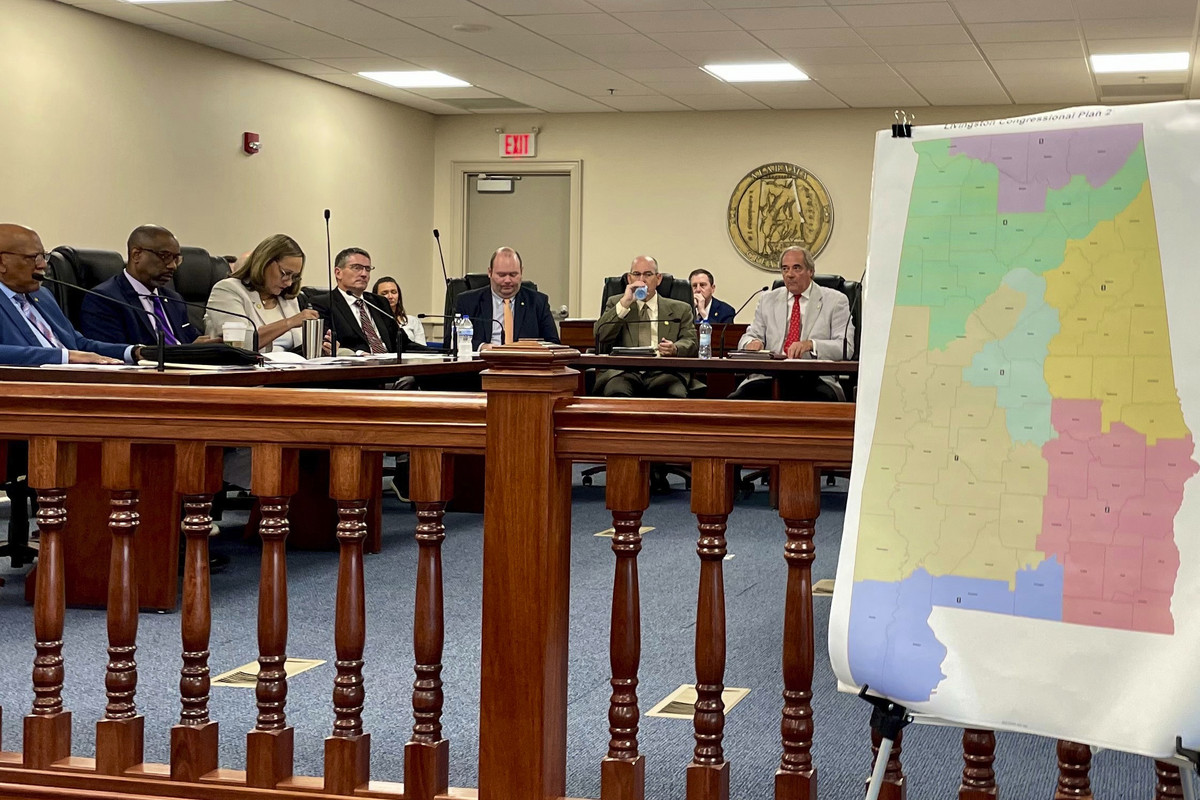
The ruling prevents the state from reverting to a map with only one Democratic-leaning district, instead requiring Alabama to use a plan that creates two majority Black, blue-leaning seats.
The decision stems from a long-running legal battle that reached the Supreme Court earlier this year. After the high court issued a Voting Rights Act ruling that Alabama Republicans believed opened the door for their preferred map, the state moved to scrap a court-ordered plan and revive a 2023 version that had previously been blocked. But the panel, unconvinced by the state’s urgency, wrote that it could not “require Alabamians to cast their votes in the 2026 elections under a districting plan tainted by intentional race-based discrimination.”
Republicans swiftly announced plans to appeal the ruling back to the Supreme Court. Alabama Attorney General Steve Marshall expressed confidence in a swift reversal, stating, “Know this, in my mind, it is not a matter of whether we win this case, only when.” The state’s legal team pointed to a prior Supreme Court decision that overturned an earlier ruling from the same three-judge panel as grounds for optimism.
The timing of the ruling adds further complexity to Alabama’s election calendar. The state held some primary contests last week, but Governor Kay Ivey delayed primaries for the 1st, 2nd, 6th and 7th congressional districts until August 11 to allow for a new map. Tuesday’s order now forces the state to proceed with the map containing two majority Black districts, a configuration that could reshape the political landscape in a deeply Republican state.
A pattern of legal rebukes
The panel’s decision came after weeks of public protest over redistricting in Alabama, with prominent Democratic figures traveling to Montgomery to rally in support of voting rights. In their lengthy ruling, the judges rejected Republican arguments that the 2023 map was necessary under the tight election timeline. “There is no convincing evidence that it is necessary for us to allow Alabama to pivot to the 2023 Plan in the middle of an election, and substantial evidence that it is not,” they wrote.
The Supreme Court earlier this month allowed Alabama to proceed with redistricting, kicking the process back to the lower court. That move gave state Republicans a brief window to push for the 2023 map, but Tuesday’s ruling closed that door. The case now returns to the high court, where the justices will decide whether to intervene in a dispute that has become a flashpoint in the national debate over racial gerrymandering and voting rights.
For now, Alabama must prepare for the August primaries under a map that creates two districts where Black voters, who make up roughly 27 percent of the state’s population, have a realistic opportunity to elect candidates of their choice. The outcome could determine whether Republicans maintain their current House majority or Democrats gain a foothold in a state where they have struggled to compete in recent cycles.