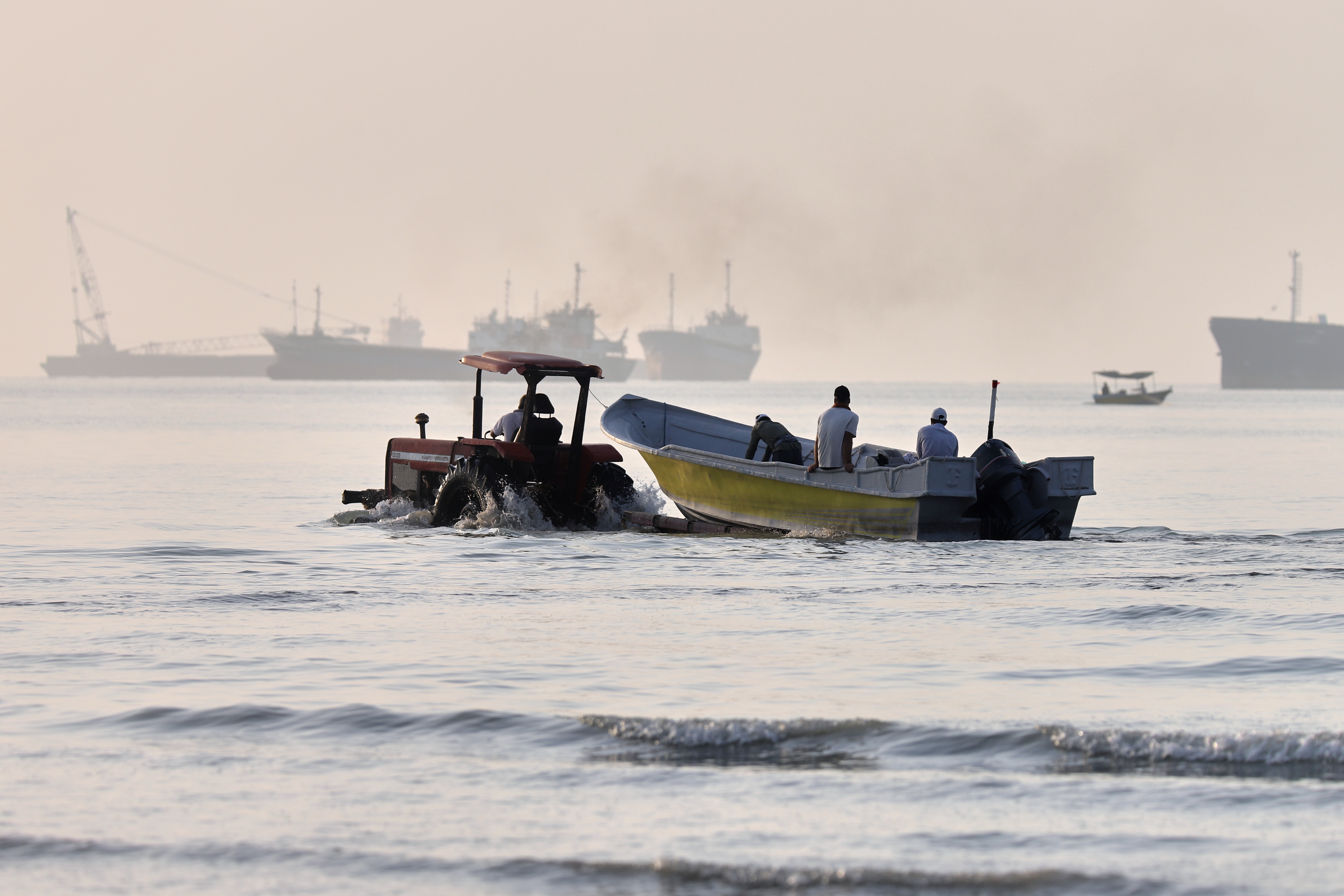
No other vessels were approaching. For the third consecutive day, the crew had received orders to hold position outside the strait rather than proceed toward loading terminals in the Persian Gulf.
The hesitation among commercial shippers comes despite a direct appeal from former President Donald Trump, who has urged tanker operators to resume normal transits through the strategic waterway. In a social media post last Tuesday, Trump claimed that a recently announced peace agreement between regional powers had made the strait safe for shipping and that any reluctance to sail amounted to “cowardice.”
Vice President JD Vance echoed that message during a press briefing on Thursday, stating that vessel traffic through the Strait of Hormuz had already increased since the deal was made public. “We are seeing tankers moving again,” Vance said. “The message is getting through.” But industry data reviewed by The Chronicle Page shows that actual transits remain well below pre-crisis levels, with several major shipping firms still routing their vessels around the Arabian Peninsula via the longer Cape of Good Hope passage.
Industry Groups Push Back
Leading maritime associations have urged their members to exercise caution. The International Chamber of Shipping and the BIMCO trade organization both issued advisories this week recommending that vessels obtain independent security assessments before entering the strait. “We welcome any diplomatic progress, but the risk profile has not changed overnight,” said a spokesperson for BIMCO. The groups noted that insurance premiums for transits through the region remain elevated and that several war risk underwriters have not yet revised their exclusion zones.
The Strait of Hormuz handles roughly one-fifth of the world’s oil supply, making its security a matter of global economic stability. During the height of tensions last year, attacks on commercial vessels and the seizure of tankers by Iranian naval forces led to a sharp drop in traffic. While the new peace deal has reduced the immediate threat of state-sponsored harassment, analysts point out that non-state actors in the region have not formally agreed to any ceasefire and retain the capability to target shipping with mines or small boats.
For now, the gap between political rhetoric and operational reality remains wide. The M/V Crimson Tide received orders late Friday to divert to a port in Oman for refueling, its crew told to await further guidance. On the bridge, the captain noted that the radar screen still showed an empty strait.