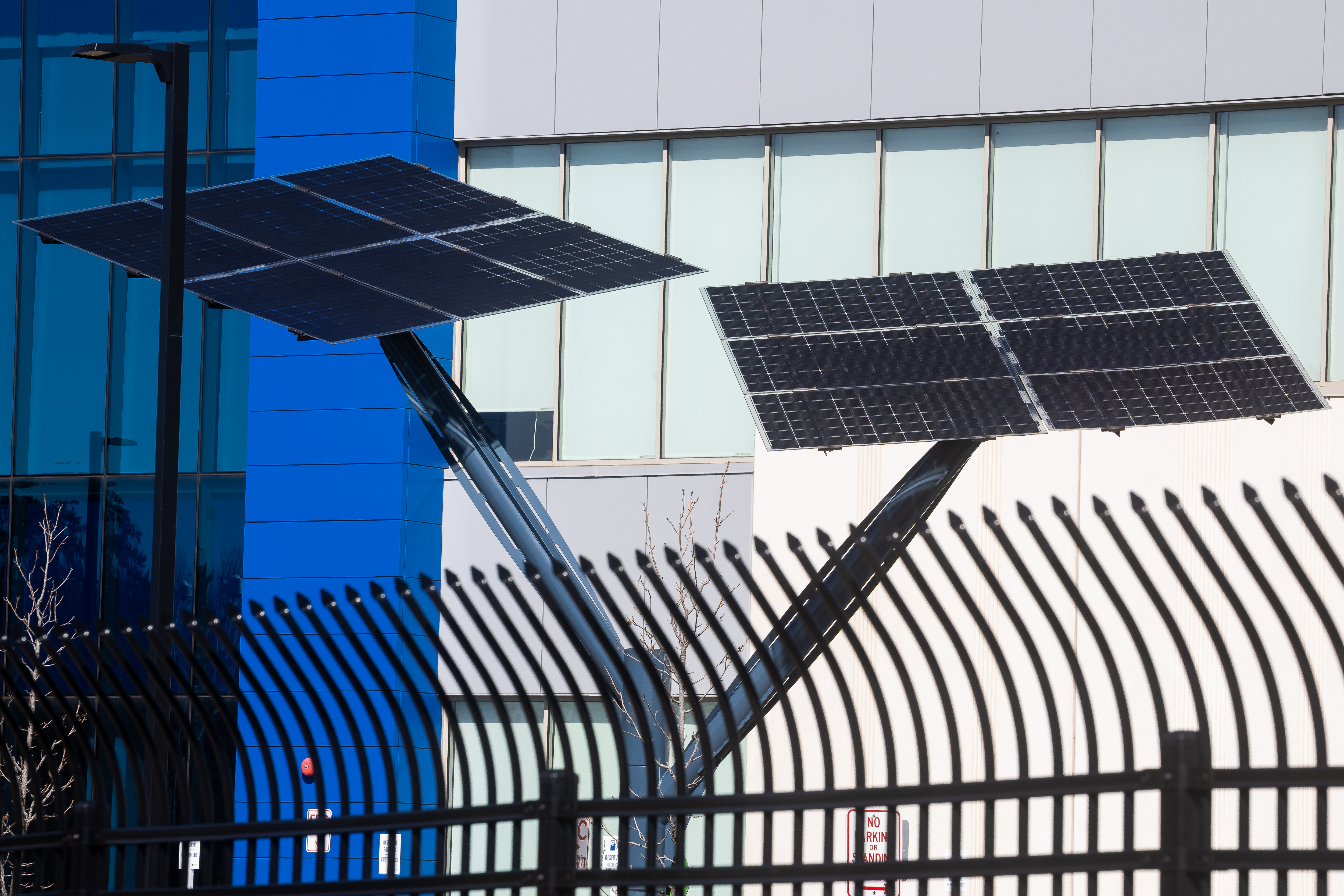
The legislation, set for a committee vote on Wednesday, would require the Department of Energy to study the power consumption and environmental impact of the nation’s sprawling server farms, but major developers and key lawmakers have stopped short of a full endorsement.
The bill, introduced by Representatives Curtis and Scott Peters, a California Democrat, seeks to create a federal framework for understanding how data centers strain local grids and contribute to carbon emissions. It would mandate a comprehensive report on energy use, efficiency standards, and the potential for renewable power integration. Supporters argue that without such data, policymakers cannot effectively address the rapid expansion of facilities that now consume roughly 2 percent of all U.S. electricity, a figure expected to climb sharply.
Yet the legislation has not secured the unified backing that its bipartisan sponsorship might suggest. Several large technology companies and data center developers, including Amazon Web Services and Google, have declined to publicly endorse the measure. Industry sources familiar with the discussions said the firms are concerned that the study could lead to future mandates on energy sourcing or emissions reporting, adding regulatory costs to an already capital-intensive sector.
On Capitol Hill, senior members of the Energy and Commerce Committee have also signaled reservations. Some Republicans worry the bill could pave the way for federal oversight of state-level energy decisions, while a handful of Democrats have pressed for stronger language on environmental justice and local community impacts. The committee’s chairman, Cathy McMorris Rodgers, a Washington Republican, has not formally announced her position, though aides indicated she is monitoring industry feedback closely.
A delicate balance between growth and oversight
The cautious stance from both industry and lawmakers reflects the broader tension in Washington over how to manage the data center boom. These facilities are critical to cloud computing, artificial intelligence, and streaming services, but they also place immense pressure on aging power grids, particularly in states like Virginia and Ohio, where new construction has surged. Local utilities have warned of potential blackouts if demand continues to outpace supply.
Proponents of the bill emphasize that it is a first step, not a final solution. “This is about gathering facts before we write rules,” said a staffer for Representative Peters, speaking on condition of anonymity because they were not authorized to comment publicly. The staffer noted that the legislation includes a two-year timeline for the Energy Department report, allowing time for industry input and further negotiation.
Opponents, however, argue that even a study could create uncertainty. The Data Center Coalition, a trade group representing major operators, has urged lawmakers to narrow the scope of the investigation, warning that broad data collection could inadvertently expose proprietary information about energy contracts and site locations. The group has not taken a formal position on the bill but has requested amendments to limit disclosure requirements.
The committee vote on Wednesday will test whether this cautious coalition can hold together. If the bill advances, it would move to the full House floor, where similar debates over federal energy policy and industry regulation are likely to resurface. For now, the fate of the data center energy bill rests on a fragile consensus, one that neither developers nor lawmakers seem eager to fully embrace.