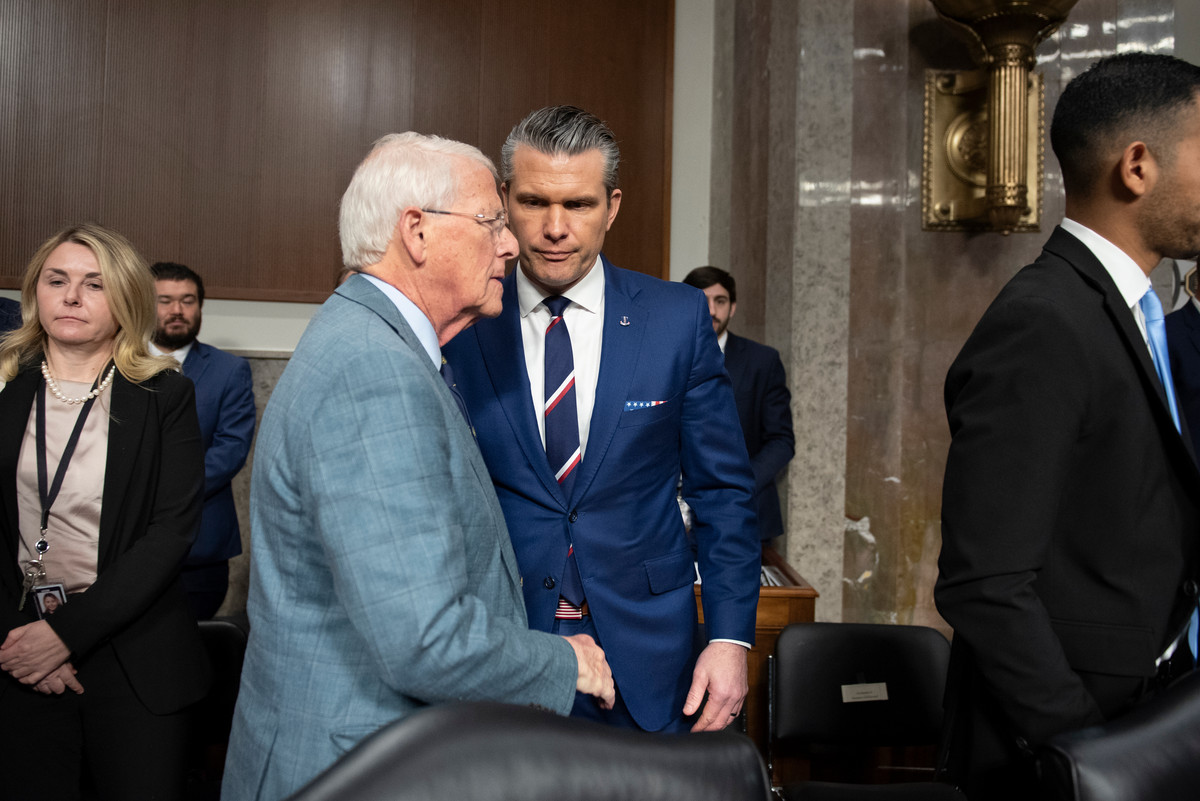
Behind the cordial public display, however, the committee was quietly preparing a blunt legislative weapon: a freeze on three quarters of the Pentagon chief’s travel budget until the Defense Department hands over footage of lethal strikes against suspected drug boats and a full investigation into the bombing of an Iranian girls school.
The provision, buried in the annual defense policy bill approved by the committee last week and filed on Tuesday, marks a sharp escalation in Congress’s long running struggle to pry information from the Pentagon. Lawmakers voted to withhold 75 percent of Hegseth’s travel funds, up from a 25 percent restriction included in legislation signed by President Donald Trump late last year. The increase signals that, months later, the department has still not satisfied the requests.
At the heart of the dispute are two sets of unanswered demands. The first involves full, unredacted videos of U.S. military strikes against alleged drug smuggling vessels in the waters off Latin America, part of an operation known as Operation Southern Spear. Since September 2025, more than 200 individuals have been killed in those strikes. Congressional Democrats have attacked the legal justification for the mission and raised the possibility that some attacks could amount to war crimes.
Lawmakers were particularly alarmed by reports of a “double tap” strike in September, in which a second attack hit survivors of an initial assault on a suspected drug vessel in the Caribbean Sea. Wicker, after reviewing the episode, concluded there was no evidence the United States committed a war crime. But the lack of transparency has fueled bipartisan frustration, with some of Trump’s own Republican allies complaining that Pentagon leadership has kept them in the dark on major national security decisions.
The second demand concerns the deadly bombing of an Iranian girls school in February. The committee wants the Pentagon to turn over its full investigation into the incident, which has strained diplomatic tensions in the Middle East even as the Trump administration pushes a nascent Iran peace deal. Lawmakers have underscored their dissatisfaction with the Pentagon’s slow walking of inquiries as they seek more details about that agreement.
The funding freeze faces an uncertain path to enactment. The House Armed Services Committee approved its own version of the defense bill, and it does not include similar language restricting Hegseth’s travel. The two chambers must reconcile their competing legislation over the next several months, a process that could see the provision stripped out or watered down.
Still, the Senate’s move reflects a deepening institutional rift between Congress and the executive branch on oversight. By targeting the defense secretary’s travel budget, lawmakers are applying pressure directly on Hegseth, betting that the inconvenience of grounded planes and canceled trips will force the Pentagon to comply. For now, the videos and the school bombing report remain locked inside the department, and the committee is waiting.