One year later, the administration has committed more than .1 billion in security assistance since the start of the war, forging a Western alliance that few predicted would hold.
That success on foreign policy stands in stark contrast to the president’s domestic record. Biden declared inflation his top priority during the address, vowing to lower costs for prescription drugs, energy and child care. While inflation has fallen steadily from its June peak of 9.1 percent to 6.5 percent, it remains well above the Federal Reserve’s target of 2 percent. Federal Reserve Chair Jerome Powell has signaled that a hot labor market could keep wages rising and further fuel price increases.
The administration’s signature legislative achievement, the Inflation Reduction Act, delivered only partial results. The law granted the Health and Human Services secretary authority to negotiate prices for a select number of drugs, starting with just 10 in 2026 and growing to 20 by 2029. But Biden’s promise to cut child care costs was stripped from the final version of the bill entirely.
On energy, the president claimed his climate plan would save families an average of $500 a year. Washington Post fact checker Glenn Kessler has since debunked that figure, noting that the projected savings do not hold up under scrutiny. Biden’s goal of building a national network of 500,000 electric vehicle charging stations also remains a work in progress, with installation lagging behind the ambitious timeline laid out in the address.
The Ukraine pledge proved the most durable of Biden’s promises. In the year since Russia’s invasion, the administration has maintained a surprisingly unified Western coalition. Last month, Biden pushed a reluctant Germany to commit its own tanks by pledging 31 Abrams tanks to Ukraine, a move designed to help Kyiv counter an expected spring offensive.
Looking Ahead
The next phase of the war presents a greater challenge. Holding together the alliance will become more difficult as the conflict drags on, testing the diplomatic cohesion that has defined Biden’s foreign policy thus far. The president is expected to deliver another policy-packed address Tuesday night, where he will likely face pressure to outline how he plans to sustain momentum on both the international and domestic fronts.
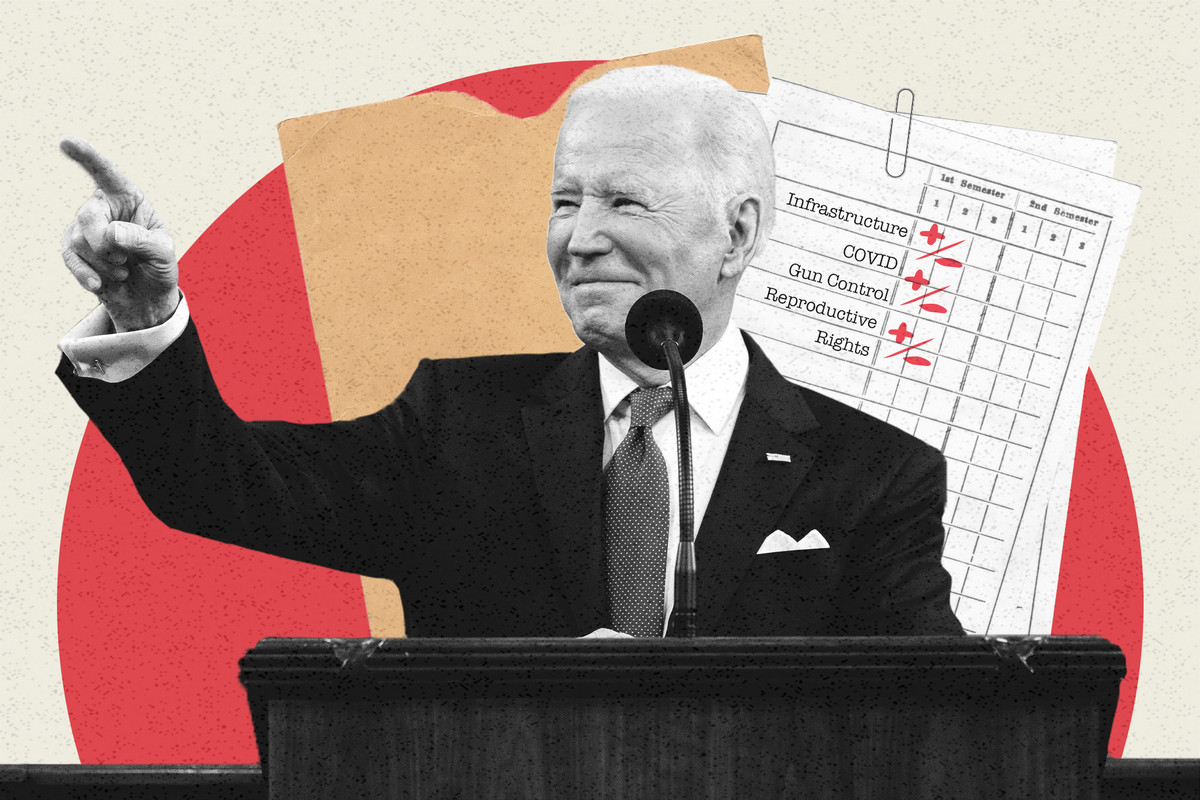
For an administration that entered office promising to restore normalcy and competence, the report card is decidedly mixed. The Ukraine response stands as a clear success. Inflation relief, drug pricing and energy costs remain works in progress. And on child care, the promise has effectively failed.