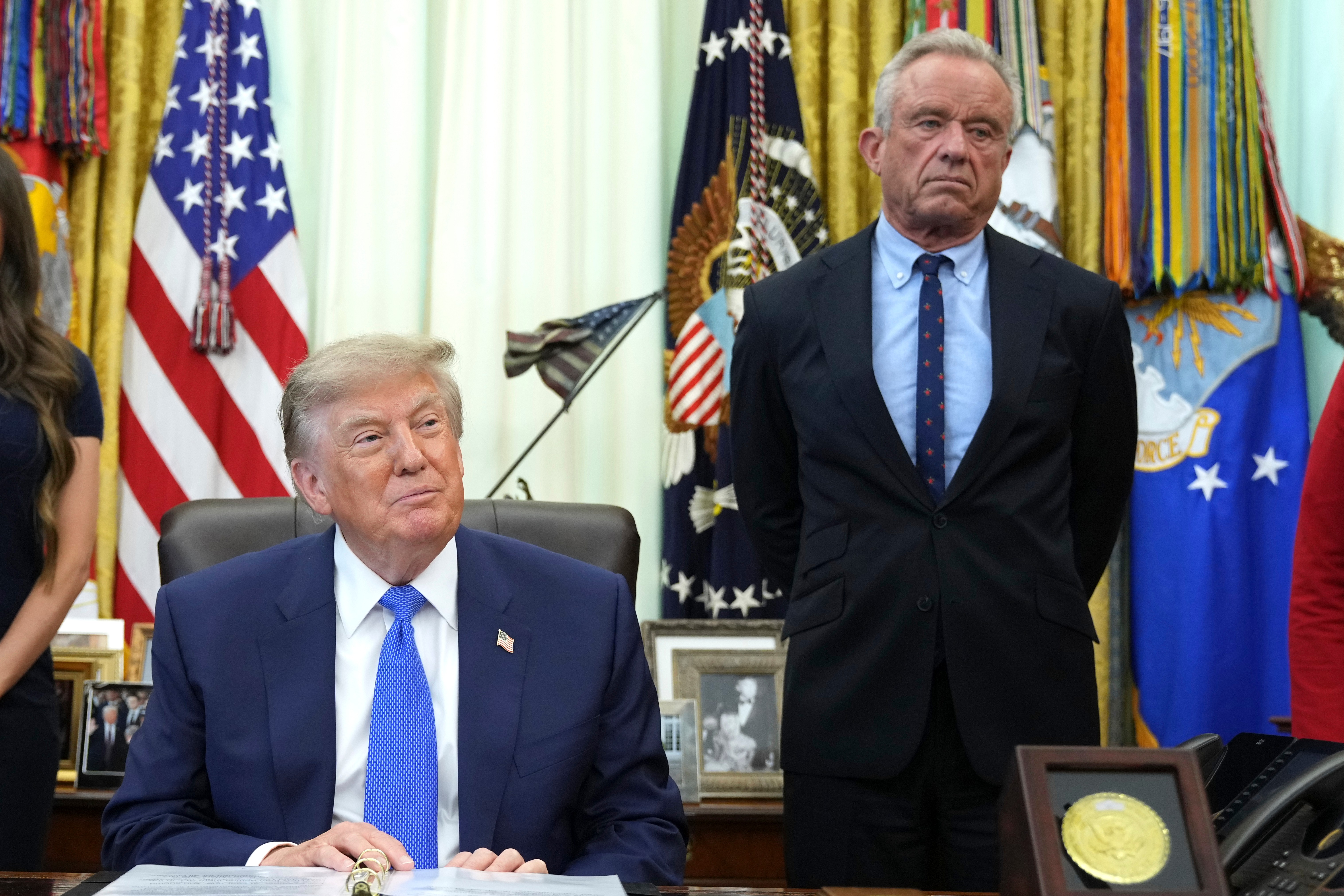
Kennedy Jr. on Monday to address vaccine policy, a public alignment that marked a significant departure from the administration’s earlier strategy of keeping the Health and Human Services secretary’s more contentious views at a distance. The appearance came after months in which senior White House officials had deliberately sought to dampen Kennedy’s appetite for sweeping overhauls of the nation’s immunization programs.
For much of the year, the president had remained notably quiet on the subject, a posture that aides hoped would insulate the administration from the political fallout of vaccine-related controversies. That careful approach was tested repeatedly as Kennedy, a longtime vaccine skeptic, pushed for changes that alarmed public health experts and some lawmakers. The White House’s efforts to manage those impulses were seen internally as a way to preserve the administration’s credibility on health matters while accommodating a key political ally.
Monday’s joint appearance signaled a recalibration of that stance, bringing the president directly into a debate he had previously avoided. Trump’s decision to lend his platform to Kennedy’s message was immediately interpreted by observers as a tacit endorsement of the secretary’s agenda, a shift that could have wide-ranging implications for federal health policy. The specifics of their discussion were not immediately detailed, but the optics alone were enough to draw sharp reactions from both supporters and critics of vaccine mandates.
The move is likely to reignite a contentious national conversation about immunization, a topic that has polarized the country since the pandemic. Public health officials have repeatedly stressed the safety and efficacy of vaccines, while Kennedy has used his position to amplify doubts about their long-term effects. By stepping into this fray, the president has effectively elevated those questions to the highest level of government, a development that could complicate efforts to maintain routine vaccination rates.
A Deliberate Strategy Reversed
Earlier this year, the administration’s internal strategy was clear: keep Kennedy’s more radical proposals off the president’s agenda. Senior staff reportedly worked to redirect his focus toward other health priorities, hoping to avoid a public confrontation with the scientific community. That strategy appears to have been abandoned, at least for the moment, as the president embraced the spotlight on a matter he had long sidestepped.
The political calculus behind the reversal remains unclear, though it may reflect a desire to consolidate support among voters who are skeptical of federal health mandates. Conversely, it risks alienating moderates and medical professionals who view Kennedy’s positions as dangerous. The president’s involvement could also embolden state-level efforts to restrict vaccine requirements, a movement that has gained traction in several conservative-leaning states over the past year.
As the administration pivots, the practical consequences for federal agencies are still unfolding. Career officials at the Department of Health and Human Services, who have worked to implement existing vaccine guidelines, may now face conflicting directives from political appointees. The full scope of any policy changes is not yet known, but the president’s public alignment with Kennedy suggests that further announcements could be forthcoming.
For now, the Monday appearance stands as a defining moment in the administration’s handling of a deeply divisive issue. Whether it marks the beginning of a sustained campaign or a one-off gesture remains to be seen, but the signal sent to the public and to public health officials is unmistakable: the president is no longer staying out of the vaccine fight.