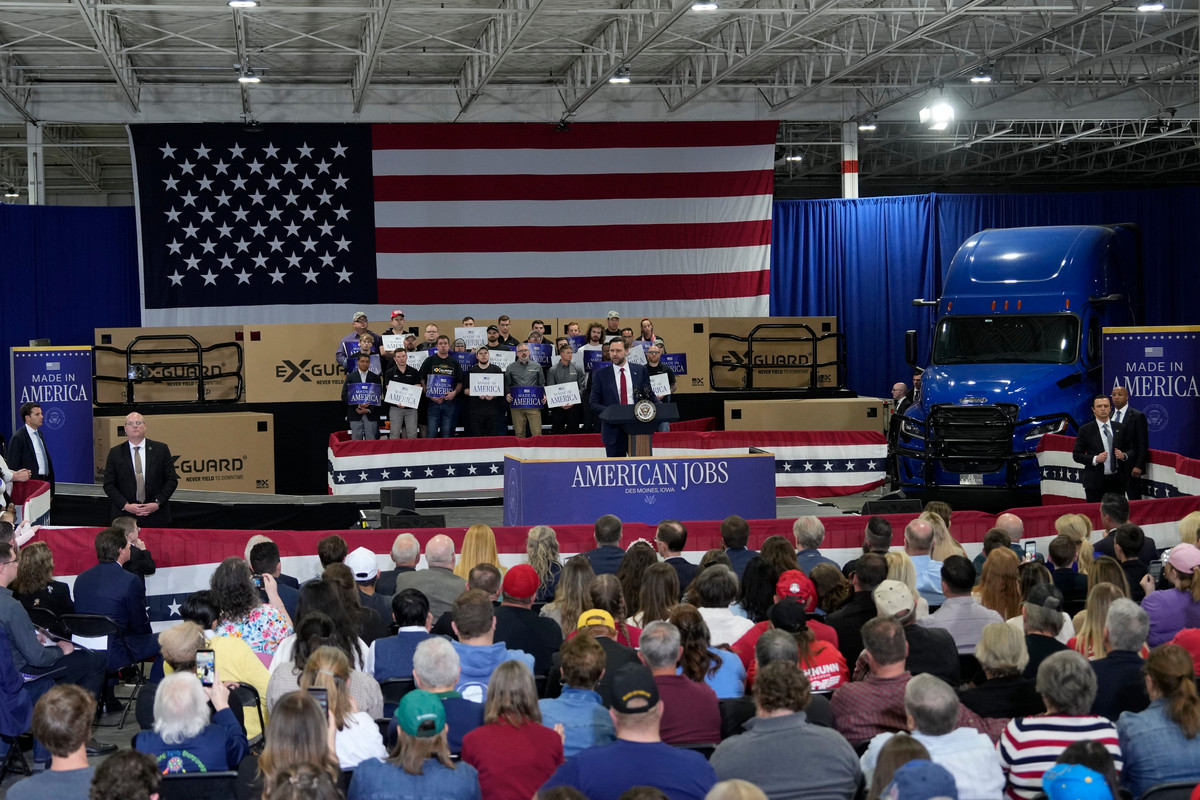
Standing on the floor of a manufacturing warehouse in a battleground House district on Tuesday, Vance credited President Donald Trump for tariffs, tax cuts and agriculture aid, never once mentioning his own presidential ambitions.
But behind the rally’s show of unity, Iowa Republicans acknowledged that Vance’s political future is inextricably bound to the president’s fortunes. The vice president will either inherit the momentum of Trump’s accomplishments or be crushed by the weight of his unpopularity, a dynamic several operatives described as “the Kamala Harris problem.”
“That’s the risk of being part of an administration,” said David Kochel, an Iowa GOP strategist. The comparison to Harris, whose 2020 presidential bid collapsed before a single vote was cast, underscores the precarious position Vance now occupies as he courts the same caucusgoers who handed Trump a decisive victory in 2024.
Would-be caucus attendees and Republican strategists expressed cautious optimism about Vance’s potential as a 2028 contender, but they acknowledged that his close association with the White House presents a high-risk, high-reward proposition. During the rally for Representative Zach Nunn, Vance repeatedly defended the administration’s economic record, even as a new Washington Post/ABC News/Ipsos poll found that 65 percent of Americans disapprove of Trump’s handling of the economy and 76 percent disapprove of his handling of cost of living issues.
Representative Randy Feenstra, who is running for governor, said Iowans “absolutely” link Vance to Trump and expressed confidence that the White House can deliver results for the state. “We’re all in this together,” Feenstra said. “We trust Trump and the vice president and what they’re doing, and things are going to be great.”
The vice president’s trip came as Americans’ patience with the administration’s economic policy wears thin. While Vance blamed former President Joe Biden for the teetering economy, an April POLITICO Poll found that 46 percent of Americans feel Trump bears at least some responsibility for the current state of the economy. The president’s approval ratings have also spiraled amid an unpopular war in Iran and deepening voter pessimism.
In a brief post-rally interview, Nunn said part of the benefit of the vice president’s visit was allowing Iowa Republican officials to “share what they want to see out of the next leader in 2028.” The comment reflected a quiet acknowledgment among party insiders that while Trump remains deeply popular with the base, the succession planning has already begun.
For now, Iowa Republicans remain largely optimistic that Trump, with Vance by his side, can steer the economy in the right direction. But the faded campaign signs along the rural roads serve as a reminder that political fortunes in this state can shift as quickly as the prairie wind.