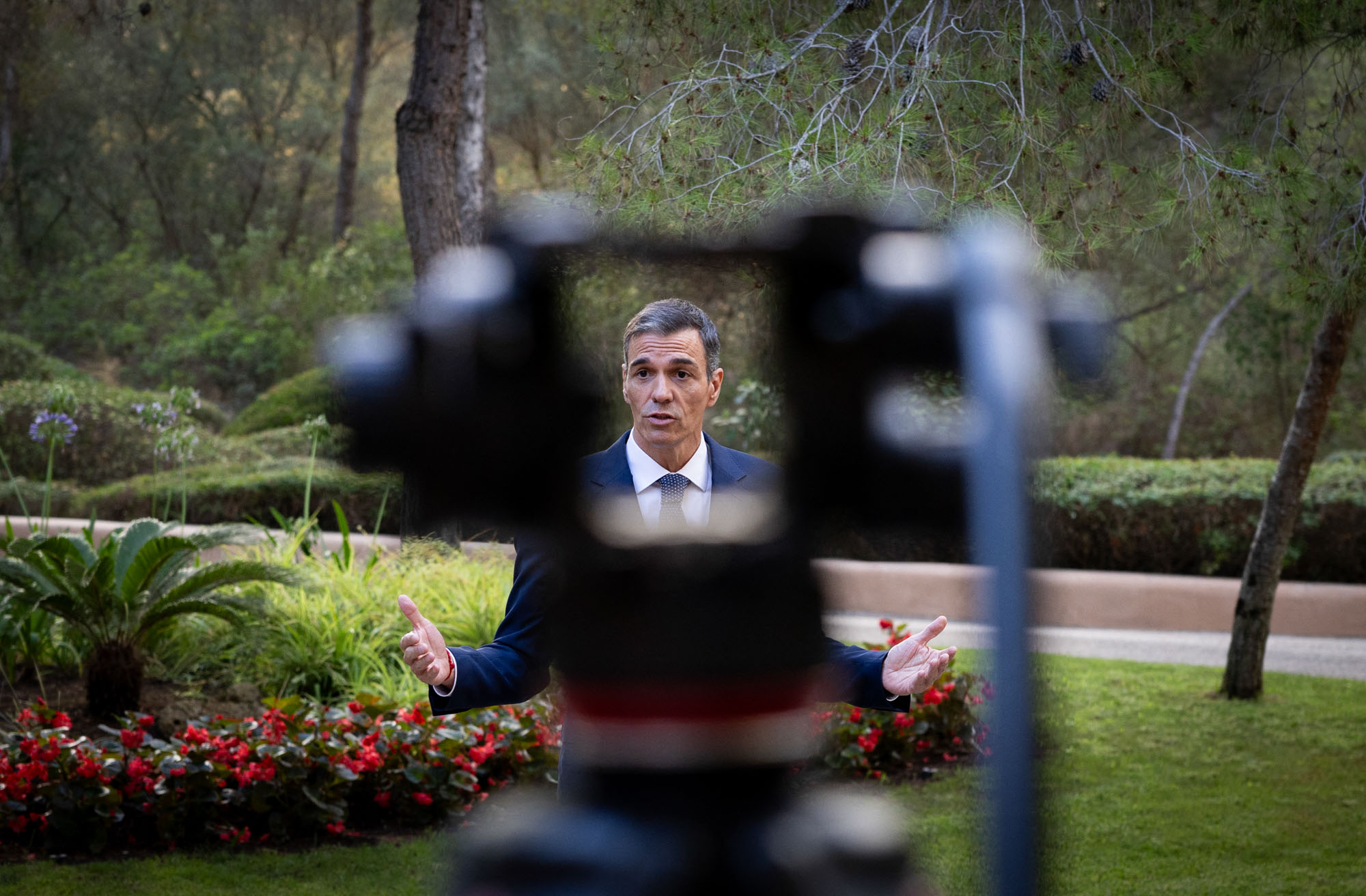
They were not there to quiz him about corruption allegations or his fractious coalition back in Madrid. They wanted to hear how Pedro Sánchez planned to stand up to Donald Trump’s push for military escalation in Iran.
For a leader who has spent much of the past year fighting for his political survival at home, the scene was a striking reversal. Sánchez, long dismissed by critics as a lucky survivor rather than a statesman, has emerged as one of Europe’s most vocal opponents of the White House’s Iran policy. His defiance has turned him into an unlikely star on the continent, a role that his domestic opponents never anticipated and that his own party is eager to exploit.
The transformation did not happen by accident. When Trump began rallying allies to support a tougher line against Tehran, including threats of military action, Sánchez calculated that a firm “no” would resonate far beyond Spain’s borders. He publicly rejected any European participation in a potential conflict and called for renewed diplomacy, a position that aligned him with France and Germany but set him apart from other NATO members wary of angering Washington.
A Boost Abroad, a Shield at Home
The payoff has been immediate. Sánchez has been invited to speak at major forums in Berlin and Paris, where he is introduced not as a beleaguered politician but as a principled defender of multilateralism. European Commission officials have quietly praised his clarity, and diplomatic cables from several EU capitals describe him as a “reliable partner” on foreign policy, a label that would have seemed improbable two years ago.
Back in Spain, the prime minister’s team has moved quickly to weaponize his newfound prestige. They have circulated clips of his speeches at European summits, contrasting his international standing with the corruption scandals that have dogged the conservative opposition. The message is blunt: while his rivals squabble over domestic grievances, Sánchez is shaping Europe’s response to the most pressing security crisis since the Ukraine war.
Yet the rockstar status comes with risks. Sánchez’s stance has drawn sharp criticism from Washington, and some EU diplomats worry that his outspokenness could deepen divisions within the alliance. At home, his opponents accuse him of using foreign policy to distract from a string of unresolved problems, from housing shortages to a stalled budget. The prime minister’s approval ratings, though improved, remain fragile.
For now, however, Sánchez appears to be betting that the glow of continental approval will outlast the domestic storms. As one senior Spanish diplomat put it, “He has found a stage where he is not just surviving, but leading. That changes everything.” Whether the applause from Brussels can sustain him through the next election is a question that only the voters, and perhaps Washington, will answer.