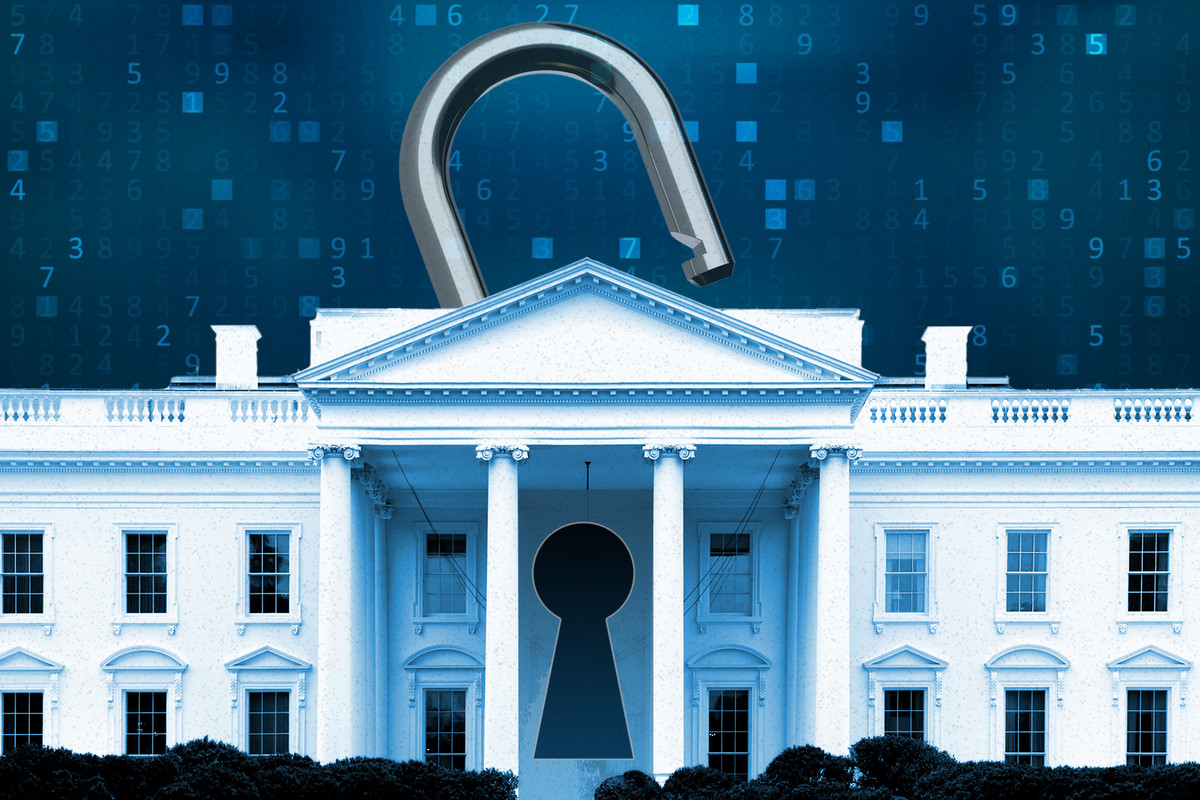
But when President Donald Trump put his signature to a long awaited executive order on artificial intelligence this week, a diverse coalition of safety advocates saw something they had been waiting for: a crack in the door.
The order, which emerged after weeks of mixed signals from the administration, stops well short of the mandatory vetting that Silicon Valley’s harshest critics had demanded. Instead, it establishes a voluntary 30 day process through which leading AI companies can share advanced models with the government to identify cybersecurity risks. Yet for a politically varied group of proponents of tougher AI rules, the shift in Washington’s posture is unmistakable.
“They have exploded the Overton window,” said Brad Carson, a former Democratic congressman and president of Americans for Responsible Innovation, a nonprofit backed by a faction of tech billionaires that pushes for AI regulation. Carson argued that even a voluntary framework signals a new willingness inside the administration to engage on oversight, a stance that would have been unthinkable just months ago.
The order comes from a Trump administration that has made beating China in the race for AI supremacy a central priority and has often framed regulation as an obstacle to that goal. But the document’s existence, safety advocates say, proves that the momentum is now on their side. They believe it could soon pave the way for mandatory vetting, federal pre approval of advanced AI systems and other regulations.
Steve Bannon, the far right former Trump adviser and a vocal advocate for AI regulations, described the order as a victory for conservative skeptics of Silicon Valley. “For the first time it’s on a piece of paper, a structure and a process,” Bannon said. He acknowledged that the process remains ill defined and does not meet all of his requirements, but he added, “We’re going to eat the elephant one bite at a time.”
Bannon also highlighted the practical pressures the order could create. Even a voluntary vetting framework, he argued, “implies it’s going to be higher cost for the AI companies if any of their models are wrong or have huge problems, and they let it out without bringing it in for voluntary review.” The implicit threat of reputational and financial damage, he said, could push firms to cooperate.
The executive order was signed with little celebration and after weeks of conflicting signals from the White House about its scope and ambition. But for supporters of tougher federal scrutiny, the document represents a sea change in Washington’s willingness to tighten oversight of a technology that is rapidly reshaping the economy, national security and daily life.
Pro regulation voices are now betting that the order, however modest in its immediate requirements, will serve as a foundation for far more aggressive action in the years ahead. As Carson put it, the conversation has already shifted. “The question is no longer whether the government should be involved,” he said. “It is how much and how fast.”