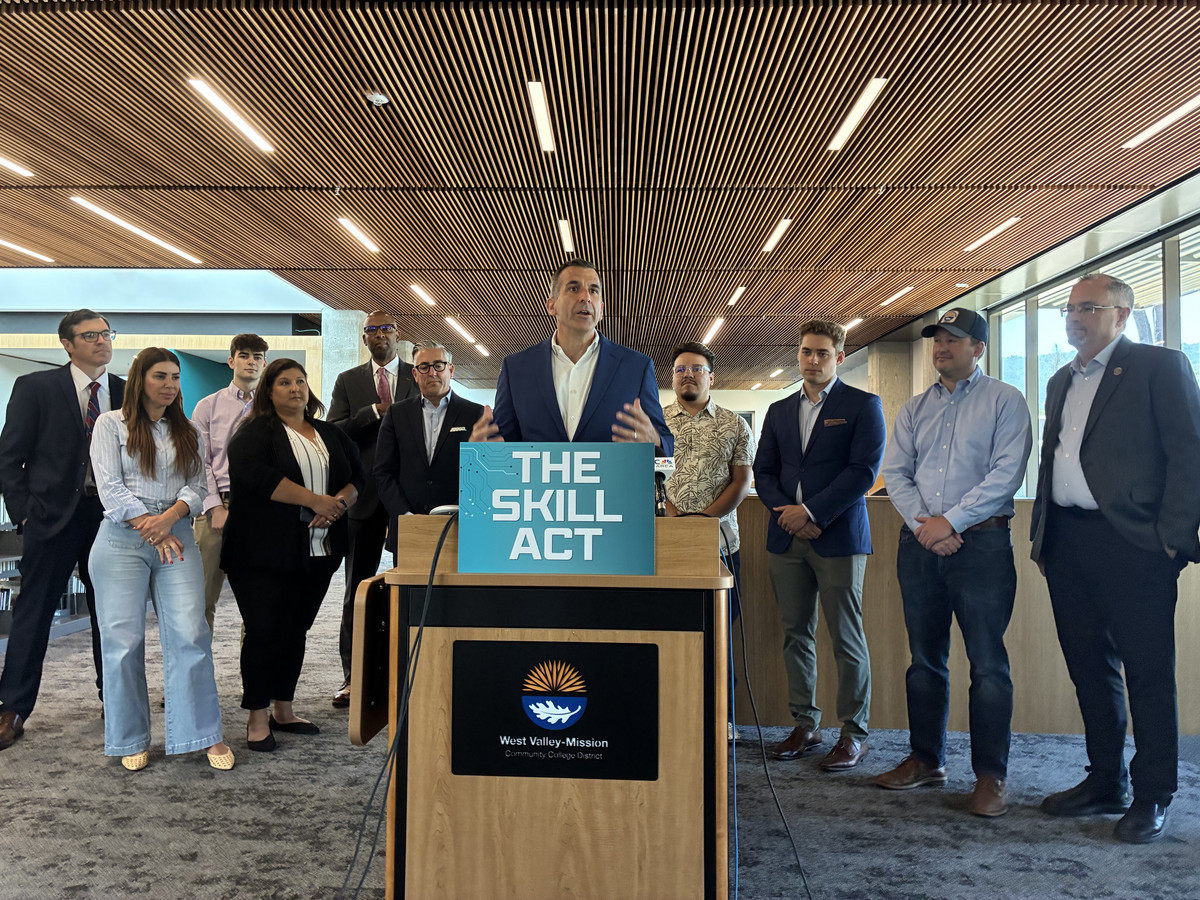
The former San Jose mayor and current Silicon Valley representative unveiled the Supporting Knowledge Through Industry-Led Learning Act, or SKILL Act, a bill that would use federal tax incentives to push private companies to invest directly in community college and public university training programs.
The legislation would authorize $500 million in total tax credit authority each year, distributed to states on a per capita basis. Companies that provide financial support, equipment, or personal services to higher education institutions could receive a $2,500 tax credit for each student who completes a qualified program, and an additional $2,500 for every graduate they hire.
“This bill is very straightforward,” Liccardo said at the press conference. “It offers incentives for private sector companies to invest with community colleges, state universities, internships to expand pipelines and co-create that curricula that we know will be critical for creating the next generation of skills and the next generation of jobs.”
The SKILL Act targets the specific training needs of an economy bracing for AI-driven layoffs. Qualifying investments include curricula development, skills assessment tools, internships, applied learning opportunities, registered apprenticeship programs and the provision of lab space. The bill fits into a growing patchwork of state and federal proposals, including a New Jersey bill that would provide nearly $200 million for retraining programs.
Political and Industry Backing
Liccardo has secured support from Rep. Jimmy Panetta, a California Democrat who sits on the tax-writing House Ways and Means Committee. Louis Stewart, Nvidia’s head of ecosystem development and a former official in Gov. Jerry Brown’s administration, also spoke at the event in favor of the legislation. Industry lobbying groups including TechNet, The Digital Chamber and the Chamber of Progress have thrown their weight behind the bill, as has the American Association of Community Colleges, according to Liccardo’s office.
The legislation arrives as lawmakers across the country scramble to address a looming question: what happens to workers when AI automates their jobs? By tying tax credits directly to hiring outcomes, the SKILL Act attempts to create a direct financial incentive for companies to invest in the human side of technological transition. Liccardo framed the bill not as a government mandate but as a partnership, one that leverages private sector resources to build public training infrastructure.
Whether the bill can clear a divided Congress remains uncertain. But for the moment, in a region that has long defined the future of work, Liccardo offered a concrete legislative answer to the anxiety that AI has introduced into the American labor market.