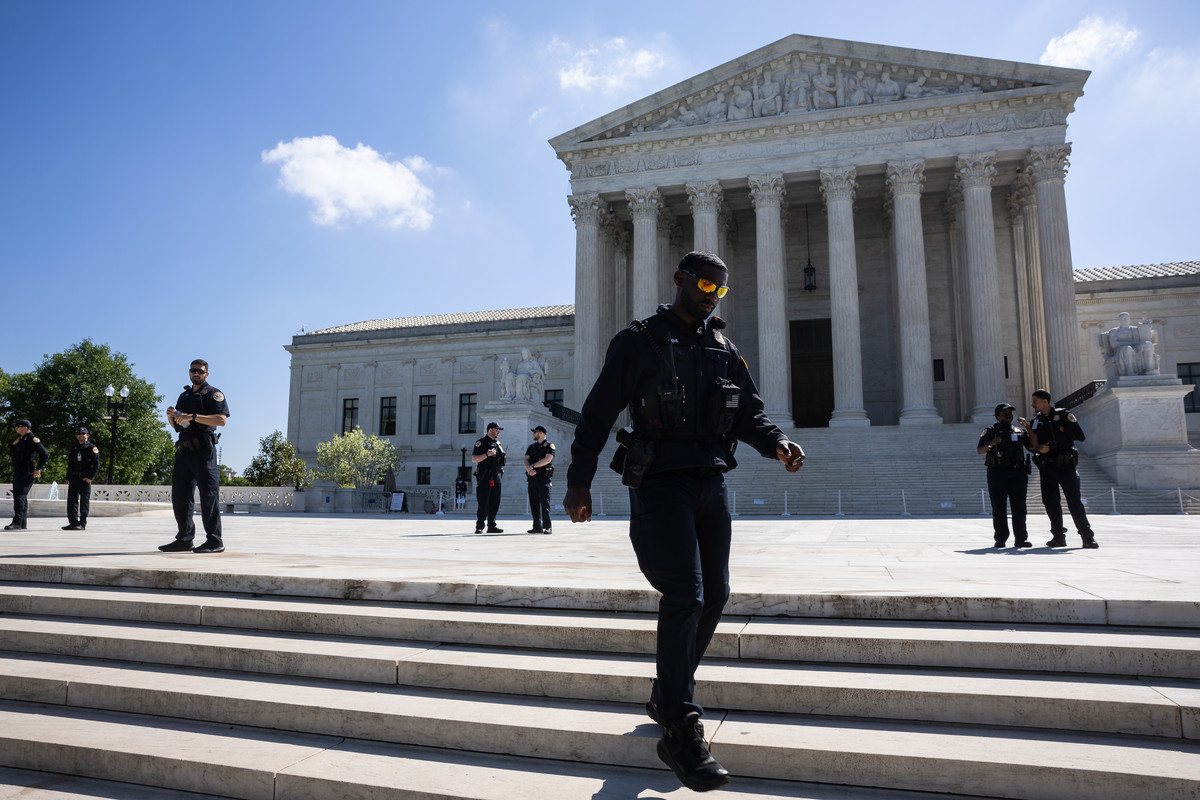
The case, brought by Okello Chatrie, who was convicted of a 2019 bank robbery in Midlothian, Virginia, centers on a so-called geofence warrant that local law enforcement served on Google to reveal which devices were present near the crime scene at the time of the heist. Chatrie pleaded guilty and received a sentence of nearly 12 years in prison.
A majority of the court seemed inclined to rule that police should generally seek a warrant before obtaining geofence records that can pinpoint who was at a particular place at a specific time. But the justices struggled to reach a consensus on whether to issue a narrow ruling or establish more detailed criteria for how such warrants should be obtained and executed. The uncertainty left legal observers guessing whether the court would create a new framework for digital surveillance or sidestep the question entirely.
Chief Justice John Roberts voiced skepticism toward the position of the Trump administration, which argued that users voluntarily surrender their location data to companies like Google and therefore have no reasonable expectation of privacy. “So to prevent surveillance of sensitive locations, you have to rely on the fact that people are going to turn off something that many, if not most people find is an important service?” Roberts asked deputy solicitor general Eric Feigin, highlighting the tension between convenience and constitutional protections.
The case exposed a fracture among the court’s conservative justices. Justice Neil Gorsuch appeared eager to embrace a pro-privacy stance, signaling that he might side with the argument that geofence warrants represent a broad, suspicionless search. Meanwhile, Justice Samuel Alito seemed more inclined to back law enforcement, suggesting that the data in question is not fundamentally different from other information individuals voluntarily share with third parties.
Justice Amy Coney Barrett did not express significant concern about the police actions in this specific case, leaving her position unclear. Her vote could prove pivotal in a case that tests how the Fourth Amendment applies to modern surveillance tools that allow authorities to sweep up data on hundreds of innocent bystanders.
Geofence warrants compel technology companies to search their databases and produce information about any device that was logged within a defined geographic area during a set time window. Privacy advocates warn that the technique effectively allows police to conduct dragnet investigations without individualized suspicion, while law enforcement agencies argue it is a critical tool for solving crimes when no obvious suspects exist.
The court’s eventual ruling, expected later this term, will have significant implications for digital privacy and the balance between policing and constitutional rights. A decision that imposes strict warrant requirements could reshape how prosecutors approach investigations involving location data, while a ruling that upholds the current practice may embolden law enforcement to expand the use of geofence warrants nationwide.