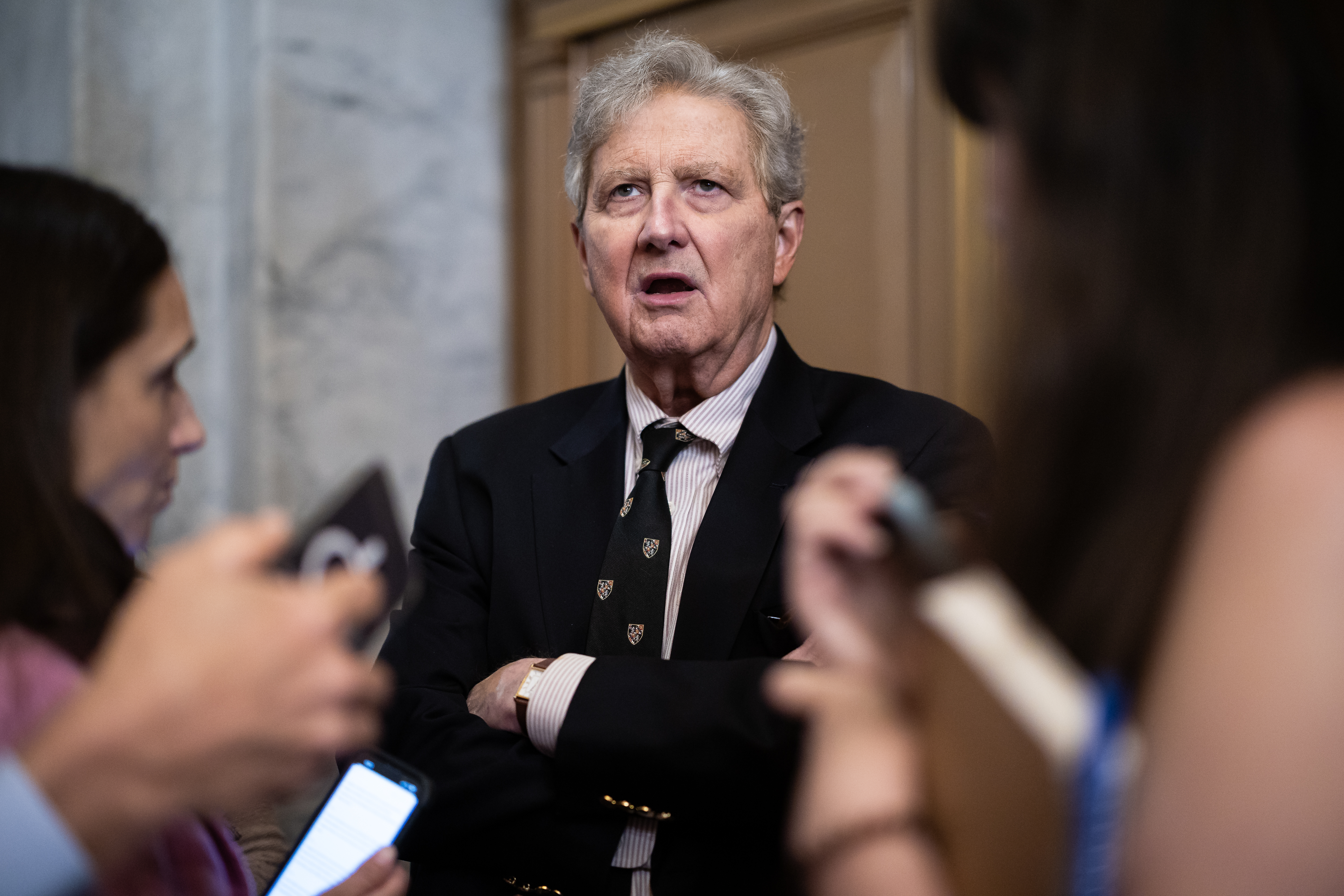
“Sometimes the FCC scares me right now,” he said, adding that the agency’s recent actions under Chair Brendan Carr are “getting into the foothills of violating the First Amendment.”
Kennedy’s remarks, delivered during a Senate Appropriations subcommittee hearing, mark one of the most direct Republican critiques of Carr’s tenure since the chair assumed control of the agency. While Carr has framed his agenda as a crackdown on media censorship and a push for ideological balance, Kennedy suggested that the commission’s focus on broadcast content and newsroom practices risks overstepping its statutory authority.
The Louisiana senator did not cite a specific FCC proceeding in his warning, but his comments come amid a flurry of agency activity targeting major media outlets. Under Carr, the commission has reopened long-dormant inquiries into broadcast license renewals and has signaled an intent to scrutinize editorial decision-making, a shift that has alarmed free press advocates and alarmed some lawmakers on both sides of the aisle.
Kennedy’s admonition carries particular weight given his party’s control of the White House and the Senate, where Republicans have largely backed Carr’s deregulatory and culture-war initiatives. His willingness to publicly question the chair’s approach suggests a growing unease within the GOP about the political optics of the FCC’s media posture, especially as legal challenges begin to mount in federal court.
The senator stopped short of calling for Carr’s resignation or demanding specific legislative remedies, but he urged the commission to exercise restraint. He framed the issue in stark terms, arguing that the agency’s role is to regulate the airwaves, not to police the viewpoints of journalists or broadcasters. “The government should not be in the business of telling people what they can and cannot say,” he said.
A Shift in Regulatory Priorities
Carr, who was elevated to the chairmanship by President Trump, has defended his agenda as a necessary corrective to years of alleged liberal bias in media. He has argued that the FCC has a mandate to ensure broadcasters serve the public interest, a standard that he says includes scrutiny of news coverage that he deems one-sided or misleading. His supporters contend that the agency is merely enforcing existing rules that have been ignored for decades.
Critics, however, see a more ominous pattern. Legal scholars and media watchdogs have warned that Carr’s approach, particularly his public statements about specific news organizations, could chill reporting and invite retaliatory action against outlets that publish unfavorable coverage. Several broadcasters have already retained counsel to prepare for potential license challenges, and industry trade groups have lobbied Congress to clarify the FCC’s limits.
Kennedy’s intervention may complicate those efforts, as it gives moderate Republicans and Democrats a bipartisan talking point for reining in the agency. Whether it translates into legislative action remains unclear, but the senator’s blunt assessment ensures that the debate over the FCC’s role in the media landscape will continue to simmer well beyond the hearing room.