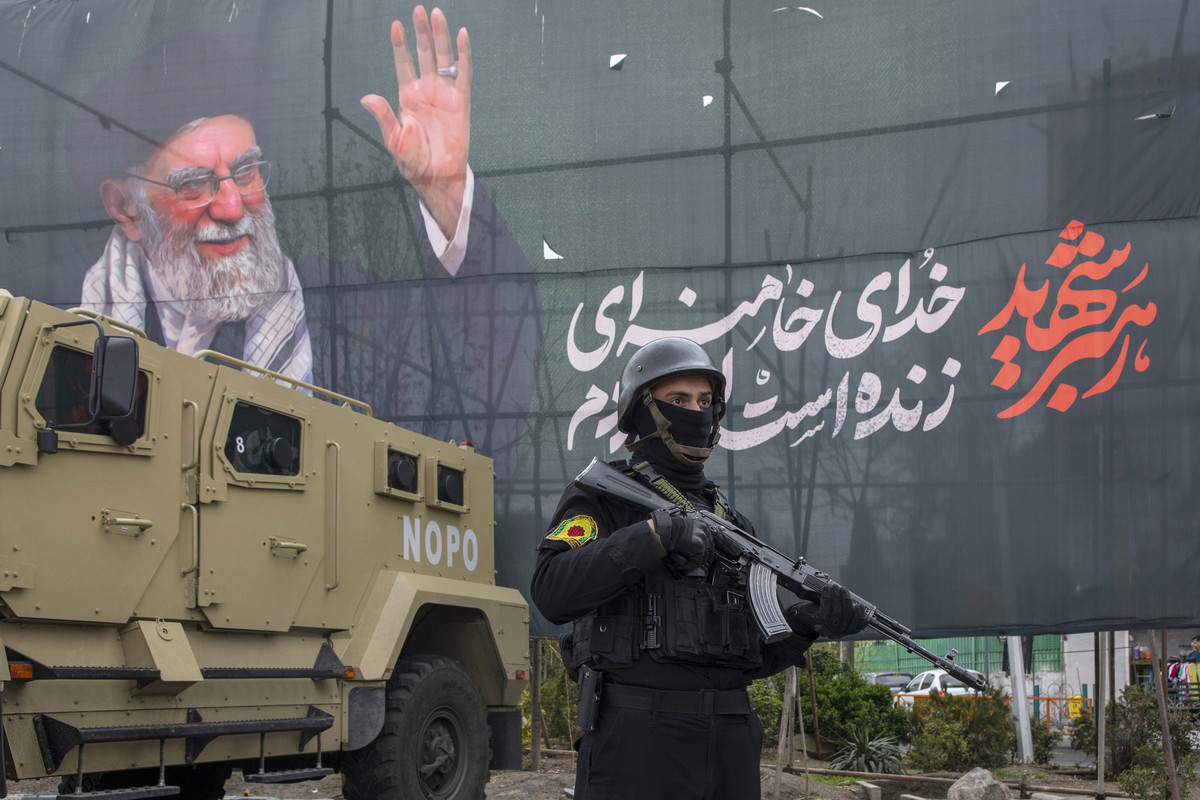
The Islamic Revolutionary Guard Corps (IRGC) has explicitly threatened to strike the regional infrastructure of nearly twenty major American companies, from Apple to Boeing, in a significant escalation of regional tensions.
The threat, issued Tuesday via a government-backed news agency, advised employees and residents within a kilometer of U.S.-owned facilities to evacuate, suggesting retaliatory attacks could begin within days. The IRGC stated the action would be a response to continued U.S. and Israeli operations targeting Iranian leadership, framing the listed corporations as participants in hostile activities.
The list of potential targets reads like a who’s who of global technology and defense. It includes Apple, Google, Microsoft, and Meta, alongside chipmakers Intel and Nvidia, enterprise firms Oracle, IBM, Cisco, and Dell, and defense contractors Boeing and Palantir. A Microsoft spokesperson declined to comment, while other companies did not immediately respond.
This is not the first such warning. Earlier this month, the IRGC named several of the same firms, citing their technology’s use in military applications. The continued threats underscore a dangerous new front where commercial tech infrastructure is treated as a legitimate military target by state actors.
A Vulnerable Digital Expansion
The confrontation highlights the vulnerabilities inherent in the rapid expansion of American tech infrastructure across the Middle East, a push accelerated under the previous administration. The risks are not theoretical; on March 3, Iranian drone strikes caused power outages at Amazon Web Services cloud computing facilities in the United Arab Emirates and Bahrain.
Experts believe such incidents are a harbinger of more disruptive attacks. “I think it’s highly unlikely that it will be the last time, as data centers become more and more important for a broad range of critical infrastructure,” said Sam Winter-Levy of the Carnegie Endowment for International Peace following the AWS incident.
The White House, in response to the new threats, asserted its military preparedness, citing a 90 percent drop in ballistic missile and drone attacks from Iran in recent months. However, the explicit targeting of civilian corporate assets presents a complex defensive challenge and blurs the line between commercial and national security interests.
This shift is forcing a strategic reassessment. “We can’t think about this AI infrastructure as purely a commercial asset anymore, and to some extent, it’s national security infrastructure,” noted Hamza Chaudhry, an AI and national security lead at the Future of Life Institute. The safety of these global digital nodes, and the data they hold, now depends on geopolitical stability as much as technical reliability.