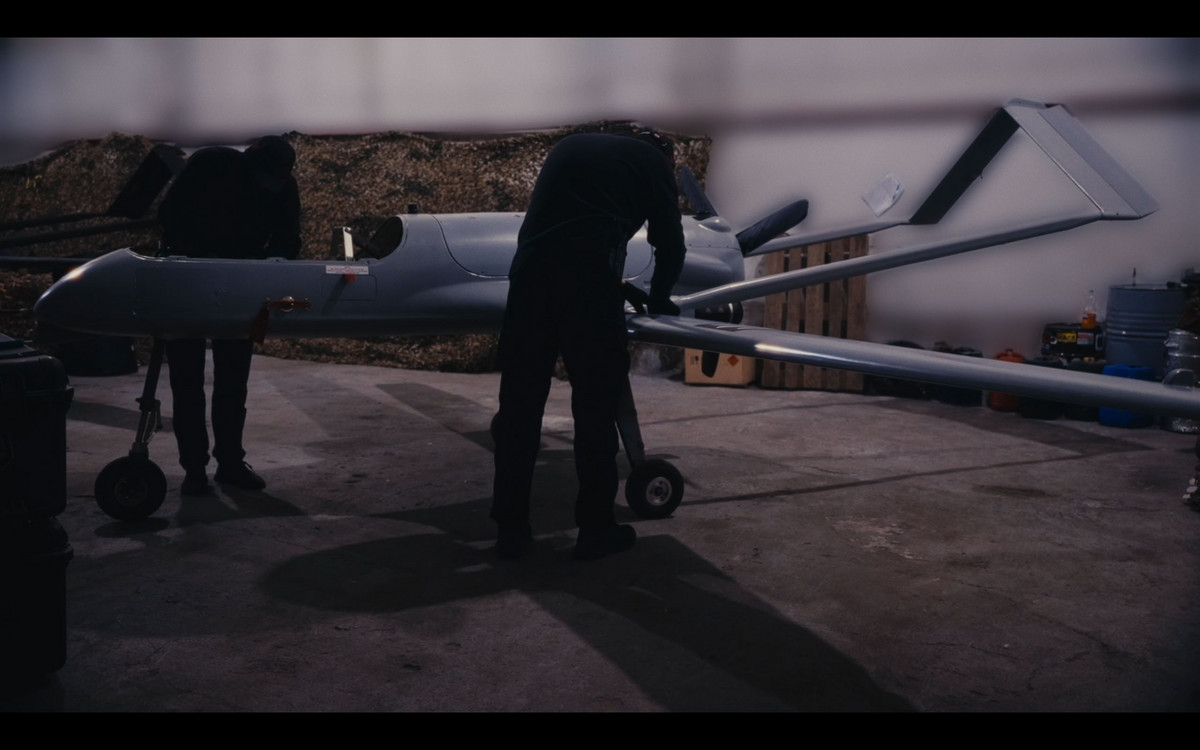
These were Liutyi long-range kamikaze drones, each carrying explosive payloads of up to 150 pounds and capable of traveling nearly 1,300 miles. Later that night, they would be launched toward targets inside Russia.
“They are now our most important card in this war,” said a Ukrainian commander using the call sign “Vector,” as he tapped the wing of one of the drones. He leads a unit specializing in so-called deep strikes, attacks conducted far behind Russian lines. The drone campaign that began in early 2024 with only a few dozen aircraft per month has evolved into a large-scale operation, with President Volodymyr Zelenskyy’s forces now launching an average of 200 to 300 drones against targets in Russian territory every night.
From a Few Dozen to Hundreds Each Night
A reporting team from the Axel Springer Global Reporters Network, which includes POLITICO, was granted permission to observe one night of mission preparations earlier this month under strict security restrictions. Mobile phones were prohibited, the faces of intelligence personnel could not be filmed, and their voices were altered in any video. The intelligence officials explained that the attacks rely on a difficult-to-counter combination of explosive-laden long-range kamikaze drones, decoy drones designed to confuse air defenses and missile-type drones.
Their primary targets are military installations and oil facilities, sites crucial to both the conduct and financing of Russia’s war effort. On Thursday, Ukraine unleashed its largest attack yet deep inside Russia, targeting an oil refinery near Moscow. The explosions sent plumes of black smoke billowing above the capital’s suburbs and shut down flights at four airports for hours. Russian officials reported downing hundreds of drones in the skies above Moscow and other cities.
“At the beginning, Russians believed they were conducting a special military operation. Now they understand that this is a war,” Commander “Vector” said. The message to Russia, he added, is that “this war has now reached your homes as well.”
The operation represents a significant shift in Ukraine’s strategic capabilities. What began as a limited campaign has become a central pillar of Kyiv’s military strategy, allowing Ukrainian forces to strike deep inside Russian territory with increasing frequency and precision. The combination of different drone types, including the “Peklo” missile drone capable of speeds up to 1,000 kilometers per hour, has made it difficult for Russian air defenses to respond effectively.
For the masked specialists working in the darkened warehouse, each drone they assemble represents a calculated gamble. The success of these missions depends not only on the technology but on the element of surprise and the ability to penetrate increasingly sophisticated Russian defenses. As the war enters its third year, these long-range drones have become Ukraine’s most effective tool for bringing the conflict directly to Russian soil.