In May 2015, Swiss police, acting on a U.S. Justice Department request, arrested seven FIFA officials on charges of racketeering, wire fraud, and money laundering. The men were led away in handcuffs, their designer suits and World Cup blazers suddenly looking like costumes in a failed heist. It was the beginning of the end for the old FIFA, a corrupt cartel that had long treated the world’s most popular sport as a private piggy bank.
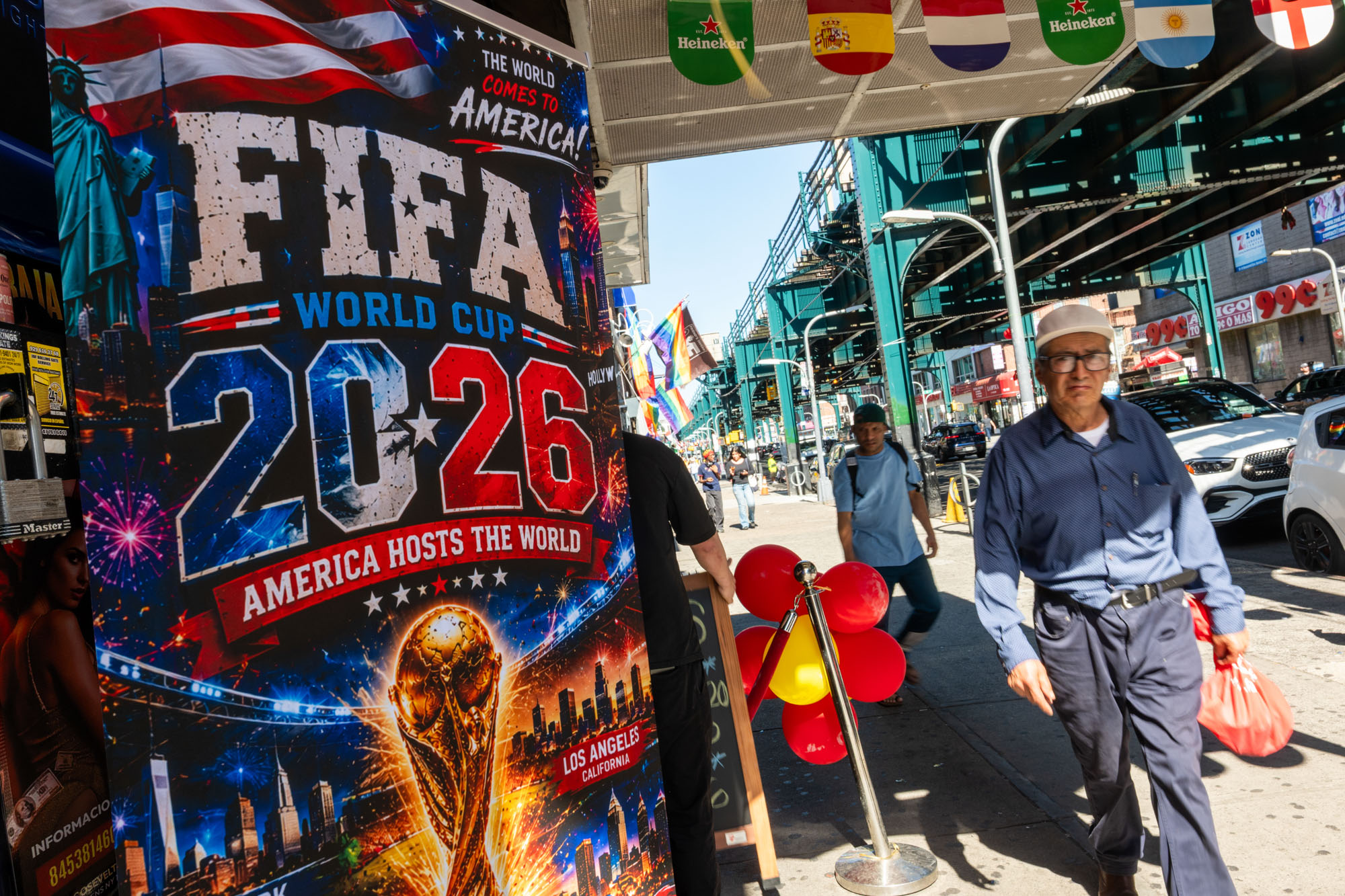
But what happened next was not a clean victory for reform. The U.S. government, having broken the old order, did not walk away. Instead, it helped build a new one. And the centerpiece of that new order is the 2026 World Cup, awarded to the United Bid of the United States, Canada, and Mexico. The tournament, which will feature a record 48 teams and 104 matches, is now widely referred to in diplomatic circles as the “Trump Cup,” a name that captures both the transactional nature of the deal and the man who presided over its final approval.
The path from Zurich to the Meadowlands is a story of power, money, and the strange marriage of law enforcement and sports diplomacy. After the 2015 arrests, FIFA was in chaos. Its president, Sepp Blatter, was forced out. Sponsors fled. The organization’s reputation was in tatters. Into this vacuum stepped the U.S. Department of Justice, which continued to pursue a sprawling investigation that eventually led to convictions of more than 40 soccer officials and marketing executives. The message was clear: the old ways were over.
Yet the vacuum also needed filling. The United Bid, which had lost the 2022 World Cup to Qatar in a vote widely seen as corrupt, suddenly found itself in a favorable position. The U.S. government, having demonstrated its power to bring FIFA to its knees, now offered a path to legitimacy. The bid promised record revenues, modern infrastructure, and a safe, stable environment for the world’s biggest sporting event. In 2018, FIFA’s member associations voted overwhelmingly to award the 2026 tournament to the North American bid.
A Tournament of American Power
The irony is almost too neat. The same government that broke FIFA now stands to profit from its resurrection. The 2026 World Cup is expected to generate billions of dollars in revenue, much of it flowing through American corporations and broadcasters. The tournament will be played largely in the United States, with 60 of the 80 matches scheduled in American stadiums. The White House, under both the Trump and Biden administrations, has treated the event as a diplomatic asset, a chance to project American influence on a global stage.
Critics argue that the United Bid process was itself a form of coercion. By leveraging the Justice Department’s investigation, the U.S. government created a climate of fear that made it nearly impossible for FIFA to reject the American offer. “They broke the organization, then offered to fix it,” one former FIFA insider told The Chronicle Page. “But the fix came with a price: a World Cup that serves American interests first.” The result is a tournament that feels less like a global celebration and more like a corporate takeover, complete with a logo that resembles a dollar sign and a schedule designed for prime-time American television.
As the 2026 tournament approaches, the question is whether FIFA has truly reformed or simply traded one set of masters for another. The old FIFA was run by men in Zurich who took bribes. The new FIFA is run by men in New York who take orders from Washington. The World Cup will still be played on grass, but the game itself has become a geopolitical instrument. In the end, the U.S. government did not destroy FIFA. It absorbed it.