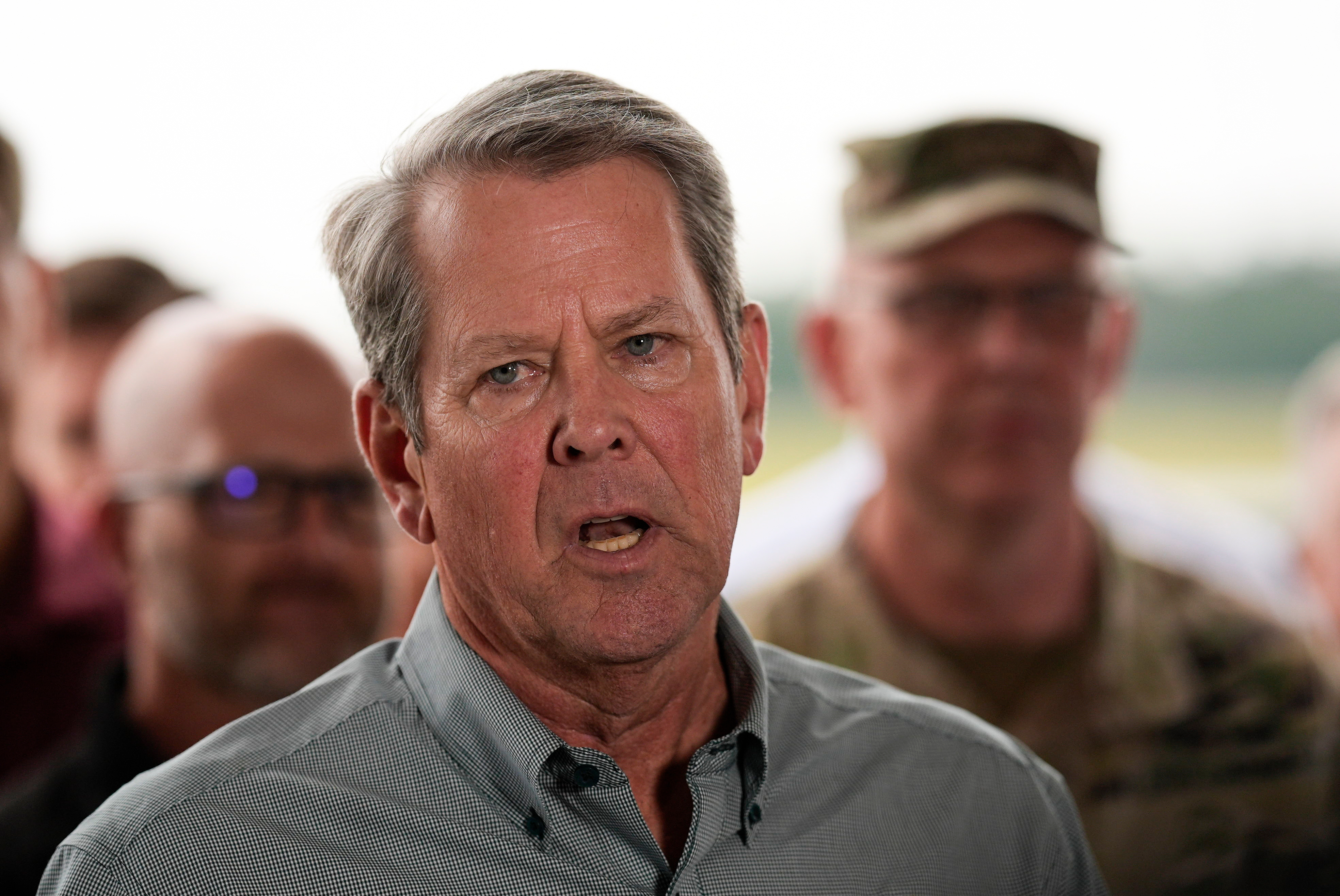
Yet as he ticked through his remaining priorities, the term-limited Republican made clear that the two industries are not competing for his attention. They are, in his telling, twin pillars of the same economic strategy.
Kemp, who cannot seek reelection, has spent much of his tenure courting the EV sector, securing multibillion dollar investments from Hyundai Motor Group, Rivian Automotive and others. Now, with six months left in office, he is also steering the state toward a boom in artificial intelligence data centers, a sector that demands vast amounts of electricity and computing power. But he insisted that his focus on EVs has not waned.
“Electric vehicles continue to be a major priority for us,” Kemp said in an interview. He framed the two industries as mutually reinforcing, noting that the data centers will require reliable energy and that the EV factories will produce the vehicles and batteries needed for a cleaner grid. The governor pointed to a $5 billion Hyundai battery plant under construction in Bryan County as evidence that the state’s bet on electrification is far from over.
The dual emphasis comes as Georgia faces mounting pressure to balance its pro business reputation with the energy demands of both sectors. The Georgia Public Service Commission recently approved a plan to expand natural gas generation, a move that critics say could undermine the environmental benefits of electrification. Kemp defended the decision, arguing that the state must ensure grid reliability before it can pursue further decarbonization.
Economic Momentum Meets Political Uncertainty
Kemp’s final months also coincide with a shifting national landscape for EVs. The Biden administration has tightened tailpipe emissions rules, but former President Donald Trump, who leads the Republican primary field, has vowed to roll back those standards. Kemp, who has clashed with Trump in the past, declined to speculate on the political implications but emphasized that Georgia’s investments are driven by market forces, not federal mandates.
“We didn’t land these projects because of Washington,” he said. “We landed them because we have a skilled workforce, a business friendly climate and a logistics network that is second to none.” The governor noted that SK Battery America and Qcells have also expanded operations in the state, creating thousands of jobs in the EV supply chain.
Still, the data center boom presents its own challenges. The facilities require massive amounts of water for cooling and strain local power grids, issues that have sparked pushback in communities across the country. Kemp acknowledged the concerns but said Georgia’s regulatory framework is equipped to handle the growth. He pointed to a new Office of Energy Resources within the state’s economic development agency as a tool for coordinating infrastructure planning.
As he prepares to leave office, Kemp is betting that the convergence of EVs and AI will define Georgia’s economy for decades. Whether that bet pays off may depend on how well the state manages the tension between industrial expansion and environmental stewardship, a balance that will outlast his tenure. “We’re building for the long term,” he said. “That means making sure we have the energy to power both the cars and the computers of the future.”