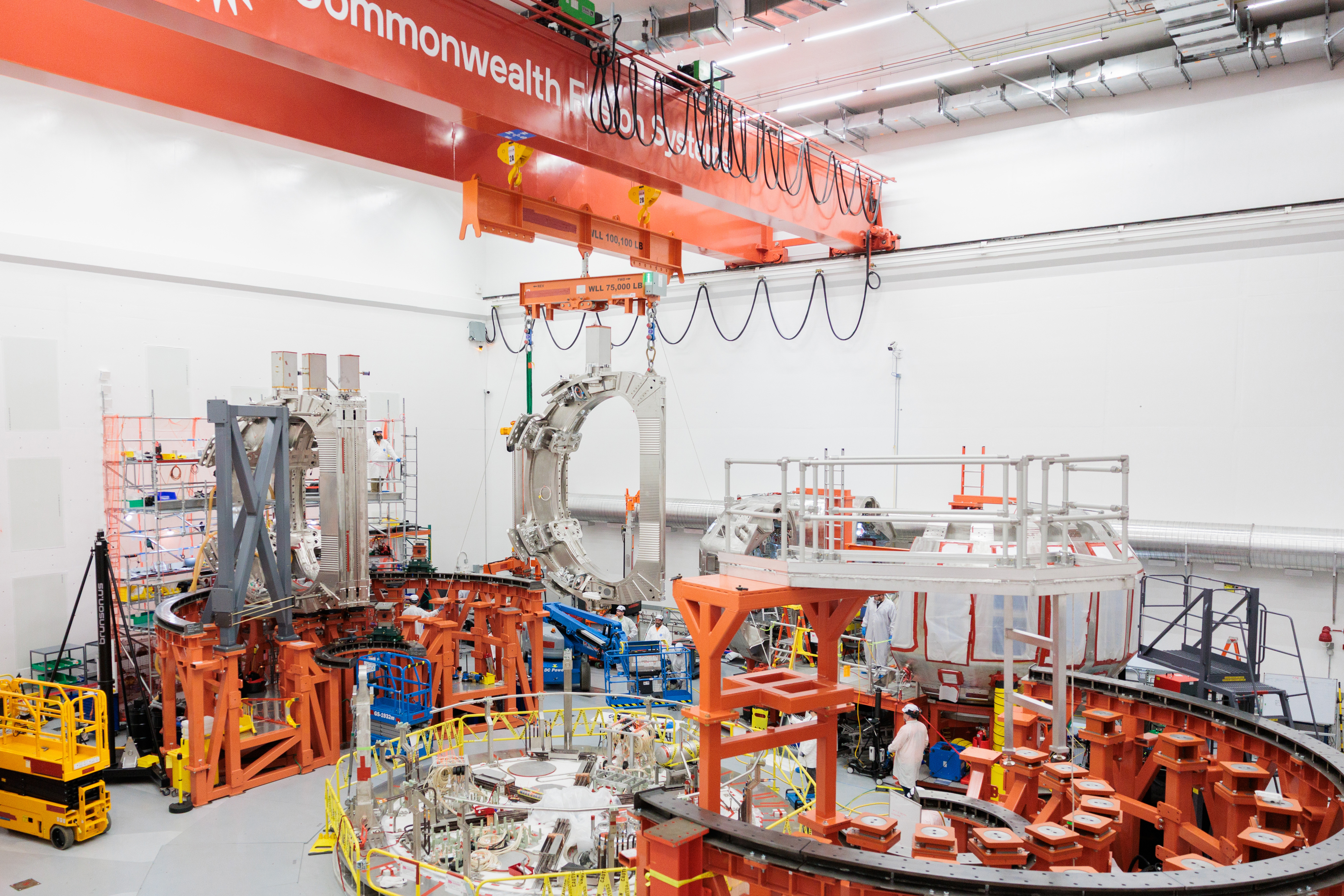
Their goal is not military hardware but something far more ambitious: a working fusion reactor that could, within a decade, feed clean, virtually limitless power into the American grid. The technology, they insist, is finally ready. The harder question is whether the political system that must pay for it is.
For decades, fusion energy has been the punchline of a cruel joke, perpetually thirty years away. Yet a clutch of private companies, backed by billions in venture capital, now say they have solved the core engineering problems. They are building demonstration plants and promising commercial electricity by the mid-2030s. But their timeline collides with a stark reality in Washington: a deeply polarized Congress, a looming debt crisis, and an incoming administration that has signaled hostility to climate spending.
President-elect Donald Trump has pledged to slash regulation and unleash American energy dominance. His team has indicated a preference for fossil fuels and has questioned the economics of renewables. While Trump has occasionally expressed interest in advanced nuclear technology, his policy agenda offers no clear lane for the massive federal investment that fusion companies say they need to bridge the gap between prototype and power plant.
An Expensive Bridge to Commercial Reality
The core challenge is financial. Private fusion firms have raised roughly $6 billion globally, a fraction of the estimated $50 billion to $100 billion required to build the first fleet of commercial reactors. Industry leaders argue that without a government commitment to purchase fusion power or subsidize construction, the technology will stall in the laboratory. They point to the federal loan programs that helped scale solar and wind, and to the bipartisan support that sustained fission reactors for decades.
Congress has taken tentative steps. The Fusion Energy Act of 2024, signed into law with bipartisan backing, created a regulatory framework for licensing fusion plants. But it authorized no new funding. The Department of Energy has allocated modest sums for milestone-based development, but industry executives say the scale is insufficient. One lobbyist described the gap as a “valley of death” where promising technologies go to die for lack of political will.
The political headwinds are not solely partisan. Some environmental groups remain skeptical of any nuclear solution, citing unresolved questions about tritium handling and neutron damage to reactor walls. Others worry that a federal push for fusion could crowd out investment in proven renewables and battery storage. These divisions could complicate efforts to assemble the broad coalition needed to secure large-scale appropriations.
For now, the companies are pressing ahead, betting that the sheer promise of fusion will eventually force Washington’s hand. They note that the technology produces no long-lived radioactive waste, cannot melt down, and uses fuel derived from seawater. But they also acknowledge a sobering truth: the science may be the easy part. Persuading a fractured government to spend tens of billions of dollars on a future that has always seemed just out of reach will require a political feat as difficult as containing a star.