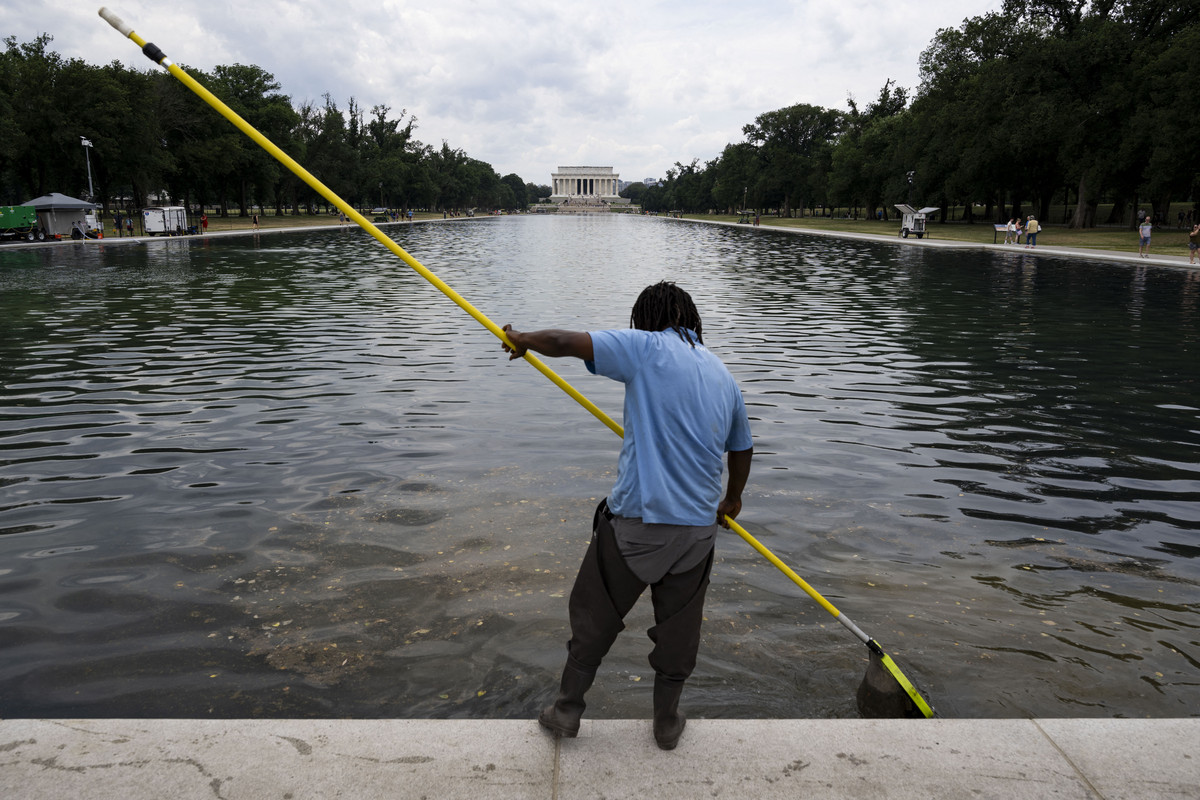
On Friday, the Department of Justice revealed the real culprit was not a vandal, but the contractor's own "hasty" and flawed installation work.
In a motion to dismiss the felony destruction of government property charge against David Hearn, U.S. Attorney for the District of Columbia Jeanine Pirro wrote that previously undisclosed problems with the pool's "American Flag Blue" lining make it difficult to prove the damage was criminal. The filing marks a significant reversal for the Trump administration, which had touted the renovation as a centerpiece of its planned Fourth of July celebrations in the capital.
The motion also assigns blame to the Interior Department, accusing the agency of failing to share information about the installation's status that would have prevented the government from seeking an indictment in the first place. "Had DOI been forthcoming with the information clearly in its possession, the government would not have sought a grand jury indictment," the filing stated.
The case has become an embarrassing episode for the administration, which faced repeated delays and cost overruns on the project before the pool was finally reopened to the public in late June. The renovation was intended to restore the iconic landmark ahead of the national holiday, but the visible deterioration of its lining quickly turned the achievement into a public relations liability.
A Pattern of Blame
Prosecutors now say the damage was the result of a rushed installation by the contractor, not the actions of Hearn, a decorated athlete whose alleged involvement drew national attention. The motion suggests that the Interior Department possessed records detailing the installation defects but did not share them with the Justice Department during the initial investigation.
Legal experts say the filing is unusual in its direct criticism of a sister agency, particularly one under the same presidential administration. The motion effectively concedes that the government's case was built on incomplete information, raising questions about how the charges against Hearn were approved in the first place.
The dismissal request does not name the contractor responsible for the installation, nor does it specify what corrective actions might be taken to repair the pool's lining. However, the filing indicates that the government is now focused on addressing the underlying workmanship issues rather than pursuing the individual defendant.
For Hearn, the motion brings an end to a legal ordeal that began with his arrest and public vilification. The former Olympian had maintained his innocence throughout, insisting that the damage occurred before he was even near the site. The court is expected to rule on the dismissal motion in the coming weeks.