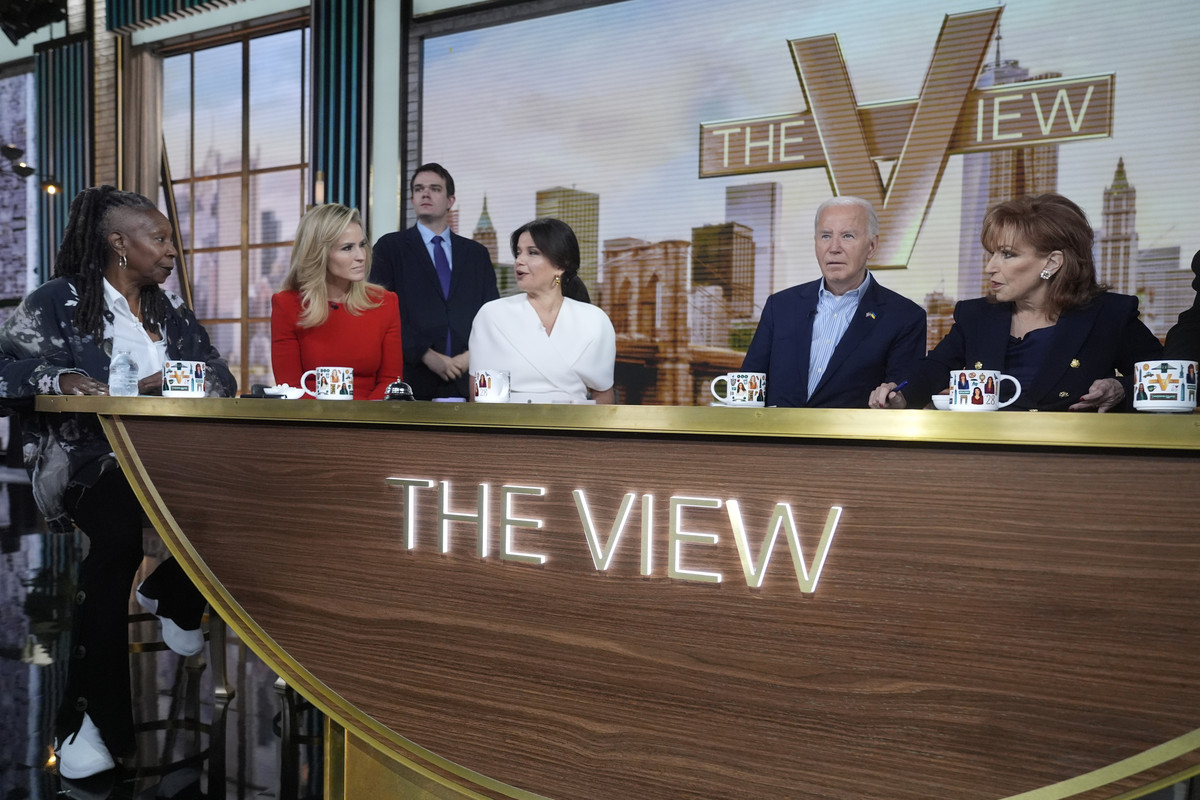
But that exchange now sits at the center of a heated legal battle between the Walt Disney Company and the Federal Communications Commission, with ABC warning that the agency’s new interpretation of a decades-old rule could fundamentally alter how broadcast news covers American elections.
In a 52-page petition filed with the FCC on Friday, ABC lambasted Chair Brendan Carr for what it called an “unprecedented” effort to regulate interviews on broadcast talk shows. The network argued that Carr’s push to apply the “equal time” rule to programs like “The View” threatens to “chill” First Amendment protections and stifle coverage of political candidates ahead of the 2026 midterm elections. “Uncertainty as to the scope of broadcast licensees’ editorial discretion threatens to limit news coverage of political candidates and chill core First Amendment-protected speech for years and potentially decades to come,” ABC wrote in the filing.
The dispute marks the latest front in a broader confrontation between major broadcast networks and Carr, a Republican who has used his tenure atop the nominally independent FCC to wage a series of fights against what he views as adversaries of President Donald Trump. The equal time rule, a regulation passed by Congress decades ago, generally requires broadcast stations to offer equivalent airtime to all legally qualified candidates for a given office. Historically, however, the FCC has exempted “bona fide” news interviews from that requirement, a carve-out that allowed shows like “The View” to host candidates without triggering equal time obligations for their opponents.
Carr’s FCC has signaled a new willingness to question that exemption. An agency spokesperson defended the chair’s approach, stating that Congress passed the equal time law to prevent broadcasters from tilting the scales in favor of one candidate. “Specifically, Congress put protections in place to ensure that covered programs offer legally qualified candidates for office (both Republican and Democrat) equal time on the public airwaves,” the spokesperson said. “The equal time law encourages more speech.” The spokesperson added that the FCC would review ABC’s arguments that “The View” should remain exempt from the rules.
ABC’s petition pushes back forcefully against that interpretation, arguing that the FCC’s new stance injects “uncertainty” into the editorial process. The network warned that if producers cannot be sure whether an interview will trigger equal time obligations, they may simply avoid hosting candidates altogether. “As the 2026 midterm election approaches, the American people need more access to political news and more exposure to political candidates, not less,” ABC wrote.
The legal skirmish comes at a time when Carr has aggressively targeted media companies he accuses of bias. Earlier this year, the FCC revived an investigation into CBS over its handling of a “60 Minutes” interview with then-Vice President Kamala Harris, and the agency has also opened inquiries into NPR and PBS regarding their underwriting practices. For ABC, the fight over “The View” represents a direct challenge to the editorial independence that broadcasters have long relied upon to conduct political journalism.
A High Stakes Fight Over a 1959 Rule
The core of the conflict rests on the “equal time” provision of the Communications Act of 1934, which was amended in 1959 to include exemptions for bona fide news programs. For decades, broadcasters have interpreted those exemptions broadly, allowing talk shows that feature candidate interviews to operate without triggering legal requirements. Carr’s FCC, however, has signaled that it may view such interviews as entertainment rather than news, a distinction that could upend long-standing industry practices.
If the FCC rules against ABC, the network could face the choice of either offering equivalent airtime to opposing candidates or ceasing to host any candidates on “The View” during campaign season. Either outcome, ABC argued, would harm the public’s access to political discourse. The agency has not yet set a timeline for its review of the petition, but with the 2026 election cycle already underway, the decision could have immediate consequences for how broadcasters cover the campaign trail.