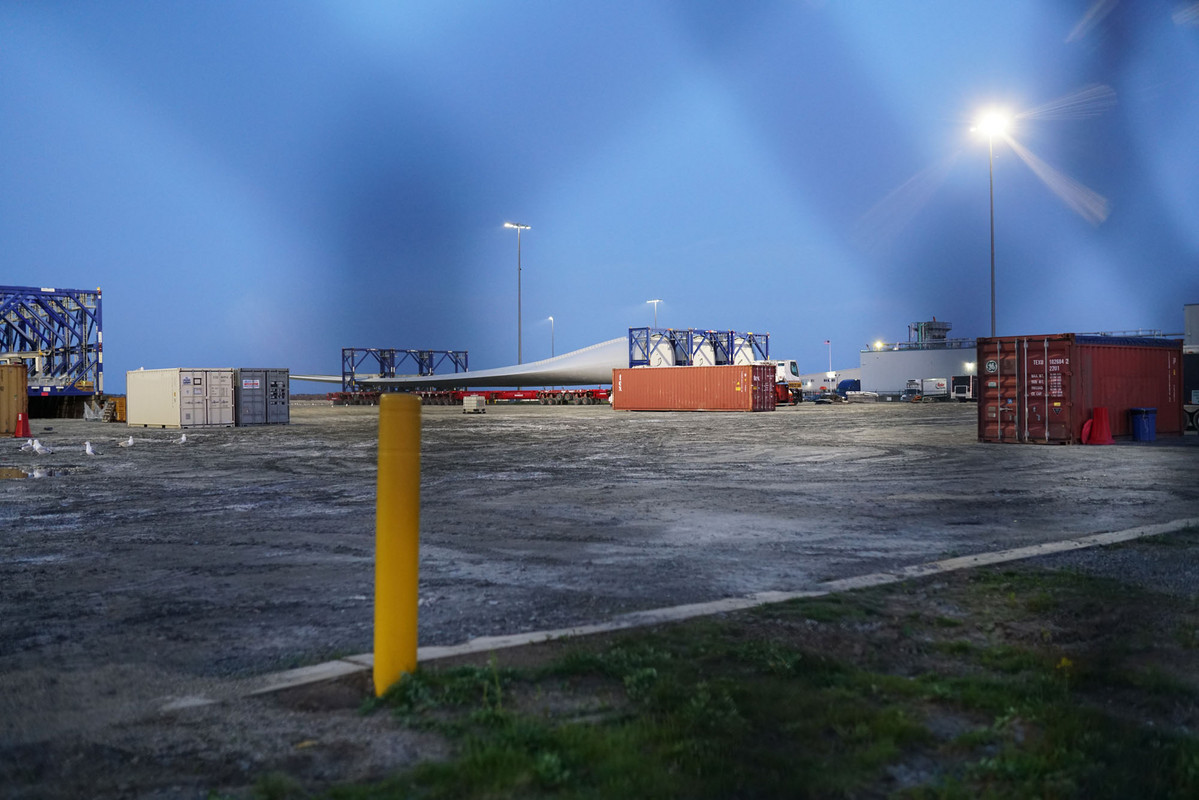
The 200-foot tower pieces that once loomed over a harbor of fishing trawlers are gone, and so too are the house-sized gearboxes and turbine blades that stretched the length of a soccer field. On a recent April day, only empty blade racks, a pair of red cranes and three broken blades remained at the New Bedford Marine Commerce Terminal.
This city of Portuguese, Latino and Cape Verdean residents was supposed to be ground zero for a new economic era. The massive turbine parts were assembled here, sent out to sea and installed as part of Vineyard Wind, the largest renewable energy project built east of the Mississippi River. For a waterfront lined with fish houses and abandoned factories, the project represented a lifeline: a chance for a blue-collar fishing town to forge a future by raising turbines offshore.
Former President Joe Biden and governors of Northeast states championed offshore wind as a way to power the economy, fight climate change and create a wave of jobs in port communities hollowed out by deindustrialization and the consolidation of the fishing industry. Massachusetts invested $113 million into the terminal, betting that New Bedford would become a hub for a new American industry. Vineyard Wind was supposed to be the first of many projects launching from this dock.
Instead, it may be the only one. The industry has been battered by rising construction costs and mounting political opposition from coastal communities and fishermen, who worry the turbines will destroy the marine ecosystem and spoil pristine ocean views. Those economic and local pressures were already testing the industry’s viability before the political landscape shifted dramatically.
A White House turned against wind
President Donald Trump has made combatting offshore wind a hallmark of his second term. He has eliminated tax credits for the industry and attempted to rip up permits for future projects. In December, he tried to halt construction of five offshore wind projects, including Vineyard Wind, by invoking national security concerns. Courts rejected the argument that the turbines posed a security threat and allowed work to proceed, but the uncertainty has chilled investment.
The empty dock in New Bedford now stands as a monument to a promise that collided with political reality. The big turbine parts that were supposed to represent a new era have been hauled away, installed at sea or left to sit in storage. The city’s waterfront, still lined with fish houses and shuttered factories, waits to see whether the next chapter will bring more cranes or more abandonment.
For a blue-collar town that bet its future on the wind, the question is no longer whether the industry can survive the political headwinds. It is whether the dock will ever again see a turbine blade loaded for sea.