Kennedy Center for the Performing Arts voted on Wednesday to affix former President Donald Trump’s name to the institution’s marquee, reviving a proposal that was first floated earlier this year and swiftly abandoned. The vote, which passed along partisan lines, also endorsed a sweeping plan to shutter the nation’s flagship cultural venue for a period of two years, a move that would effectively pause all performances, educational programs, and public operations.
The decision marks the second time in six months that the board, now dominated by Trump appointees, has sought to rebrand the center in the former president’s honor. The first attempt, made in February, was withdrawn after a wave of public backlash from artists, donors, and Democratic lawmakers. This time, however, board members framed the renaming as a necessary corrective to what they described as the center’s political drift, according to two people familiar with the closed-door meeting.
The two-year shutdown plan, which was approved in the same session, is being characterized by supporters as a “strategic reset” that would allow for a comprehensive overhaul of the center’s programming and financial model. Critics, including several former board members and arts advocacy groups, have called the proposal a pretext for dismantling an institution that has long been a bipartisan symbol of American cultural prestige. They argue that a prolonged closure would devastate the center’s resident companies, including the National Symphony Orchestra, and force hundreds of staff layoffs.
The board’s composition has shifted dramatically since Trump left office, with the former president having filled a majority of the 36-member governing body during his term. That majority has now consolidated control, and Wednesday’s votes were conducted without the participation of several Democratic members who had been appointed by President Biden and who have since resigned in protest. The remaining opposition members have vowed to challenge the board’s actions in court, citing the center’s federal charter, which mandates that it operate as a living memorial to President Kennedy.
Legal and political fallout
The legal questions surrounding the vote are likely to hinge on whether the board has the authority to alter the center’s statutory mission without congressional approval. The Kennedy Center was established by an act of Congress in 1958, and its enabling legislation explicitly names the institution as a memorial to the 35th president. Legal scholars have noted that while the board has broad latitude over day-to-day operations, a permanent name change and a multi-year closure could be construed as a fundamental alteration of the center’s purpose, requiring legislative action.
On Capitol Hill, reaction was swift. Several Democratic senators, including those from the D.C. region, issued statements condemning the vote as a partisan seizure of a national treasure, while a handful of Republican lawmakers expressed support for the board’s right to manage the institution as it sees fit. No formal legislation to block the renaming has been introduced, but aides say discussions are underway about attaching a rider to an upcoming appropriations bill.
The center’s current season, which includes a slate of scheduled performances through the spring, is expected to continue as planned. The two-year shutdown, if implemented, would not begin until after the current fiscal year, giving the board time to finalize logistics. In the interim, the renaming vote has already produced tangible consequences: two major touring productions have reportedly canceled their upcoming engagements at the center, and at least one prominent donor has suspended a seven-figure pledge.
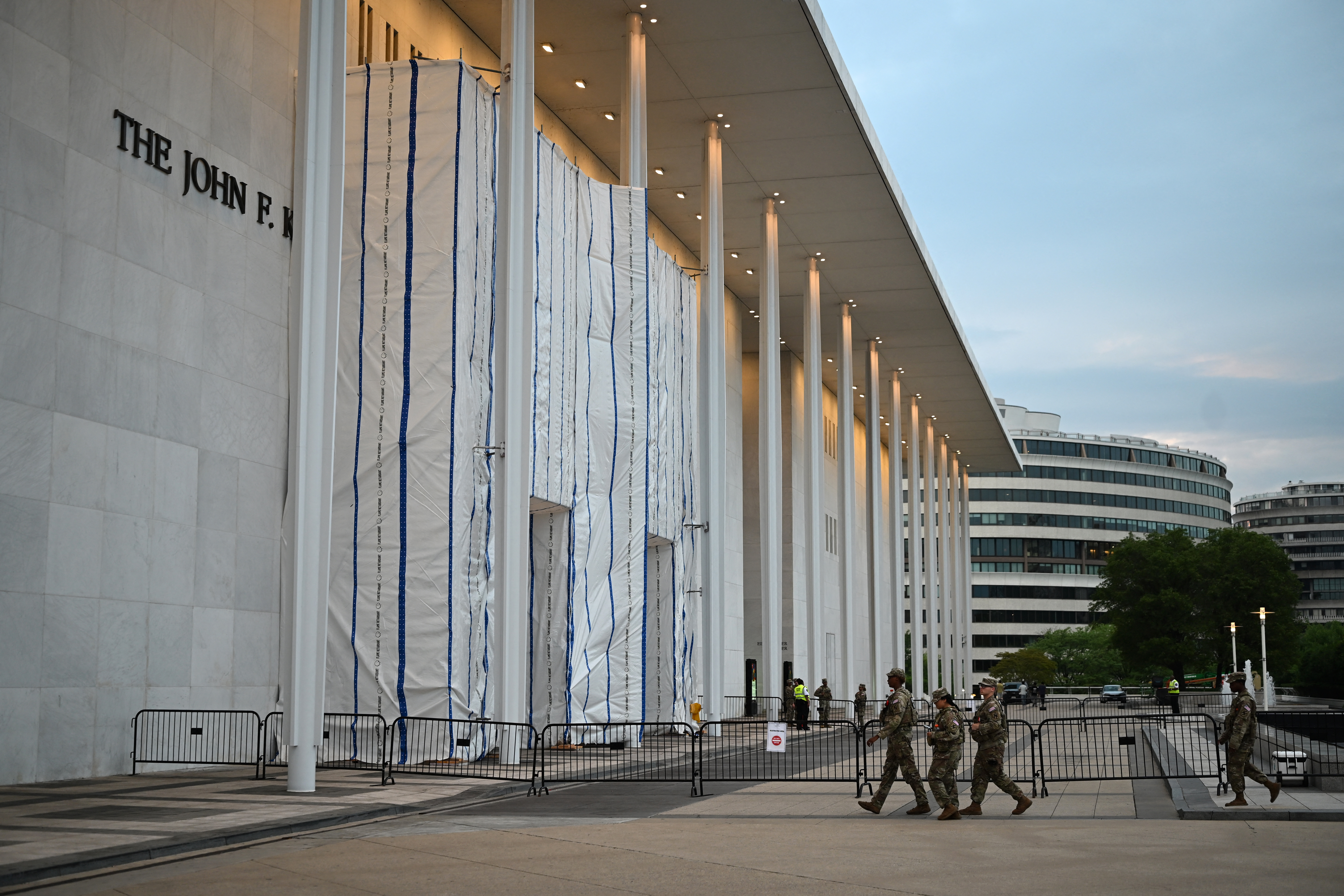
For now, the building’s iconic facade, which bears the inscription of John F. Kennedy’s name, remains unchanged. But the board’s resolution directs the center’s administration to begin the process of updating signage, stationery, and digital platforms to reflect the new designation, a process that could take months. Whether that process is ever completed may ultimately be decided not in a boardroom, but in a federal courtroom.